

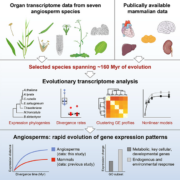
Rapid shifts in the patterns of gene expression shapes flowering plant diversity
Plant Science Research WeeklyFlowering plants are the most widespread group of plants, occupying almost every environment on our planet. They play important roles in maintaining the earth’s biodiversity and have a remarkably high rate of diversification. What’s always puzzled scientists is how they became so incredibly diverse.…
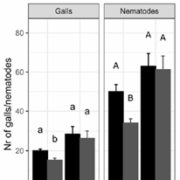
Infected parents confer nematode resistance to offspring via epigenetic modifications
Plant Science Research WeeklyCan the stress experienced by parents enhance the resilience of their offspring? In this study, Atighi et al. investigated whether rice plants can inherit resistance against the root-knot nematode Meloidogyne graminicola from their infected parents. Their research demonstrates that offspring of nematode-infected…
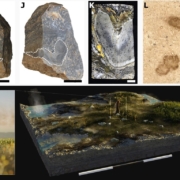
Not a Fungi after all: New clues to the identity of Prototaxites
Plant Science Research WeeklyThe colonization of land by plants was a crucial event in Earth’s history that fundamentally transformed our planet’s surface. Early plants were small and structurally simple, but terrestrial ecosystems also included other, non-plant organisms. Among the most striking were enigmatic organisms known…
Plant Science Research Weekly: January 30, 2026
WWR Full PostReview: Epidermis-derived secretory structures
I’d never thought about the fact that there are two distinct types of epidermal-derived secretory structures, both mainly involved in stress responses and defense. Glandular trichomes (GTs) are well known structures that protrude outwards, but they…
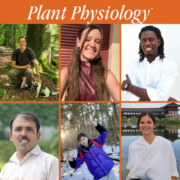
Plant Physiology Spotlights March, April and May 2025 First Authors
Blog, Community, Plant Physiology: Author ProfilesBehind the Plant Physiology manuscripts are researchers, professors, professionals and students dedicated to advancing the field of plant science. You’ve seen our First Authors on Bluesky, Facebook, and Twitter — now, read more about why they chose to pursue plant sciences and click on the links…
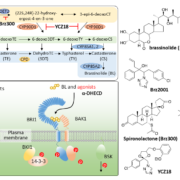
Founders review: Forty years of research into hormone mimics, inhibitors, and agrochemicals
Plant Science Research WeeklyThis review, by Tadao Asami, looks back at his career as a scientist who designs and synthesizes small, physiologically active molecules with applications in research and agriculture. It’s an impressive history documenting how the methods used for such rational design have evolved over the past five…
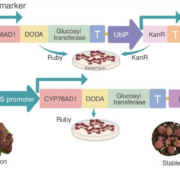
Review: RUBY: a genetically encoded visible reporter for plant biology
Plant Science Research WeeklyA major challenge in plant biology is observing molecular events. Reporter systems such as GUS and GFP have underpinned breakthroughs in gene regulation, cell signalling and development, yet each has its constraints: Fluorescent proteins demand microscopes and low background autofluorescence, and GUS…
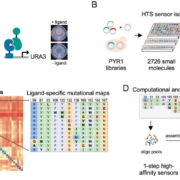
A shape-shifting plant receptor expands the landscape of small-molecule sensing
Plant Science Research WeeklyDesigning small-molecule biosensors that are both sensitive and versatile remains a central challenge in synthetic biology, yet such tools are indispensable for environmental monitoring, cellular control, and emerging biotechnologies. In this study, Tian and colleagues exploit an unexpected feature of…
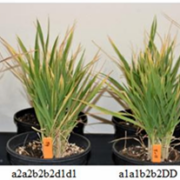
TaMYB-D7 alleles mediate leaf pigmentation in response to nutrient status in wheat
Plant Science Research WeeklyNitrogen and phosphorus are essential macronutrients for wheat (Triticum aestivum L.) growth and development, and phosphorus deficiency is often associated with purple pigmentation in leaves due to anthocyanin accumulation. For farmers and growers, this pigmentation can be read as a sign of phosphorus…