
Regulation of gluten strength by vacuolar processing enzymes targeting a wheat glutenin subunit
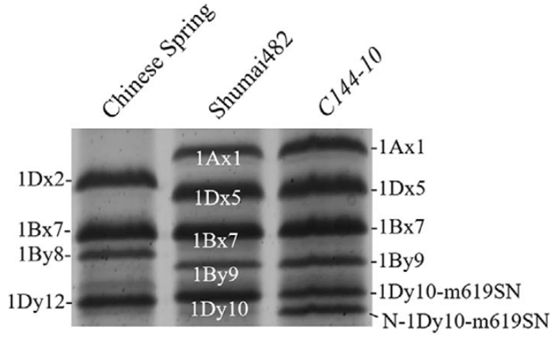 Wheat is rich in gluten proteins which provide texture and structure to many foods such as breads. The abundance of low molecular weight glutenin subunits (LMW-GSs) and high molecular weight glutenin subunits (HMW-GSs) determines gluten strength and dough quality. Wheat cultivars commonly contain three to five types of HMW-GSs. In a previous study, an ethyl methanesulfonate (EMS)-induced mutant containing six types of HMW-GSs was identified. The causal allele was named 1Dy10-m619SN, which carries a serine-to-asparagine amino acid substitution compared to the wild-type allele 1Dy10. The substitution causes posttranslational cleavage of the 1Dy10-m619SN protein and thus the change of gluten strength. However, enzymes mediating this cleavage were unknown. In the current study by Wang et al., using TurboID-based proximity labelling and mass-spectrometry, the authors identify the interaction between 1Dy10-m619SN protein and vacuolar processing enzymes (VPEs). By in vitro protein degradation assays, they further show that the VPEs cleave 1Dy10-m619SN protein but not the wild-type 1Dy10 protein. The cleavage of 1Dy10-m619SN protein by VPEs is also demonstrated by VPE overexpressions in wheat. Furthermore, compared to the wild-type wheat plants carrying the 1Dy10 allele, mutant wheat plants carrying the 1Dy10-m619SN allele have higher VPE expressions, although the induction mechanism is not clear. Previous studies suggested that VPEs target asparagine or aspartic acid for protein degradation. The current study by Wang et al. reveals the application of such a mechanism to regulate gluten strength. (Summary by Yee-Shan Ku @Yee-Shan Ku) Plant J. 10.1111/tpj.70697