

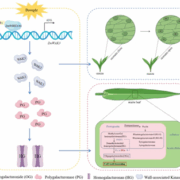
ZmWAK3 acts as a negative regulator of drought tolerance in maize
Plant Science Research WeeklyDrought is a major constraint on maize production, and understanding the underlying molecular regulators is key to breeding resilient varieties. Yang et al. investigated the role of the wall-associated kinase ZmWAK3 in maize seedlings and found it to be a negative regulator of drought tolerance. Loss-of-function…

Non-coding RNA and RNA modification empower immunity in grapevine
Plant Science Research WeeklyGrapevine is an important crop in the food industry. Like other crops, cultivated grapevine benefits from wild relatives that can be used for genetic resource mining and cultivar improvement. Useful genetic resources include novel alleles and gene expression regulators for better growth and stress resilience.…
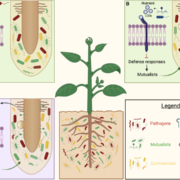
Review: Plant receptor-like kinases sense extrinsic and host-derived signals and shape the microbiome
Plant Science Research WeeklyPlant genomes contain hundreds of genes encoding receptor-like kinases (RLKs), which are membrane-spanning proteins with an extracellular perception domain and an intracellular signaling domain. Many RLKs have roles in identifying surface proteins of pathogens, some recognize specific signals from mutualists…
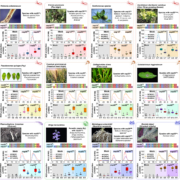
Discovery and engineering of synthetic RLKs
Plant Science Research WeeklyReceptor-like kinases (RLKs) are abundant genes that have diversified and expanded throughout plant evolution, with most plants having hundreds or more RLKs. In this exciting new paper, Ngou et al. decided to deconstruct the recognition sites of these proteins in order to be able to make predictions…
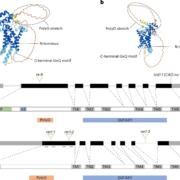
Identification of a plastid-localized amino acid transporter
Plant Science Research WeeklyPlastids are more than photosynthetic compartments, they also are responsible for the biosynthesis of nine proteinogenic amino acids (which explains why animals, lacking plastids, must obtain these amino acids through their diet). In a new paper, Kuhnert et al. have identified a critical amino-acid…
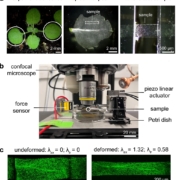
Under pressure: Interdisciplinary research into the mechanics of the cell wall
Plant Science Research WeeklyThe architecture of the plant cell wall is very intricate: strings of cellulose microfibrils provide structure while allowing the cell to expand and grow. This growth is primarily driven by turgor pressure, which applies pressure and allows for expansion in all directions. While the general mechanism…

Senescence to nutrient cycling: Top-down effects of climate change
Plant Science Research WeeklyPrecipitation plays an important role in shaping leaf tissue composition, and as climate change progresses, we’ll likely see dramatic shifts in precipitation regimes. Changes in leaf tissue composition due to increased rainfall or drought may have cascading effects on soil microbe communities and ultimately…
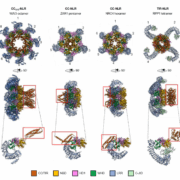
A wheat immune receptor that breaks the mold: The octameric WAI3 resistosome
Plant Science Research WeeklyPlants may not have white blood cells, but they are far from defenseless. Instead, they rely on specialized immune receptors called NLRs (nucleotide-binding leucine-rich repeat receptors) to recognize intracellular invaders and trigger strong defense responses. These receptors are molecular shape-shifters,…
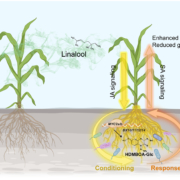
Signals in the air and soil: the hidden communication circuit that shapes plant resilience
Plant Science Research WeeklyWhen plants grow shoulder to shoulder in crowded fields, they don’t just compete for space and sunlight—they also “talk” to one another. This underground and airborne chatter, carried by leaf volatiles and root exudates, helps plants sense nearby neighbors and prepare for threats. But how exactly…