


What We're Reading: March 2nd
WWR Full PostThis week's edition is guest edited by Arif Ashraf (@aribidopsis), a graduate student of United Graduate School of Agricultural Sciences, Iwate University, Japan and Graduate student ambassador of American Society of Plant Biologists (ASPB). His research interest is understanding the hormonal interplay…
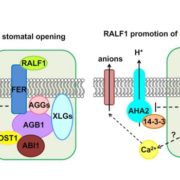
FERONIA-RALF and G Proteins in Guard Cell Response
Plant Physiology, Plant Physiology: On The Inside, Research, Research BlogHeterotrimeric guanine nucleotide-binding (G) proteins are composed of Ga, Gb, and Gg subunits and function as molecular switches in signal transduction. In Arabidopsis, there is one canonical Ga (GPA1), three extra-large Ga (XLG1, XLG2, and XLG3), one Gb (AGB1), and three Gg (AGG1 to 3) subunits. Despite…
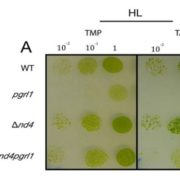
Mitochondria Affect Photosynthetic Electron Transport
Plant Physiology, Plant Physiology: On The Inside, Research, Research BlogPhotosynthetic eukaryotic organisms rely on two organelles, chloroplasts and mitochondria, for the synthesis of the molecules NAD(P)H and ATP that fuel their metabolism. These two organelles are commonly thought of as two separate entities but the results of Larosa et al. (10.1104/pp.17.01249) suggest…
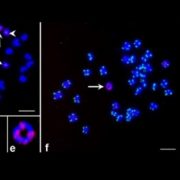
Herbicide Resistance in Common Waterhemp
Plant Physiology, Plant Physiology: On The Inside, Research, Research BlogThe herbicide glyphosate is widely used in agriculture, especially on glyphosate-resistant (GR) transgenic crops. The widespread adoption of GR crops across the globe and an overreliance on glyphosate as a single means of weed control has spawned many GR weed species. Glyphosate inhibits the 5-enopyruvlyshikimate-3-phosphate…
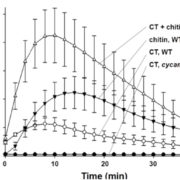
Cellotriose Induces Increases in Cytoplasmic Calcium
Plant Physiology, Plant Physiology: On The Inside, Research, Research BlogThe root-colonizing endophytic fungus Piriformospora indica, which was originally isolated from the rhizosphere of two woody shrubs in the Indian Thar Desert, colonizes the roots of a broad host range, including the model plant Arabidopsis. P. indica does not cause pathogenic symptoms, but promotes root…
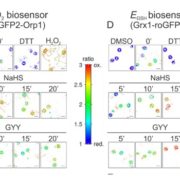
Hydrogen Sulfide’s Role in Stomatal Closure
Plant Physiology, Plant Physiology: On The Inside, Research, Research Blog Hydrogen sulfide (H2S) is an important gaseous signaling molecule in plants that participates in stress responses, development, and stomatal closure. In plants, H2S is enzymatically produced by cysteine desulfhydrase in the catalyzed conversion of cysteine to pyruvate, H2S, and NH3+. In Arabidopsis…
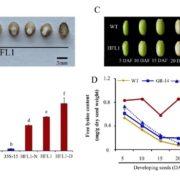
Serotonin Accumulation in High-Lysine Rice
Plant Physiology, Plant Physiology: On The Inside, Research, Research BlogThe nutritional quality of cereals often suffers from a deficiency in essential amino acids, especially lysine. Recently, High Free Lysine (HFL) rice (Oryza sativa) has been genetically engineered. The free lysine content in the mature endosperm of two HFL transgenic lines (HFL1 and HFL2) is increased…

An integrated assessment of the vascular plant species of the Americas (Science) ($)
Plant Science Research WeeklyCataloguing of American plants started in the year 1526 with the chronicles by Fernandez de Oviedo that already included the first reports of now widely use crops such as chili pepper and corn. Ulloa-Ulloa et al. present in this article a complete and searchable checklist (large PDF) of all known American…

REVIEW Cryobiotechnology of apple (Malus spp.) (Plant Cell Rep.) ($)
Plant Science Research WeeklyApple (Malus spp.) is an economically important tree that faces, like other crops cultured in temperate regions, remarkable challenges due to climate change such as abiotic (drought and salinity) and biotic (fungi, bacteria and aphids) stresses. For that, there is increasing need to preserve Malus…