


Review: New tools and resources in metabolomics: 2016–2017 ($) (Electrophoresis)
Plant Science Research WeeklyMetabolomics, like the other high throughput omics platforms, provides a snapshot of metabolites in response to a condition or in a cell, tissue, organ, or entire organism. In this review effort the author has cataloged all relevant tools, databases and softwares that were published in 2016-2017 for…

EIN3 and PIF3 form an interdependent module that represses chloroplast development in buried seedlings ($) (Plant Cell)
Plant Science Research WeeklyPhotosynthesis is the fundamental process for plants to produce food. Beneath the soil there is an impairment of chloroplast development. In this article, Liu et al. identified that mechanical pressure works through the ethylene-responsive transcription factor EIN3, while light signaling is mediated…

A phosphoinositide map at the shoot apical meristem in Arabidopsis thaliana (BMC Biol.)
Plant Science Research WeeklyPlasma membrane lipids including phosphatidylinositol phosphates (PIPs) are often depicted as forming a featureless plane that serves mainly as a barrier, but in reality they show considerable spatial diversity. PIPs contribute to anchoring and positioning proteins and protein networks, so there is much…

LPCAT1 controls phosphate homeostasis in a zinc-dependent manner (eLIFE)
Plant Science Research WeeklyPhosphate availability is one of the main limiting factors for plant growth. Similarly, zinc deficiency represents a threat for agriculture and children nutrition and there is a complex interaction between phosphate and zinc nutrition. Kisko et al. investigate the interaction of phosphate and zinc nutrition…
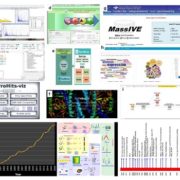
Updates on Resources, Software Tools, and Databases for Plant Proteomics in 2016–2017 ($) (Electrophoresis)
Plant Science Research WeeklyProteomics, like metabolomics research, depends on the mass-spectrometry tools. Data processing, protein annotation, statistical and data analysis, as well as visualization are often the hurdles in obtaining meaningful biological insights from high throughput datasets. To this end, the author has summarized…
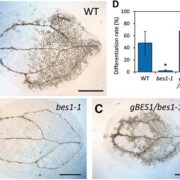
BES1 and BZR1 redundantly promote phloem and xylem differentiation ($) (Plant Cell Physiol.)
Plant Science Research WeeklyIn vascular development, procambial or cambial cells differentiate into xylem and phloem. In this research article, by using VISUAL (Vascular cell Induction culture System Using Arabidopsis Leaves) system, Saito et al. identified BES1 (BRI1 EMS SUPPRESSOR 1) as one of the components required for xylem…

Nitrate modulates stem cell dynamics in Arabidopsis meristems through cytokinins ($) (PNAS)
Plant Science Research WeeklyThe SAM (Shoot Apical Meristem) generates the cells that make up the shoot. In this paper, Landrein et al. studied how nutrient availability shapes SAM architecture. They showed that SAM size is positively correlated with both pTCSn::GFP (a cytokinin reporter) and pWUS::GFP (a major regulator for stem…
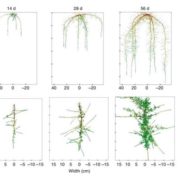
CRootBox: a structural – functional modeling framework for root systems (Ann Bot)
Plant Science Research WeeklyRoot architecture is important to understand the response of plants during biotic and abiotic stress conditions. Root growth is mostly under soil, which deprives us of the ability to observe its development and growth pattern. In this paper, Schnepf et al. present CRootBox, a framework developed based…

Evolutionary history resolves global organization of root functional traits ($) (Nature)
Plant Science Research WeeklyRoots differ in their form and function, as they need to compete for water and nutrients in the wide range of environment. Although we are starting to understand some adaptive aspects of individual root morphology features, the adaptive features of root organization are still poorly understood. Ma and…