

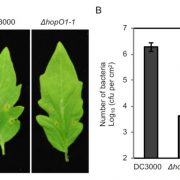
Pathogenic bacteria target plant plasmodesmata to colonize and invade surrounding tissues (Plant Cell)
Plant Science Research WeeklyPlasmodesmata are regulated channels that connect adjacent cells, allowing movement of metabolites, RNA, proteins, and pathogens. Plants close their plasmodesmata as part of their immune response, but this closure can be interfered with by pathogens. Aung et al. examined the repertoire of effector proteins…
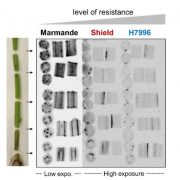
Resistant tomato restricts colonization and invasion by the pathogen Ralstonia solanacearum at four organismal levels (J Exp Bot)
Plant Science Research WeeklyRalstonia solanacearum is a pathogenic bacterium that infects many important crop species, including tomato. Following invasion into the roots, the bacteria move upwards into the shoot and cause dramatic wilting. Previous studies have identified moderately and highly resistant lines. Here, Planas-Marquès…
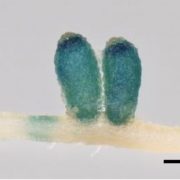
Medicago-Sinorhizobium-Ralstonia co-infection reveals legume nodules as pathogen confined infection sites developing weak defenses (Curr. Biol.)
Plant Science Research WeeklyThe pathogenic bacterium Ralstonia solanacearum enters roots through wounds and also at root tips. It can also infect legume nodules. Benezech et al. investigated how this infection occurs, and how it is affected by and affects nitrogen fixation. The authors found that nodules are as permissive of Ralstonia…
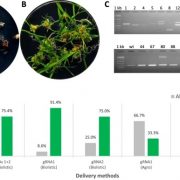
High-frequency random DNA insertions upon co-delivery of CRISPR-Cas9 ribonucleoprotein and selectable marker plasmid in rice (Sci Reports)
Plant Science Research WeeklyGenome editing through CRISPR/Cas9 holds so much promise for plant breeders, including potentially the ability to overcome the public’s displeasure with conventional GMOs. Still, the gene-editing RNAs and enzymes must get into the plant cell in order to work. Banakar et al. have compared three methods…
Plant Science Research Weekly: January 10
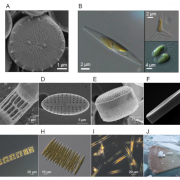
Blog, WWR Full PostReview. Diatom molecular research comes of age: Model species for studying phytoplankton biology and diversity
Diatoms are photosynthetic eukaryotes and contribute substantially to global carbon fixation. They are distantly related to green plants, having shared the same primary endosymbiotic event,…

A membrane-bound cellulase in time and space
Research, The Plant Cell, The Plant Cell: In a NutshellNagashima et al. investigate molecular mechanisms for the sorting of a membrane protein KORRIGAN 1 (KOR1) in plant cells.
Plant Cell https://doi.org/10.1105/tpc.19.00714
By Y. Nagashima1, and H. Koiwa1,2
1Vegetable and Fruit Improvement Center and Department of Horticultural Sciences, Texas…

Recognizing Plant Direct first authors: Meng Xie
Plant Direct, Plant Direct: Author ProfilesMeng Xie, first author of Identification of functional single nucleotide polymorphism of Populus trichocarpa PtrEPSP-TF and determination of its transcriptional effect
Current Position: Postdoctoral Associate, Center for Bioenergy Innovation, Oak Ridge National Laboratory; Department of Plant Sciences,…

Recognizing Plant Cell authors: Yasuhito Sakuraba
The Plant Cell, The Plant Cell: Author ProfilesYasuhito Sakuraba, first author of Multilayered regulation of membrane-bound ONAC054 is essential for abscisic acid-induced leaf senescence in rice
Current Position: Professor (Assistant), Biotechnology Research Center, The University of Tokyo, Japan
Education: Ph.D. in Life Science, Hokkaido University,…

Recognizing Plant Physiology authors: Qi Li
Plant Physiology, Plant Physiology: Author ProfilesQi Li, first author of Perception of damaged self in plants
Current Position: Postdoc at University of Florida
Education: BS and PhD in Shandong Agricultural University
Non-scientific Interests: music, running, hiking
Brief bio: I am a postdoctoral associated at University of Florida, supervised…