

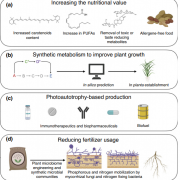
Review: The impact of synthetic biology for future agriculture and nutrition
Plant Science Research WeeklyThe synthetic biology field is going to be important for the decade we began in order to face climate challenges, including food security. However, plant synthetic biology lags behind bacterial and other eukaryotic systems. Roell and Zurbriggen summarize in this review, many of the projects that are…

Pheophorbide a may regulate jasmonate signaling during dark-induced senescence
Plant Science Research Weekly
During leaf senescence, nitrogen-rich chlorophyll is broken down through a regulated process so that nitrogen-containing compounds can be reassimilated into the plant body. Chlorophyll catabolites are sequestered in the vacuole as linear tetrapyrroles known as phyllobilins, produced through the action…
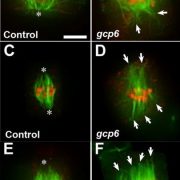
The γ-tubulin complex protein GCP6 in crucial for spindle morphogenesis but not essential for microtubule reorganization in Arabidopsis (OA)
Plant Science Research Weekly
During cell division, cells require to form mitotic spindle and these mitotic spindles are basically newly formed microtubules. The formation of new microtubules depends on γ-tubulin. Along with 5 GPCs (γ-tubulin protein complex), γ-tubulin form γTuRC (γ-tubulin ring complex) and it facilitates…
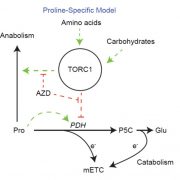
Metabolite regulatory interactions control plant respiratory metabolism via Target of Rapamycin (TOR) kinase activation
Plant Science Research Weekly
The rate of mitochondrial respiration is highly dynamic and responds to numerous endogenous and exogenous factors. Here, O’Leary et al. have measured mitochondrial respiration (through O2 production) in response to various metabolites in leaf discs over several hours, to address not only post-translational…
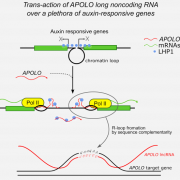
R-Loop Mediated trans Action of the APOLO Long Noncoding RNA
Plant Science Research Weekly
It was shown that the Arabidopsis intergenic long noncoding RNA (LncRNA) APOLO (AUXIN-REGULATED PROMOTER LOOP) modulates in cis its neighbor gene PID forming a chromatin loop. However, it remained unknown whether it can act also in trans modulating the expression of other genes. Now, Ariel et…
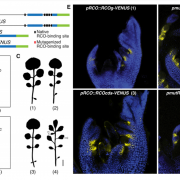
Autoregulation of RCO by low-affinity binding modulates cytokinin action and shapes leaf diversity (Curr. Biol)
Plant Science Research WeeklyREDUCED COMPLEXITY (RCO) is the main homeodomain transcription factor (TF) responsible for leaf complexity in cruciferous plants. RCO is lost in the model Arabidopsis with simple leaves but present in the genome of Cardamine hirsuta, a good model for leaf morphology traits. However, little is known about…
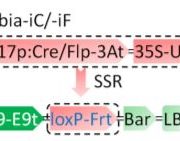
Restriction Release: improved maize transformation efficiency
Plant Physiology, Plant Physiology: News and Views, ResearchMagdalena M. Julkowska
[email protected]
Improvement of crops using traditional breeding is too slow to ensure food production able to sustain the growing human population, especially in the face of climate change (Hickey et al., 2019). Transformation methods for monocot crops depend…
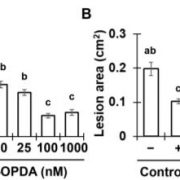
Xylem-mobile Oxylipins are Critical Regulators of Induced Systemic Resistance in Maize
Research, The Plant Cell, The Plant Cell: In BriefIn addition to promoting plant growth and development, the colonization of roots by beneficial microorganisms often provides aboveground tissues with enhanced resistance to pathogen attack. This form of resistance, referred to as ‘induced systemic resistance’ (ISR), relies on the long-distance movement…
Plant Science Research Weekly: January 17
Blog, WWR Full PostGuest Editor :
Facundo Romani
I am in an Argentinean PhD student at Universidad Nacional del Litoral (Santa Fe, Argentina) and current ASPB Plantae Fellow. I am about to finish my PhD program, during past years I worked with Javier Moreno as supervisor and spent a long stay at Monash University…