

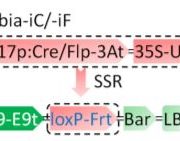
Restriction Release: improved maize transformation efficiency
Plant Physiology, Plant Physiology: News and Views, ResearchMagdalena M. Julkowska
Magdalena.Julkowska@kaust.edu.sa
Improvement of crops using traditional breeding is too slow to ensure food production able to sustain the growing human population, especially in the face of climate change (Hickey et al., 2019). Transformation methods for monocot crops depend…
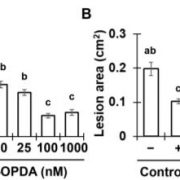
Xylem-mobile Oxylipins are Critical Regulators of Induced Systemic Resistance in Maize
Research, The Plant Cell, The Plant Cell: In BriefIn addition to promoting plant growth and development, the colonization of roots by beneficial microorganisms often provides aboveground tissues with enhanced resistance to pathogen attack. This form of resistance, referred to as ‘induced systemic resistance’ (ISR), relies on the long-distance movement…
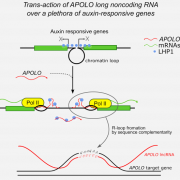
Plant Science Research Weekly: January 17
Blog, WWR Full PostGuest Editor :
Facundo Romani
I am in an Argentinean PhD student at Universidad Nacional del Litoral (Santa Fe, Argentina) and current ASPB Plantae Fellow. I am about to finish my PhD program, during past years I worked with Javier Moreno as supervisor and spent a long stay at Monash University…

Energy vs growth: Plant nutritional decisions are made by TOR
Research, The Plant Cell, The Plant Cell: In a NutshellO’Leary et al. show that the TOR signalling pathway in plants responds to amino acid levels by eliciting regulatory effects on respiratory energy metabolism at night, uniting a hallmark mechanism of TOR regulation across eukaryotes. Plant Cell https://doi.org/10.1105/tpc.19.00157
By Brendan O’Leary…
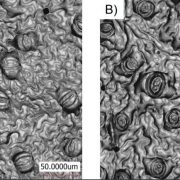
Keep it steamy: improved quantification of the humidity within the leaf
Plant Physiology, Plant Physiology: News and Views, ResearchMagdalena M. Julkowska
Magdalena.Julkowska@kaust.edu.sa
Stomata are the gatekeepers of plant water status, regulating the balance between plant CO2 uptake and water loss. Stomatal conductance (gs) can be estimated by microscopy of wax or plastic leaf surface imprints, but this technique is time…
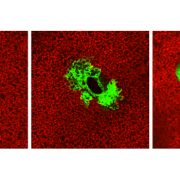
Taking Down Plant Communication Channels to Invade
Research, The Plant Cell, The Plant Cell: In a NutshellAung et al. reveal that pathogenic bacteria target plant plasmodesmata to colonize and invade surrounding tissues.
Plant Cell https://doi.org/10.1105/tpc.19.00707
By Kyaw Aung and Sheng Yang He
Background: Multicellular organisms like animals and plants host a multitude of microorganisms.…

THE PLANT CELL Welcomes New Assistant Features Editors
Blog, Pubs Pages, Research, The Plant Cell, The Plant Cell: NewsThe Plant Cell welcomes 12 new Assistant Features Editors (AFEs) for 2020. They join six continuing AFEs who started in 2019. We would also like to thank all of the original AFEs who stepped down from the editorial board in 2018-2019, who helped us to establish the program and provided valuable input…

AvrRpm1, a 28-year Old Mystery Solved
Research, The Plant Cell, The Plant Cell: In a NutshellReddit et al. show that an effector protein from a pathogen modifies a host factor by ADP ribosylation, thereby activating defenses.
The Plant Cell https://doi.org/10.1105/tpc.19.00020
Background:
To protect themselves against disease, plants employ a family of intracellular receptors called…
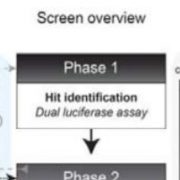
How To Identify Autophagy Modulators
Plant Physiology, Plant Physiology: News and Views, ResearchAuthor: Masanori Izumi
Affiliation: RIKEN Center for Sustainable Resource Science, Wako 351-0198, Japan
masanori.izumi@riken.jp
Autophagy is the ubiquitous process in eukaryotes leading to the degradation of intracellular components, during which a portion of the cytoplasm, including organelles,…