

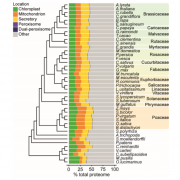
Gene duplication accelerates the pace of protein gain and loss from plant organelles (Mol. Biol. Evol.)
Plant Science Research WeeklyOrganelles, such as the chloroplast and nucleus, are structures with specific functions within a plant cell. It has been reported that many related, or homologous, proteins function in different organelles. However, how and why organellar proteins have diverged over evolutionary time remains unclear.…

Mitochondrial fostering: the mitochondrial genome may play a role in plant orphan gene evolution (bioRxiv)
Plant Science Research WeeklyOrphan genes are those that are found in only a single species. In trying to understand the origin of orphan genes, O’Conner and Li have found that many of these orphan genes are likely to have originated as mitochondrial genes, as many are nuclear genes whose encoded proteins are targeted to the mitochondria…
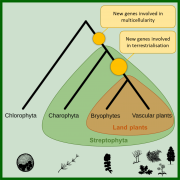
The origin of land plants is rooted in two bursts of genomic novelty (Curr. Biol)
Plant Science Research WeeklyThe transition of plants from water to land is one of the most momentous shifts in the history of life on Earth. 500 million years ago, the first land plants dramatically changed the environments on the planet, creating soils, rivers and the oxygen-rich atmosphere. However, the factors that enabled early…
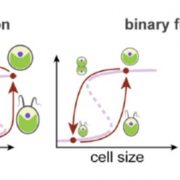
A single light-responsive sizer can control multiple-fission cycles in Chlamydomonas (Curr. Biol.)
Plant Science Research WeeklyHow do cells know when it is time to divide? Helt et al. explore this question using the single-celled alga Chlamydomonas. Unlike most animal and fungal cells, which tend to maintain a relatively consistent size by dividing after their size has doubled, Chlamydomonas cells can undergo several rounds…

Isolation of an archaeon at the prokaryote–eukaryote interface (Nature)
Plant Science Research WeeklySometime around 1.8 to 2 billion years ago, complex eukaryotic cells appeared for the first time, providing the ancestor for plants, animals and fungi. Many lines of evidence have indicated that this event probably involved an ancient archaeon taking up an ancient bacterium, the progenitor of all mitochondria.…

SUPPRESSOR OF MAX2 1-LIKE 5 promotes secondary phloem formation during radial stem growth (Plant J)
Plant Science Research WeeklyPlant tissues continue to develop postembryonically through proliferation at the shoot and root apical meristem. In the vasculature, radial growth occurs through the proliferation of the undifferentiated cambial cells. Members of the SUPPRESSOR OF MAX2 1-LIKE (SMXL) proteins are known to be involved…
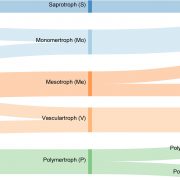
A proposed new classification scheme for fungal and oomycete pathogens based on carbohydrate-active enzymes (Front. Microbiol)
Plant Science Research WeeklyFilamentous pathogens (fungi and oomycetes) use a variety of tactics to obtain nutrients from plants. Classically, they have been categorized as biotrophic ("eating" living tissues), nectrotrophic (eating dead tissues) or hemibiotrophic (biotrophic followed by heterotrophic). Hane et al. point out that…
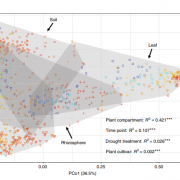
Fungal community assembly in drought-stressed sorghum shows stochasticity, selection, and universal ecological dynamics (Nature Comms)
Plant Science Research WeeklyPreviously, crop-associated mycobiomes were thought to assemble largely under the control of deterministic selection by the plant host with limited influence from drift. This study by Gao et al., highlights the important role of stochastic processes in fungal community assembly, particularly in the hosts’…

From population to production: 50 years of scientific literature on how to feed the world (Global Food Security)
Plant Science Research WeeklyTamburino et al. analyzed text from more than 12,000 research articles published in the past 50 years that included the terms “global” or “world” and “food supply”, “food demand’, or “zero hunger”. From this dataset, they quantified terms related to population, total food production,…