

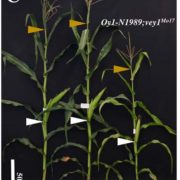
Variation in maize chlorophyll biosynthesis alters plant architecture (Plant Physiol)
Plant Science Research WeeklyThis is an interesting paper that combines classical genetics with biochemistry and phenotypic analysis. Khangura et al. looked at maize lines with various allelic combinations of two loci that affect chlorophyll biosynthesis: the oil yellow1 (oy1) gene encodes magnesium chelatase, the first committed…
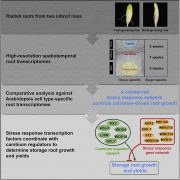
Conserved gene regulatory network integrated with stress response factors in radish and Arabidopsis root cambium (Curr. Biol.)
Plant Science Research WeeklyThe cambium is a layer of actively dividing cells between xylem and phloem tissues that is responsible for the thickening of primary or lateral roots and stems. Root crops are tightly associated with the cambium regulatory mechanism which is less characterized in root as compared to shoot development.…
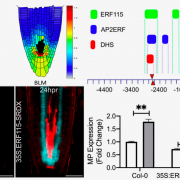
Rocks in the auxin stream: Wound-induced auxin accumulation and ERF115 expression synergistically drive stem cell regeneration (PNAS)
Plant Science Research WeeklyPlants have evolved exquisite regenerative capacities to repair wounds or even reform complete organs thanks to the proliferative activity of stem cell niches residing in meristems. Different types of injuries elicit different developmental and regenerative responses. However, a key player seems to be…

Seed traits determine species responses to fire under varying soil heating scenarios ($) (Funct. Ecol.)
Plant Science Research WeeklySoil seed banks allow plants to persist in fire-prone ecosystems. However, if seeds are buried too deep, seedling emergence can be inhibited. The maximum depth at which seeds can be buried without hampering recruitment is expected to be shaped by different seed traits, although this has been seldom tested.…
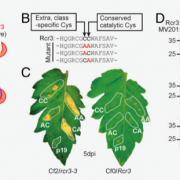
Extracellular proteolytic cascade in tomato activates immune protease Rcr3 (PNAS)
Plant Science Research WeeklyThe plant apoplast is a sea of immune-related proteins that facilitate robust defense against pathogens. Rcr3 is a tomato secreted apoplastic protease that contributes to both basal defense and gene-for-gene resistance against pathogens. Rcr3 is activated by the cleavage of its autoinhibitory prodomain,…
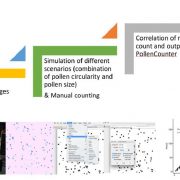
Optimizing PollenCounter for high throughput phenotyping of pollen quality in tomatoes (MethodsX)
Plant Science Research WeeklyPollenCounter is an open source, ImageJ based macro that splits RGB images of stained pollen grains into the primary channels. The program estimates pollen viability in plants through analyzing red (total number of pollen grains) and green (only viable pollen grains) images, after which the particles…
Plant Science Research Weekly: July 17, 2020
WWR Full PostReview: Emerging mechanisms to fine-tune receptor kinase signaling specificity
Maybe it’s because I’ve spent too much time in lockdown, but sometimes I find studies on cell signaling a bit impenetrable. Fortunately, this excellent review by Galindo-Trigo et al. has arrived, which elegantly walks…

Recognizing Plant Physiology authors: Will B. Cody
Plant Physiology, Plant Physiology: Author ProfilesWill B. Cody, first author of Native processing of sgRNA transcripts to create catalytic Cas9/sgRNA complexes in planta
Current Position: Postdoctoral Scholar at Stanford University
Education: Ph.D. in Plant Pathology at Texas A&M University; B.S in Bioenvironmental Sciences at Texas A&M…

Recognizing Plant Direct authors: Ashley E. Cannon
Plant Direct, Plant Direct: Author ProfilesAshley E. Cannon, first author of Lipophilic-Signals Lead to Organ-Specific Gene Expression Changes in Arabidopsis Seedlings
Current Position: Postdoctoral Research Associate in Dr. Kent Chapman’s Lab at The University of North Texas
Education: B.S. in Chemistry from Midwestern State University…