


Starting Off Right: N-terminal Acetylation Stabilizes an Immune-activating Protein
Plant Physiology, Plant Physiology: News and Views, ResearchCharles Copeland1
[email protected]
1Department of Plant Microbe Interactions, Max Planck Institute for Plant Breeding Research, 50829 Cologne, Germany
Plants rely on a complex innate immune system to recognize and respond to potential pathogens in their environment (Jones and Dangl, 2006).…

Identifying and annotating mRNA transcripts from non-genic regions of the genome
Research, The Plant Cell, The Plant Cell: In a NutshellPanda et al. use third-generation sequencing to examine the transcriptome of genomic regions that do not encode genes. Plant Cell https://doi.org/10.1105/tpc.20.00115
By Kaushik Panda – Donald Danforth Plant Science Center, and R Keith Slotkin – Donald Danforth Plant Science Center and University…

Close Encounters of the ARF Kind: Proximity-based ARF1 GTPase Activity Regulates Vesicle Trafficking
Research, The Plant Cell, The Plant Cell: In BriefADP-RIBOSYLATION FACTOR (ARF) proteins play essential roles in vesicle trafficking by regulating the formation of membrane vesicles that move cargo throughout the cell. Their activity is controlled by specific guanine exchange factors (ARF-GEFs) that activate ARFs by catalyzing a GDP to GTP exchange…

Recognizing Plant Cell authors: Vivek K. Raxwal
The Plant Cell, The Plant Cell: Author ProfilesVivek K. Raxwal, first author of Nonsense mediated RNA decay factor UPF1 is critical for post-transcriptional and translational gene regulation in Arabidopsis
Current Position: Postdoctoral researcher, Central European Institute of Technology, Brno, Czech Republic
Education: PhD, Department of Botany,…

Review: Emerging mechanisms to fine-tune receptor kinase signaling specificity (COPB)
Plant Science Research WeeklyMaybe it’s because I’ve spent too much time in lockdown, but sometimes I find studies on cell signaling a bit impenetrable. Fortunately, this excellent review by Galindo-Trigo et al. has arrived, which elegantly walks the reader through the crowded world of receptor-like kinases and “how cells…
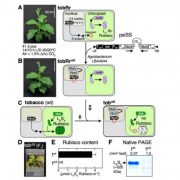
Modifying plant photosynthesis and growth via simultaneous chloroplast transformation of Rubisco large and small subunits (Plant Cell)
Plant Science Research WeeklyIn an interesting evolutionary artifact, the genes encoding the small subunit of Rubisco, rbcS, reside in the nuclear genome, whilst those encoding RbcL persists in the chloroplast. The RbcS protein is translocated into the chloroplast where the holoenzyme forms. This complexity adds to the challenge…
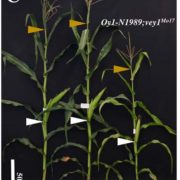
Variation in maize chlorophyll biosynthesis alters plant architecture (Plant Physiol)
Plant Science Research WeeklyThis is an interesting paper that combines classical genetics with biochemistry and phenotypic analysis. Khangura et al. looked at maize lines with various allelic combinations of two loci that affect chlorophyll biosynthesis: the oil yellow1 (oy1) gene encodes magnesium chelatase, the first committed…
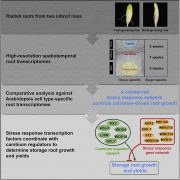
Conserved gene regulatory network integrated with stress response factors in radish and Arabidopsis root cambium (Curr. Biol.)
Plant Science Research WeeklyThe cambium is a layer of actively dividing cells between xylem and phloem tissues that is responsible for the thickening of primary or lateral roots and stems. Root crops are tightly associated with the cambium regulatory mechanism which is less characterized in root as compared to shoot development.…
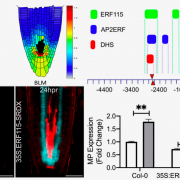
Rocks in the auxin stream: Wound-induced auxin accumulation and ERF115 expression synergistically drive stem cell regeneration (PNAS)
Plant Science Research WeeklyPlants have evolved exquisite regenerative capacities to repair wounds or even reform complete organs thanks to the proliferative activity of stem cell niches residing in meristems. Different types of injuries elicit different developmental and regenerative responses. However, a key player seems to be…