

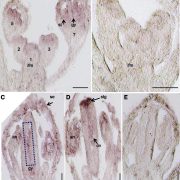
Role of Cell Wall Invertase in Ovule Development
Plant Physiology, Plant Physiology: On The InsideApart from its well-known function in Suc unloading, cell wall invertase (CWIN), an enzyme that catalyzes the hydrolysis of Suc into Fru and Glc, also plays a role in sugar signaling and plant development. As an example of CWIN playing a role in plant development, Liao et al. (10.1104/pp.20.00400)…
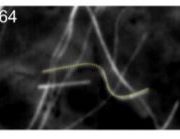
FRA1 Kinesin Prevents Cell Wall Deposition from Going Off the Rails
Research, The Plant Cell, The Plant Cell: In BriefCellulose, hemicellulose, and pectin are the brick and mortar of the plant kingdom, and how they are laid has substantial impacts on plant morphology. Plant cell shape is dictated by the interplay between turgor pressure and heterogeneity in cell wall composition, whereby localized cell wall loosening…

MtSSPdb—a new data base for the small secreted peptide research community
Plant Physiology, Plant Physiology: News and Views, ResearchEva Hellmann, The Sainsbury Laboratory, University of Cambridge, CB2 1LR Cambridge, United Kingdom, https://orcid.org/0000-0002-4591-2973
[email protected]
Small secreted peptides (SSPs) are short peptides that function as messengers and regulate a variety of processes in plants…

Brassinosteroids Promote Greening of Etiolated Seedlings
Research, The Plant Cell, The Plant Cell: In a NutshellWang et al. demonstrate that BRs play important roles in seedling development and survival during the initial emergence of seedlings from subterranean darkness into sunlight. The Plant Cell (2020) https://doi.org/10.1105/tpc.20.00057.
By Lingyan Wang,Yanchen Tian, Wen Shi, Min Fan and Ming-Yi Bai,…

Recognizing Plant Physiology authors: Firoz Ahmed
Plant Physiology, Plant Physiology: Author ProfilesFiroz Ahmed, first author of pssRNAit-a web server for designing effective and specific plant siRNAs with genome-wide off-target assessment
Current Position: Assistant Professor, Department of Biochemistry, University of Jeddah, Jeddah, Saudi Arabia
Education: Ph.D. in Bioinformatics from Jawaharlal…
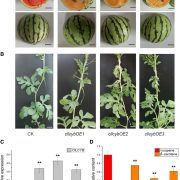
How Cultivated Watermelon Derived its Red Flesh
Plant Physiology, Plant Physiology: On The InsideModern cultivated watermelons (Citrullus lanatus) are sweet tasting and tender, with intensely colored flesh that ranges in hue from yellow to deep red. These colors are produced by the accumulation of various carotenoids in the flesh cells. Red-fleshed watermelons that accumulate lycopene in their flesh…
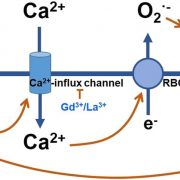
Hydrogen Gas Regulates Cadmium Uptake
Plant Physiology, Plant Physiology: On The InsideCadmium (Cd) is a toxic heavy metal that is relatively mobile in the soil and has become a serious worldwide environment problem. Cd is easily taken up by plant roots where it can be loaded into the xylem and transported to above-ground tissues. Cd accumulation in the shoot inhibits plant growth and…

Improving crop water-use efficiency requires optimizing the circadian clock
Plant Physiology, Plant Physiology: News and Views, ResearchMeisha Holloway-Phillips
Department of Environmental Sciences, University of Basel, Switzerland
[email protected]
The slogan, ‘more crop per drop’, which was popularised in the early 2000s, depicts the need to improve the productivity of crops for the same water inputs (Kijne…

Location, location, location: phototropin 2 action at the chloroplast membrane
Plant Physiology, Plant Physiology: News and Views, ResearchAs someone with a background in plant molecular genetics, I confess to occasionally forgetting about location. Reverse genetics is a powerful tool for picking apart gene networks, but in which organ do these genes act? Which tissue of that organ? Which cells of that tissue and which compartment of those…