

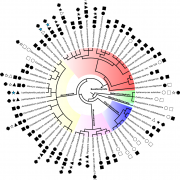
Lipo-chitooligosaccharides as regulatory signals of fungal growth and development (Nature Comms)
Plant Science Research WeeklyDuring symbiosis, the rhizobia bacteria rely on their lipo-chitooligosachharide signals (LCOs) to associate with plants. This signal is perceived by plant receptor like kinase, LysM-containing receptors which activate the common symbiosis signaling pathway (CSSM). Fungal symbiosis with plants has also…
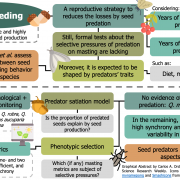
Seed predation selects for reproductive variability and synchrony in perennial plants (New Phytol.) ($)
Plant Science Research WeeklyInstead of regularly flowering and fruiting each year, some long-lived species exhibit annually variable reproduction events. This phenomenon, known as masting, is considered an adaptation to reduce the losses from seed predation: in years of high reproduction, seeds are so abundant that predators become…
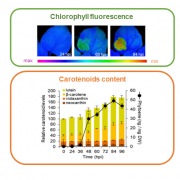
Synthetic conversion of leaf chloroplasts into carotenoid-rich plastids reveals mechanistic basis of natural chromoplast development (PNAS) ($)
Plant Science Research WeeklyBiofortification aims at increasing the content of health-promoting nutrients in edible parts of the plant. As an example, enhancing the production of carotenoids - natural pigments that provide the yellow to red color – in crops could prevent vitamin A deficiency in humans. In nature, carotenoids…
Plant Science Research Weekly: August 28, 2020
WWR Full PostReview: Extending Plant Defense Theory to Seeds ($)
Plants have developed multiple mechanisms to deal with the natural enemies they encounter through their life. In consequence, the Plant Defense Theory has arisen to assess how plants allocate resources to this purpose. However, much of the efforts…

Self-Incompatibility Can Cause Death in Vegetative Cells
Plant Physiology, Plant Physiology: On The InsideSelf-incompatibility (SI) is a mechanism used by flowering plants to prevent self-fertilization. It is controlled by a multi-allelic S-locus that allows self/non-self-recognition between pistil and pollen. In several SI systems, when male and female S-determinants match, self pollen is recognized and…

Recognizing Plant Direct authors: Zainab ALJbory
Plant Direct, Plant Direct: Author ProfilesZainab ALJbory, first author of Differential Localization of Hessian Fly Candidate Effectors in Resistant and Susceptible Wheat Plants
Current Position: Postdoc. Research Associate
Education: B.S. in Plant Protection and M.S. in Entomology from University of Baghdad- Iraq. Ph.D. in Molecular Entomology,…
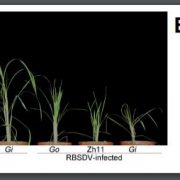
OsGSK2 integrates jasmonic acid and brassinosteroid signalling in rice
Blog, Research, The Plant Cell, The Plant Cell: In BriefPlant defenses against herbivore or pathogen attack involve the coordination of multiple hormone-mediated signalling networks, including the jasmonate (JA) and brassinosteroid (BR) pathways. Jasmonate is an oxylipin phytohormone that triggers the transcription of defence-related proteins and secondary…
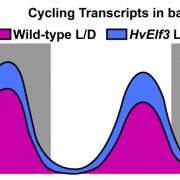
The rhythm of the light: how light and the clock drive cycling of transcript levels in barley
Blog, Plant Physiology, Plant Physiology: News and Views, ResearchCircadian rhythms are ubiquitous among living things. A core set of so-called clock genes and their products assemble an oscillatory network that provides a rhythm to anticipate dawn and dusk (Hsu and Harmer, 2014). The circadian clock regulates the day/night rhythms of plants and light itself has many…
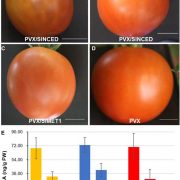
METHYLTRANSFERASE1 and Ripening in Vivipary
Plant Physiology, Plant Physiology: On The InsideDuring fruit ripening in tomato and other flowering plants, the seeds contained within the fruit normally become dormant. However, under certain physiological conditions, seeds can germinate within fruits, a phenomenon called vivipary. Vivipary can substantially reduce yield and product quality in vegetables,…