

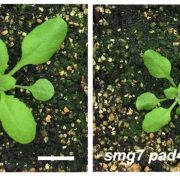
The Multifaceted Roles of UPF1 in Gene Regulation
Blog, Research, The Plant Cell, The Plant Cell: In a NutshellRaxwal et al. uncover the roles of the RNA helicase and ATPase UPF1 in regulating gene expression. The Plant Cell (2020) https://doi.org/10.1105/tpc.20.00244
By Vivek K. Raxwal and Karel Riha
CEITEC Masaryk University, Brno, Czech Republic
Background: Gene expression, i.e., the…
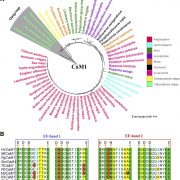
Calmodulin and Salt Tolerance
Plant Physiology, Plant Physiology: On The InsideSalt stress is a major abiotic factor restricting crop growth and productivity. Excess sodium (Na+) causes ion toxicity and ion imbalances. Maintaining lower Na+ accumulation in shoots is crucial for salt tolerant plant species and genotypes under salt stress. Lower shoot Na+ accumulation in plants…

Cyclic Nucleotide-Gated Channels and Temperature Stress
Plant Physiology, Plant Physiology: On The InsideExtreme temperatures often negatively impact plant productivity. Both heat and cold induce transient Ca2+ influx into the cell cytoplasm. Cui et al. (10.1104/pp.20.00591) have investigated the function of two closely related cyclic nucleotide-gated ion channel (CNGC) proteins, OsCNGC14 and OsCNGC16,…
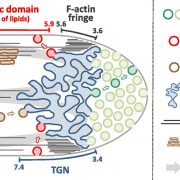
Apical Membrane Traffic In Pollen Tube Tips
Plant Physiology, Plant Physiology: On The InsidePollen tubes elongate very rapidly at rates of several micrometer per minute and strictly in one direction: this process involves the intense local secretion of cell wall material at the tube tip. Consequently, there is a massive incorporation into the plasma membrane (PM) of excess membrane material…
Dwarfed no longer: how one mutant can help the other
Blog, Research, The Plant Cell, The Plant Cell: In a NutshellWillems et al. establish that meristem organization and development rely on Anaphase Promoting Complex/Cyclosome-mediated breakdown of a cyclin.
Plant Cell https://doi.org/10.1105/tpc.20.00208
By Alex Willemsa,b and Lieven De Veyldera,b
aDepartment of Plant Biotechnology and Bioinformatics,…
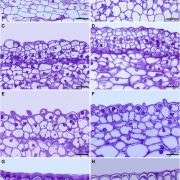
Cutin Synthesis and Deposition
Plant Physiology, Plant Physiology: On The InsideThe waxy cuticle that covers the aerial parts of leaves, fruits, and nonlignified stems of land plants is chemically heterogeneous, with lipids representing between 60% to 80% of the cuticle, depending on the plant organ and species. These lipids can be polymerized, represented by cutin, or non-polymerized,…

Stimulating photosynthetic processes increases productivity and water-use efficiency in the field (Nature Plants)
Plant Science Research WeeklyYield potential in crops is determined by the efficiency of photosynthetic rates, which is a critical target for improvement. Previous studies have shown that photosynthetic carbon assimilation and plant biomass can be improved by the stimulation of either regeneration of RuBP (the five-carbon sugar…
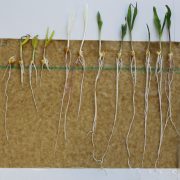
BonnMu: a sequence-indexed resource of transposon-induced maize mutations for functional genomics studies (Plant Physiol.)
Plant Science Research WeeklyLoss-of-function mutants have been invaluable tools in the geneticist’s toolbox for more than a century. More recently, libraries have been developed of knockout insertion mutants at known sites. Here, a new Mu-transposon insertion sequence-indexed maize resource is described. This new collection,…
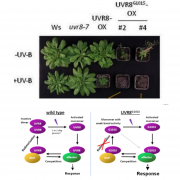
A constitutively monomeric UVR8 photoreceptor allele confers enhanced UV-B photomorphogenesis (bioRxiv)
Plant Science Research WeeklyIn response to UV-B light, the plant UV-B photoreceptor UV RESISTANCE LOCUS 8 (UVR8) monomerizes and activates, inducing UV-B acclimation and survival. Re-dimerization by REPRESSOR OF UV-B PHOTOMORPHOGENESIS 1 (RUP1) and RUP2 inactivates UVR8. In order to further clarify UVR8 pathway regulation, Podolec…