

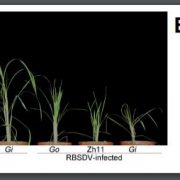
OsGSK2 integrates jasmonic acid and brassinosteroid signalling in rice
Blog, Research, The Plant Cell, The Plant Cell: In BriefPlant defenses against herbivore or pathogen attack involve the coordination of multiple hormone-mediated signalling networks, including the jasmonate (JA) and brassinosteroid (BR) pathways. Jasmonate is an oxylipin phytohormone that triggers the transcription of defence-related proteins and secondary…
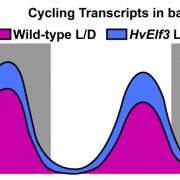
The rhythm of the light: how light and the clock drive cycling of transcript levels in barley
Blog, Plant Physiology, Plant Physiology: News and Views, ResearchCircadian rhythms are ubiquitous among living things. A core set of so-called clock genes and their products assemble an oscillatory network that provides a rhythm to anticipate dawn and dusk (Hsu and Harmer, 2014). The circadian clock regulates the day/night rhythms of plants and light itself has many…
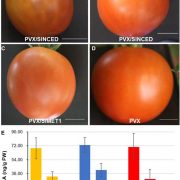
METHYLTRANSFERASE1 and Ripening in Vivipary
Plant Physiology, Plant Physiology: On The InsideDuring fruit ripening in tomato and other flowering plants, the seeds contained within the fruit normally become dormant. However, under certain physiological conditions, seeds can germinate within fruits, a phenomenon called vivipary. Vivipary can substantially reduce yield and product quality in vegetables,…
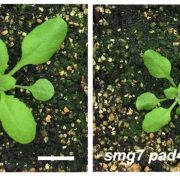
The Multifaceted Roles of UPF1 in Gene Regulation
Blog, Research, The Plant Cell, The Plant Cell: In a NutshellRaxwal et al. uncover the roles of the RNA helicase and ATPase UPF1 in regulating gene expression. The Plant Cell (2020) https://doi.org/10.1105/tpc.20.00244
By Vivek K. Raxwal and Karel Riha
CEITEC Masaryk University, Brno, Czech Republic
Background: Gene expression, i.e., the…
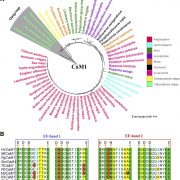
Calmodulin and Salt Tolerance
Plant Physiology, Plant Physiology: On The InsideSalt stress is a major abiotic factor restricting crop growth and productivity. Excess sodium (Na+) causes ion toxicity and ion imbalances. Maintaining lower Na+ accumulation in shoots is crucial for salt tolerant plant species and genotypes under salt stress. Lower shoot Na+ accumulation in plants…

Cyclic Nucleotide-Gated Channels and Temperature Stress
Plant Physiology, Plant Physiology: On The InsideExtreme temperatures often negatively impact plant productivity. Both heat and cold induce transient Ca2+ influx into the cell cytoplasm. Cui et al. (10.1104/pp.20.00591) have investigated the function of two closely related cyclic nucleotide-gated ion channel (CNGC) proteins, OsCNGC14 and OsCNGC16,…
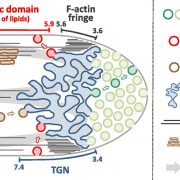
Apical Membrane Traffic In Pollen Tube Tips
Plant Physiology, Plant Physiology: On The InsidePollen tubes elongate very rapidly at rates of several micrometer per minute and strictly in one direction: this process involves the intense local secretion of cell wall material at the tube tip. Consequently, there is a massive incorporation into the plasma membrane (PM) of excess membrane material…
Dwarfed no longer: how one mutant can help the other
Blog, Research, The Plant Cell, The Plant Cell: In a NutshellWillems et al. establish that meristem organization and development rely on Anaphase Promoting Complex/Cyclosome-mediated breakdown of a cyclin.
Plant Cell https://doi.org/10.1105/tpc.20.00208
By Alex Willemsa,b and Lieven De Veyldera,b
aDepartment of Plant Biotechnology and Bioinformatics,…
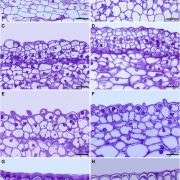
Cutin Synthesis and Deposition
Plant Physiology, Plant Physiology: On The InsideThe waxy cuticle that covers the aerial parts of leaves, fruits, and nonlignified stems of land plants is chemically heterogeneous, with lipids representing between 60% to 80% of the cuticle, depending on the plant organ and species. These lipids can be polymerized, represented by cutin, or non-polymerized,…