

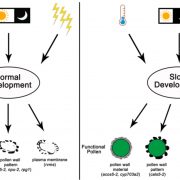
Slow development restores the fertility of photoperiod-sensitive male-sterile plant lines (Plant Physiol.)
Plant Science Research WeeklyThere are many well-known advantages to hybrid seeds. However, one obstacle is the tendency of some plants to self-pollinate. The development of genetically male-sterile lines greatly facilitates hybrid seed production, as the maternal male-sterile plant cannot self-fertilize and depends on donor pollen…
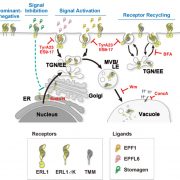
The manifold actions of signaling peptides on subcellular dynamics of a receptor specify stomatal cell fate (eLife)
Plant Science Research WeeklyStomatal development requires cell-to-cell communication and follows one cell spacing, with a minimum of one cell space between two stomata. Key to this communication are the ERECTA and ERECTA LIKE (ERL) Leucine-Rich Repeat domain-Receptor Like kinases (LRR-RLKs) and their ligands, the EPIDERMAL PATTERNING…
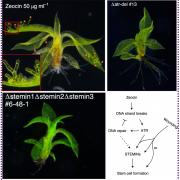
DNA damage triggers reprogramming of differentiated cells into stem cells in Physcomitrella (Nature Plants) ($)
Plant Science Research WeeklyWounding and other types of cellular damage, such as DNA damage-induced stem cell death, trigger cellular reprogramming to confer stem cell identity to damage-adjacent cells, thus establishing a new stem cell niche capable of repairing the injury. Studies in angiosperm models have identified the phytohormone…
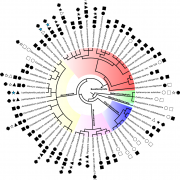
Lipo-chitooligosaccharides as regulatory signals of fungal growth and development (Nature Comms)
Plant Science Research WeeklyDuring symbiosis, the rhizobia bacteria rely on their lipo-chitooligosachharide signals (LCOs) to associate with plants. This signal is perceived by plant receptor like kinase, LysM-containing receptors which activate the common symbiosis signaling pathway (CSSM). Fungal symbiosis with plants has also…
Seed predation selects for reproductive variability and synchrony in perennial plants (New Phytol.) ($)
Plant Science Research WeeklyInstead of regularly flowering and fruiting each year, some long-lived species exhibit annually variable reproduction events. This phenomenon, known as masting, is considered an adaptation to reduce the losses from seed predation: in years of high reproduction, seeds are so abundant that predators become…
Synthetic conversion of leaf chloroplasts into carotenoid-rich plastids reveals mechanistic basis of natural chromoplast development (PNAS) ($)
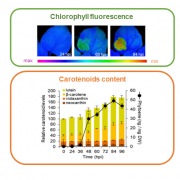
Plant Science Research WeeklyBiofortification aims at increasing the content of health-promoting nutrients in edible parts of the plant. As an example, enhancing the production of carotenoids - natural pigments that provide the yellow to red color – in crops could prevent vitamin A deficiency in humans. In nature, carotenoids…
Plant Science Research Weekly: August 28, 2020
WWR Full PostReview: Extending Plant Defense Theory to Seeds ($)
Plants have developed multiple mechanisms to deal with the natural enemies they encounter through their life. In consequence, the Plant Defense Theory has arisen to assess how plants allocate resources to this purpose. However, much of the efforts…

Self-Incompatibility Can Cause Death in Vegetative Cells
Plant Physiology, Plant Physiology: On The InsideSelf-incompatibility (SI) is a mechanism used by flowering plants to prevent self-fertilization. It is controlled by a multi-allelic S-locus that allows self/non-self-recognition between pistil and pollen. In several SI systems, when male and female S-determinants match, self pollen is recognized and…

Recognizing Plant Direct authors: Zainab ALJbory
Plant Direct, Plant Direct: Author ProfilesZainab ALJbory, first author of Differential Localization of Hessian Fly Candidate Effectors in Resistant and Susceptible Wheat Plants
Current Position: Postdoc. Research Associate
Education: B.S. in Plant Protection and M.S. in Entomology from University of Baghdad- Iraq. Ph.D. in Molecular Entomology,…