

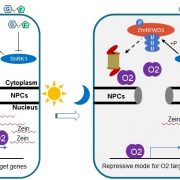
Rhythms in the dark: how endosperm responds to daylight cycles
Blog, Research, The Plant Cell, The Plant Cell: In a NutshellLi et al. discover a diurnal pattern in sucrose content in developing maize endosperm that relies on the action of an E3 ubiquitin ligase on the master regulator transcription factor Opaque2. Plant Cell https://doi.org/10.1105/tpc.20.00352
By Chaobin Li, Zeyang Ma, Rentao Song, China Agricultural…

Recognizing Plant Cell authors: Yang Yang
The Plant Cell, The Plant Cell: Author ProfilesYang Yang, co-first author of The Tip-localized Phosphatidylserine Established by Arabidopsis ALA3 is Crucial for Rab GTPase-mediated Vesicle Trafficking and Pollen Tube Growth
Current Position: Ph.D. candidate.
Education: MOE Key Laboratory of Cell Activities and Stress Adaptations, School of Life…

Recognizing Plant Cell authors: Yuelong Zhou
The Plant Cell, The Plant Cell: Author ProfilesYuelong Zhou, co-first author of The Tip-localized Phosphatidylserine Established by Arabidopsis ALA3 is Crucial for Rab GTPase-mediated Vesicle Trafficking and Pollen Tube Growth
Current Position: Ph.D. candidate
Education: MOE Key Laboratory of Cell Activities and Stress Adaptations, School of…

Recognizing Plant Direct authors: Carla S. Santos
Plant Direct, Plant Direct: Author ProfilesCarla S. Santos, first author of A combined physiological and biophysical approach to understand the ligand-dependent efficiency of 3-hydroxy-4-pyridinone Fe-chelates
Current Position: Post-Doctoral Researcher at Universidade Católica Portuguesa, CBQF - Centro de Biotecnologia e Química Fina – Laboratório…
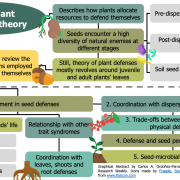
Review: Extending Plant Defense Theory to Seeds (Annu. Rev. Ecol. Evol. Syst.) ($)
Plant Science Research WeeklyPlants have developed multiple mechanisms to deal with the natural enemies they encounter through their life. In consequence, the Plant Defense Theory has arisen to assess how plants allocate resources to this purpose. However, much of the efforts in this matter has revolved around the defense that occurs…
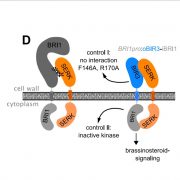
A protein engineering approach for elucidating receptor protein signaling function (Plant Cell)
Plant Science Research WeeklyPlant cells express an array of membrane-bound receptor proteins that recognize and respond to extracellular cues. However, their varied structure/specificity and methods of activation pose challenges in assessing their function. Focusing on Leucine-Rich Repeat Receptor Kinases (LRR-RKs), Hohmann et…
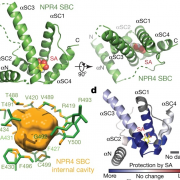
Structural basis of salicylic acid perception by Arabidopsis NPR proteins (Nature) ($)
Plant Science Research WeeklySalicylic acid (SA) is a critical hormone in plant-pathogen responses. The main receptors of this hormonal signal are a small family of NPR proteins (NONEXPRESSOR OF PATHOGENESIS-RELATED GENES). Although NPR1 is a positive regulator of defense signaling, NPR3 and NPR4 serve as negative regulators; they…
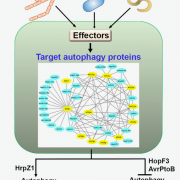
An interactome of plant autophagy proteins and pathogen effectors (Cell Host Microbe) ($)
Plant Science Research WeeklyAutophagy is a regulated process whereby select cytoplasmic components are degraded. It is involved in a variety of biological processes, including defense against pathogens. As such, plant pathogens have evolved mechanisms to target host autophagy machinery to gain virulence. However, we still lack…
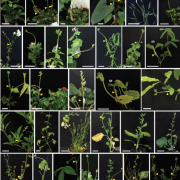
Cell-cell adhesion in plant grafting is facilitated by b-1,4-glucanases (Science) ($)
Plant Science Research WeeklyPlant grafting has been used in crop improvement for centuries and more recently to study systemic and long-distance signaling in the plant vascular system. In order to better understand graft compatibility and its mechanism, Notaguchi et al. used Nicotiana to study interfamily graft combinations. Interfamily…