

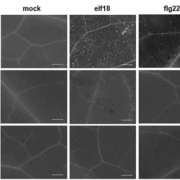
A natural antisense transcript regulates pattern triggered immunity in Arabidopsis
Plant Science Research WeeklyA natural antisense transcript (NAT) is a form of non-coding RNA that shares sequence complementarity with a protein coding sense gene. Although originally thought to be transcriptional noise, recent findings show that NATs contain functional roles, often through the regulation of their cognate sense…
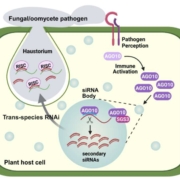
The role of AGO10 in plant immunity via trans-species RNA interference
Plant Science Research WeeklyIn this preprint, Wang et al. unravel a novel role for ARGONAUTE10 (AGO10) in plant immunity. Specifically, they found that AGO10 is involved in trans-species RNA interference (tsRNAi), a mechanism plants use to silence target genes in pathogens. Upon Phytophthora capsici infection, two distinct ago10…
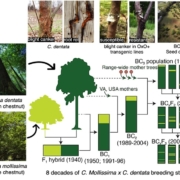
Genomic studies offer new hope for restoring the dwindling American chestnut
Plant Science Research WeeklyDeadly blight caused by the fungal pathogen (Cryphonectria parasitica) and root rot caused by an oomycete pathogen have pushed the American chestnuts toward extinction. In this study by Westbrook et al., the authors highlight the ongoing restoration strategies aiming to return the previously dominant…
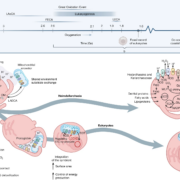
Plant Science Research Weekly: March 13, 2026
WWR Full PostReview: What happens when it gets too hot - the vulnerability of plant reproduction in a warming world
Climate change brings about higher temperatures, threatening plant populations worldwide. Higher temperatures interfere with reproductive processes such as pollen production or fertilization, even…
The Plant Cell Features November and December 2025 First Authors
Blog, Community, The Plant Cell: Author ProfilesBehind the manuscripts are researchers, professors, professionals, and students dedicated to advancing the field of plant science. You’ve seen our First Authors on Bluesky, X and Facebook— now, read more about why they chose to pursue plant sciences and click on the links to read their articles.
Xiangyun…
Plant Physiology Features October, November, and December 2025 First Authors
Blog, Community, Plant Physiology: Author ProfilesYou’ve seen our First Authors on X, BlueSky, and Facebook. Behind the manuscripts are researchers, professors, professionals, and students dedicated to advancing the field of plant science. Read more about these dedicated people here.
Aditi Gotkhindikar
Aditi Gotkhindikar (she/her) is the First…

The Plant Cell Features August, September, and October 2025 First Authors
Blog, Community, The Plant Cell: Author ProfilesBehind the manuscripts are researchers, professors, professionals and students dedicated to advancing the field of plant science. You’ve seen our First Authors on Bluesky, X and Facebook— now, read more about why they chose to pursue plant sciences and click on the links to read their articles.
Ning…

Review: More is better, the importance of plasmodesmata in C4 photosynthesis
Plant Science Research WeeklyPlant (and many algal) cells facilitate cell-to-cell movement through specialized regulated pores called plasmodesmata that connect neighboring cells, and there is a rich literature in how plasmodesmata regulate intercellular movement for example by sealing closed following pathogen or viral infection.…
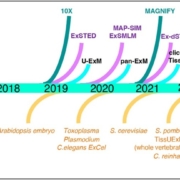
Review. Overcoming the scale barrier: expansion microscopy for nanoscale imaging in plants
Plant Science Research WeeklyMany biological questions, from tissue-level patterning to subcellular organization, demand 3D imaging with spatial resolution beyond the limits of conventional light microscopy, or even super-resolution microscopy. Expansion microscopy (ExM) offers an elegant solution by physically enlarging biological…