Network analysis of competing endogenous RNA (ceRNA) in tea plant upon fungal infection
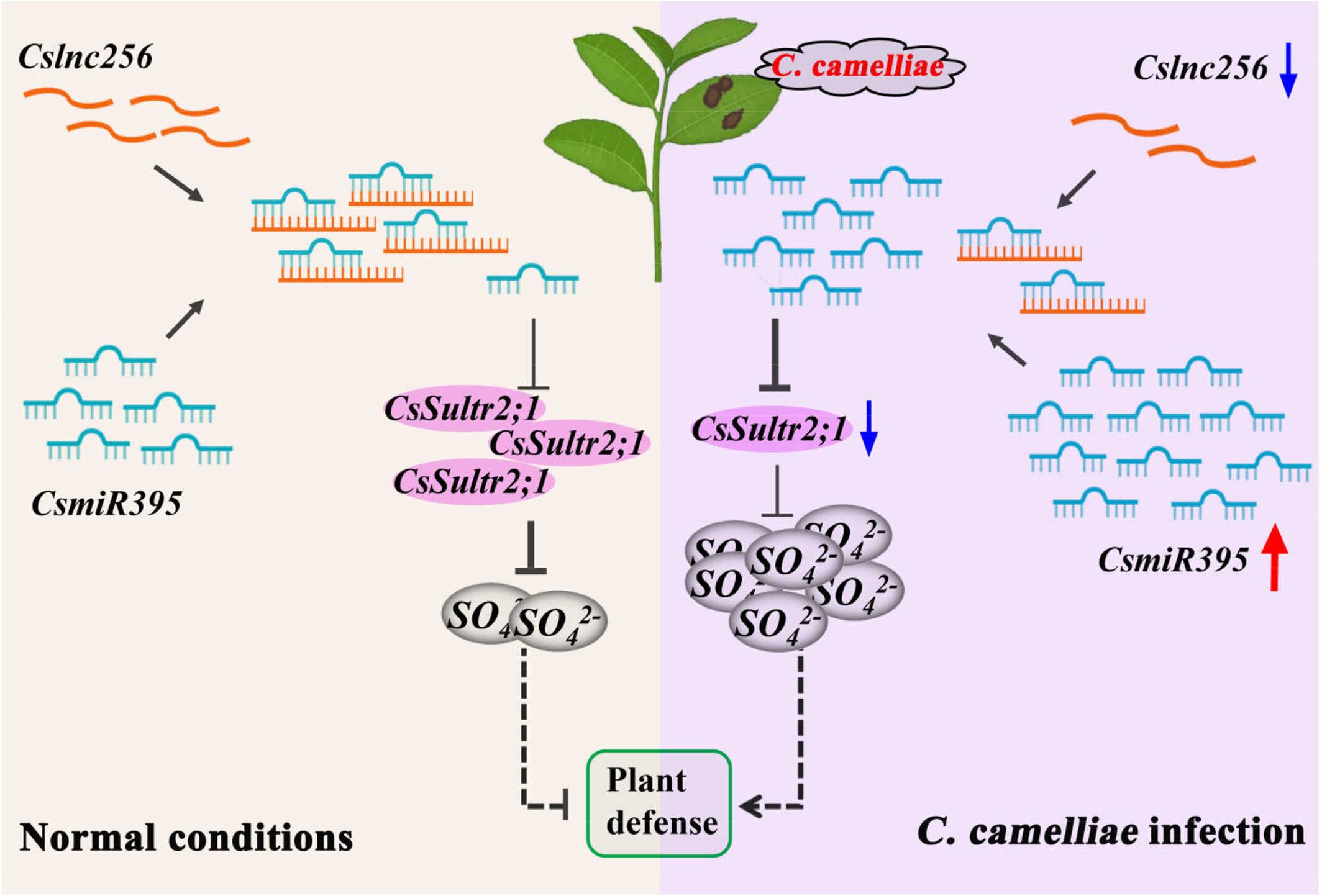 Tea plants (Camellia sinenesis) are usually cultivated in warm and humid regions where fungal infections are favoured. Foliar diseases directly affect the quality of the leaves that are used for tea production. Colletotrichum camelliae is a common fungal pathogen infecting tea plants. Previous studies highlighted the importance of sulfate accumulation in defense against the fungus. In this study by Jiang et al., the authors profiled the transcriptome of C. camelliae infected tea leaves. They used competing endogenous RNA (ceRNA) network analysis based on sequence complementarity and expression correlation to predict the interactions among mRNAs (messenger RNAs), miRNAs (microRNAs), and lncRNAs (long non-coding RNAs). The ceRNA network analysis suggested that miRNA CsmiR395 targets mRNA CsSULTR2;1 which encodes a sulfate transporter. When active, CsSULTR2;1 lowers local sulfate level, rendering the plant more susceptible to the fungus. The ceRNA analysis also suggested the long non-coding RNA Cslnc256 targets CsmiR395. Using transgenic plants, the authors validated that Cslnc256 inhibits CsmiR395, which degrades CsSULTR2;1 to promote local sulfate level. C. sinenesis infection in tea leaves represses Cslnc256 level, resulting in CsmiR395 accumulation, CsSULTR2;1 degradation, sulfate accumulation, and immunity enhancement. This study by Jiang et al. demonstrates the power of ceRNA network analysis on studying post-transcriptional regulations and provides insights into disease resistance promotion in tea plant. (Summary by Yee-Shan Ku @Yee-Shan Ku) Plant J. 10.1111/tpj.70720