
Toward improved CO₂ fixation: A hornwort-derived RbcS motif enables formation of Rubisco condensates
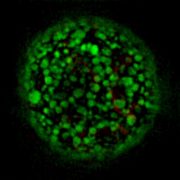
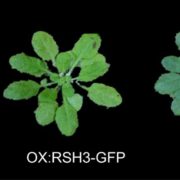
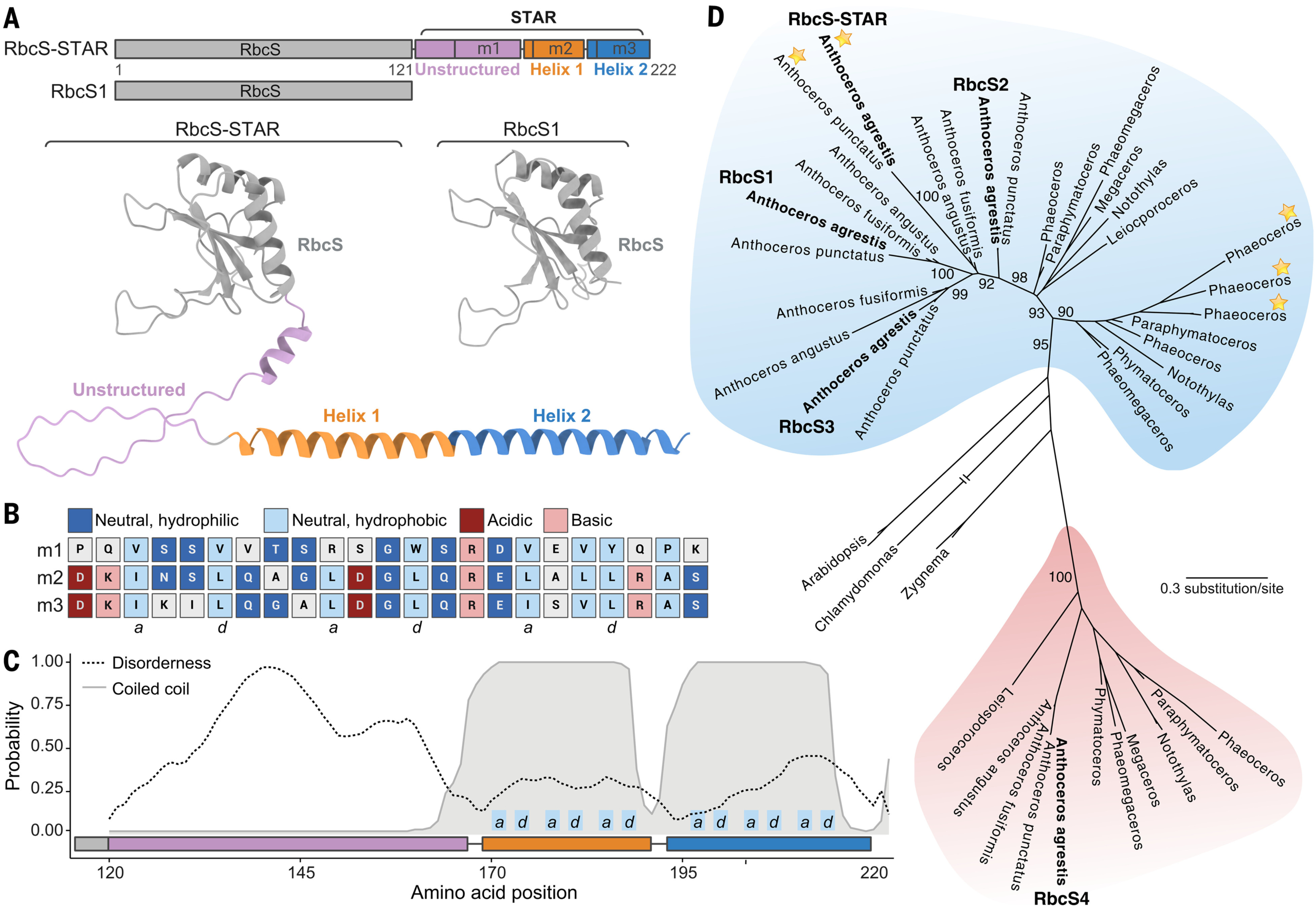 Enhancing photosynthetic CO₂ fixation to increase crop yields is a major focus in plant biotechnology. Notably, several algal species form pyrenoids, phase-separated organelles that boost the activity of the CO₂-fixing enzyme Rubisco by supplying it with concentrated CO₂, thereby making carboxylation more efficient. Among land plants, hornworts are the only lineage with species known to form these beneficial organelles. Hence, significant efforts have been devoted to understanding the mechanisms underlying pyrenoid formation and introducing them into crop plants. Robison et al. describe a very promising yet simple strategy for inducing pyrenoid formation in plants, by using the C-terminal “STAR” extension of a Rubisco small-subunit isoform (AaRbcS-STAR) found in the hornwort Anthoceros agrestis. Interestengly, their findings show, that either by fusing this particular domain to plant’s native RbcS protein or directly intoducing AaRbcS into wild-type plants such as Arabidopsis thaliana, they can direct the formation of pyrenoid-like Rubisco condensates in species that normally lack them. Unlike algae, which rely on separate linker proteins for pyrenoid formation, hornwort’s AaRbcS-STAR integrates directly into the Rubisco holoenzyme and induces pyrenoid-like condensates via its C-terminal coiled-coil interactions, making it an attractive biotechnological tool. Strikingly, this work offers a simple platform for implementing a pyrenoid-based CO₂-concentrating mechanism in plants, with the potential to enhance photosynthetic efficiency in C3 crops. (Summary by Fengoula Avgeri @AvgeriF) Science 10.1126/science.aea0150