

Plant Science Research Weekly: March 27, 2026
WWR Full PostReview: Rare variants in crops genomes and how to spot them
Despite the usefulness of genome-wide association studies (GWAS) for linking DNA variation to agronomic traits, GWAS are focused on detecting common alleles and often fail to detect less-common, rare variants. Rare variants may account for…
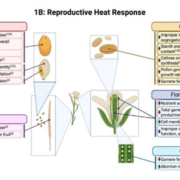
Review: What happens when it gets too hot – the vulnerability of plant reproduction in a warming world
Plant Science Research WeeklyClimate change brings about higher temperatures, threatening plant populations worldwide. Higher temperatures interfere with reproductive processes such as pollen production or fertilization, even if the plant itself can withstand these temperatures. For example, some plants can withstand temperatures…
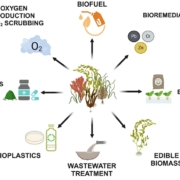
Review. Growing the future in orbit: Applications of macroalgae for food, air, and life support in space
Plant Science Research WeeklyPlants and other photoautotrophs have potential to support astronaut needs, including food production, atmospheric and water recycling, and the generation of pharmaceuticals and biofuels. A recent review by Murphy et al. provides a brief historical overview of microalgae and cyanobacteria research in…
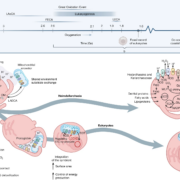
Metagenomic insights into the ancestor of eukaryotes
Plant Science Research WeeklyThe awesome power of metagenomics is providing fascinating insights into the origins of life. Tracing backwards from today’s life forms we can identify features that were likely present in the last universal common ancestor (LUCA), as well as the last eukaryotic common ancestor (LECA), which arose…
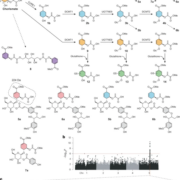
Decoding a multifunctional biosynthetic gene cluster for post-chorismate metabolism in Arabidopsis
Plant Science Research WeeklyBiosynthetic gene clusters (BGCs) are groups of genes physically located in close proximity in a genomic region and can be thought of as a close-knit genomic orchestra. While these BGCs were thought to be rare in plants, unlike bacteria, Peng et al. takes the story a step ahead with the discovery of…
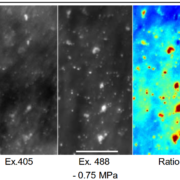
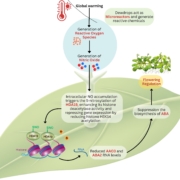
Spatial organization of ROS signaling at the plasma membrane
Plant Science Research WeeklyGenetic studies in Arabidopsis have identified a lot of the participants in signal transduction pathways, but often its less clear precisely where they function. As an example, although it is well known that H2O2 (hydrogen peroxide) production by RBOHs in the apoplast triggers many downstream cellular…
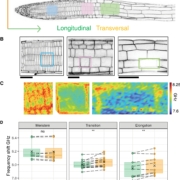
Developmental and stress responses of single root cell mechanical properties
Plant Science Research WeeklyClearly, the mechanical properties of plant cell walls have important implications for growth and development, but they are not necessarily easy to measure, especially in intact, living tissues. Here, Alonso-Baez et al. used Brillouin microscopy and molecular rotors to characterize cell wall properties…
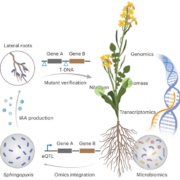
Host transcriptional regulation shapes microbiome-mediated nitrogen uptake
Plant Science Research WeeklyNitrogen is a key nutrient for plant development, and plant nutrient acquisition is highly influenced by the rhizosphere microbiome. However, how host genomic variation and root transcriptional regulation shape microbiome assembly under field conditions remains unclear. Li and colleagues addressed this…
Beyond selfing: floral trait selection and the irreplaceable role of pollinators
Plant Science Research WeeklySelf-pollination in many crop cultivars has been extremely useful for humans. It simplifies propagation, stabilizes traits, and supports reliable fruit production. But for many plant species, selfing comes with biological costs: reduced genetic diversity, inbreeding depression, and potential declines…