Conservatory: Unlocking the regulatory landscape of plant genomes
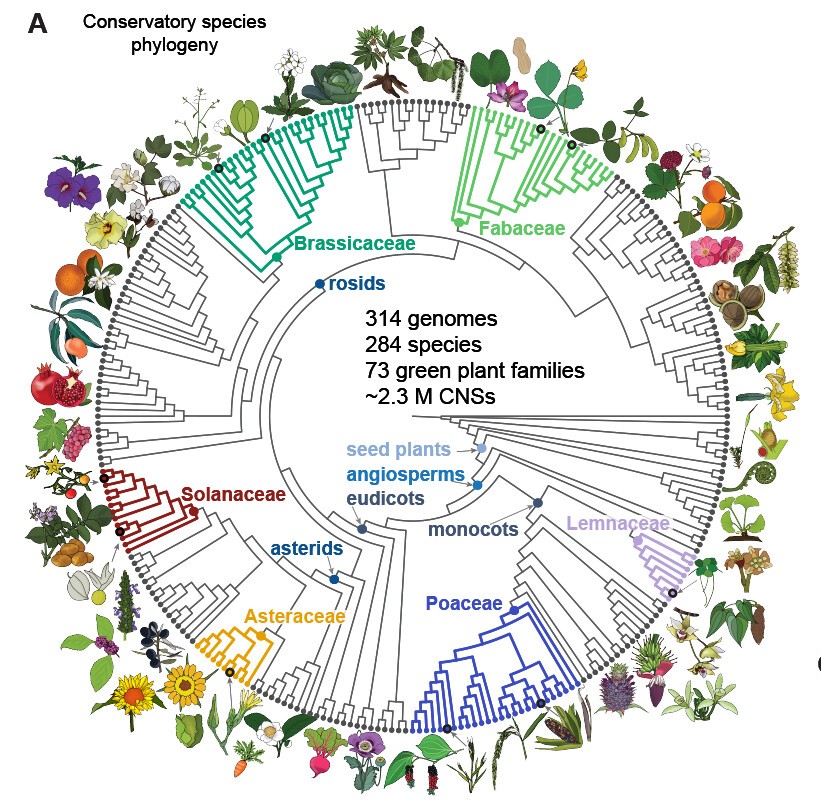
Fig1_v28
Long overshadowed by protein-coding genes, the non-coding genome remains one of the most elusive frontiers in plant biology. Their sequence diversity and limited conservation have made functional annotation particularly challenging. Addressing this gap, Amundson and colleagues introduce “Conservatory”, a powerful and accessible algorithm (www.conservatorycns.com) designed to systematically identify conserved non-coding sequences (CNSs) across diverse plant lineages. Conservatory is built on two key concepts. First, it employs a two-step alignment strategy, within and between taxonomic families, to enhance the sensitivity of ortholog detection. Second, it incorporates multiple reference genomes as “bridge genomes”, effectively reducing reference bias and improving homology inference across evolutionary distances. Applying this framework, the authors uncovered approximately 2.3 million CNSs from 284 plant species, spanning over 300 million years of diversification. Importantly, the functional relevance of these CNSs was validated in tomato. Using CRISPR-Cas9, deletion of proximal promoter regions of SlWOX9 and WOX2, key regulators of embryogenesis, resulted in embryonic lethality, underscoring the critical regulatory roles embedded within non-coding DNA. By enabling large-scale discovery and validation of regulatory elements, Conservatory opens new avenues for decoding genome function and accelerating crop improvement in the era of precision genomics. (Summary by Ching Chan @ntnuchanlab @ntnuchanlab.bsky.social) Science 10.1126/science.adt8983