
Review: Rare variants in crop genomes and how to spot them
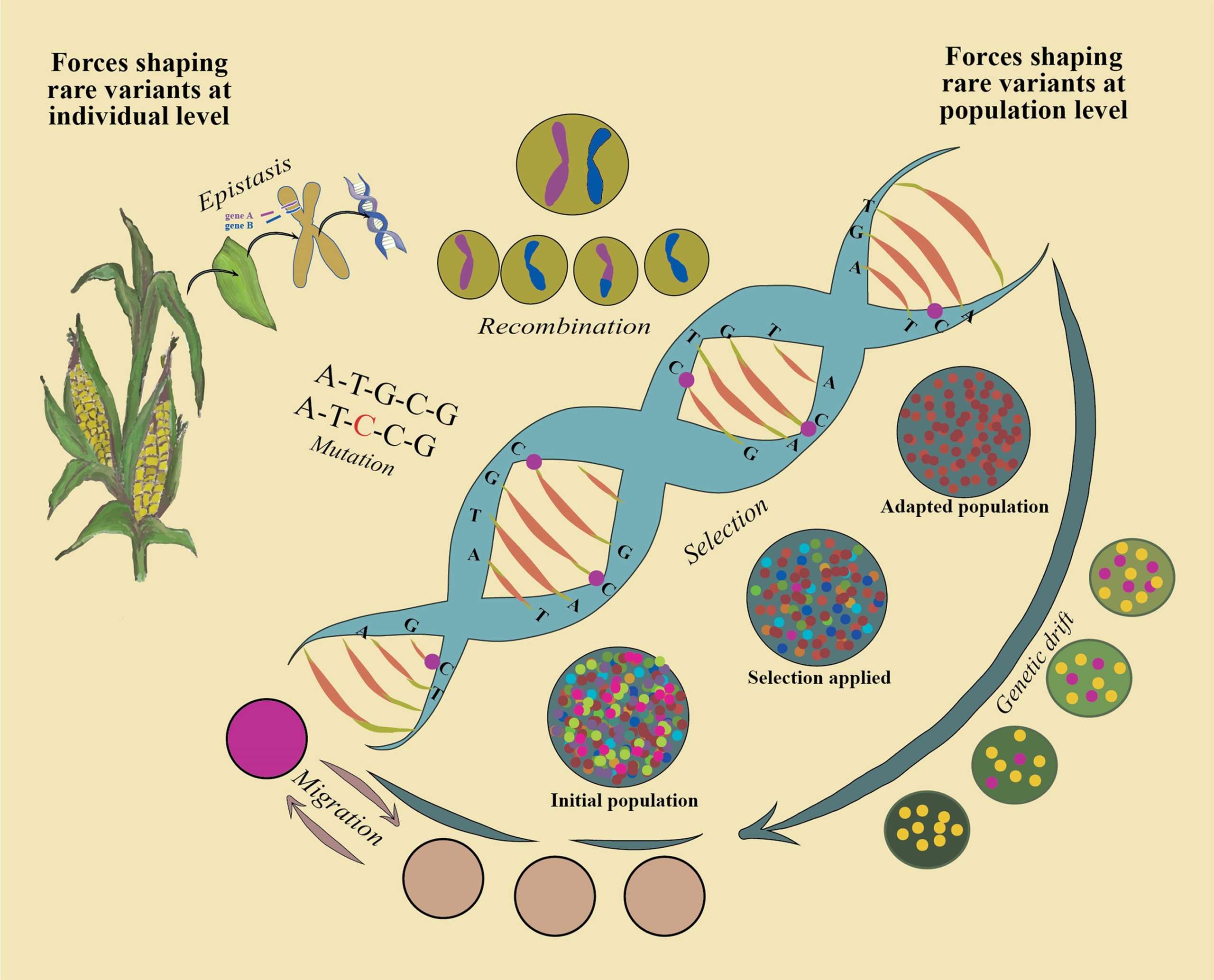 Despite the usefulness of genome-wide association studies (GWAS) for linking DNA variation to agronomic traits, GWAS are focused on detecting common alleles and often fail to detect less-common, rare variants. Rare variants may account for a significant portion of the heritability behind complex traits and could make meaningful contributions to crop resistance and adaptability. In a recent review, Florian and Lipka provide an overview of what rare variants are and ways to identify them. They highlight the fact that studies investigating the impact of genetic variations in human diseases have revealed significant contributions from rare variants. Conventional GWAS frameworks lack the power to discern low-frequency alleles, especially when their effects are context-dependent or distributed across multiple loci. To address the challenges in rare-variants studies, whole-genome sequencing, population genetics, and interpretability of computational models will be required. Some of these approaches have more statistical power like the sequence kernel association test (SKAT), that group rare variants within genomic regions. Machine learning can handle complex interactions to identify more subtle genotype-phenotype patterns. A better understanding of how rare variants affect complex traits could be valuable for breeding more resilient and higher yielding crops. This review is accessible even for non-specialists in that key terms are identified and defined throughout the article. (Summary by Montserrat López-Coria). in silico Plants 10.1093/insilicoplants/diaf012