


Plant Science Research Weekly: April 10, 2026
Review: Plants calcium signaling is both conserved and plant-specific
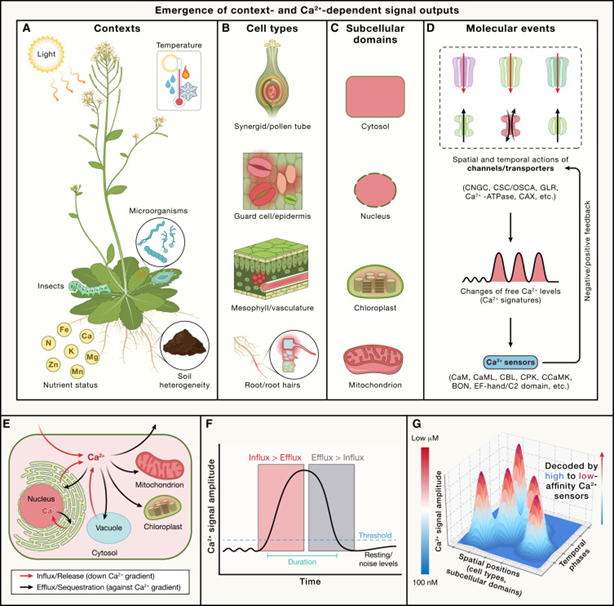 Although calcium ions are universal second messengers, plants employ both conserved and unique strategies to decode Ca²⁺ signals. In a new review in Cell, Sheng Luan reviews the molecular tools used to study calcium signaling in plants and the mechanisms that govern this process. Like other cells, plant cells maintain low internal Ca²⁺ levels (about 100 nM), even though the extracellular concentration is much higher, allowing them to generate signals quickly. When triggered, specific Ca²⁺-permeable channels, such as cyclic nucleotide-gated channels, and glutamate receptor-like proteins (GLRs) open to admit calcium ions, generating distinct “Ca²⁺ signatures” based on the strength, frequency, and location of influx. Efflux transporters such as autoinhibited Ca²⁺-ATPases and cation/H⁺ exchangers end these signals, often regulated by Ca²⁺ sensors. Plants use a wide range of sensors, including calmodulin (CaM), many CaM-like proteins, calcium-dependent protein kinases, and the plant-specific calcineurin B-like protein–CBL-interacting protein kinase network. The review explores the conserved nature of calcium signaling in eukaryotic cells but also covers Ca²⁺ signaling in root growth, pollen tube guidance, responses to stress, nitrate sensing, immunity (where NLR resistosomes act as Ca²⁺ channels), and wounding responses through GLR3.3 and GLR3.6 channels, which are similar to nerve signals in animals. Luan ends by posing ten open questions, such as how to identify thermosensitive channels and how sustained Ca²⁺ increases lead to cell death. Together, this comprehensive review highlights how plants use the universal language of Ca²⁺ into a versatile signaling system tailored to their sessile way of life and it identifies key challenges for future research. (Summary by Jahed Ahmed) Cell 10.1016/j.cell.2025.12.027
Review: How WOXs regulate regeneration in land plants
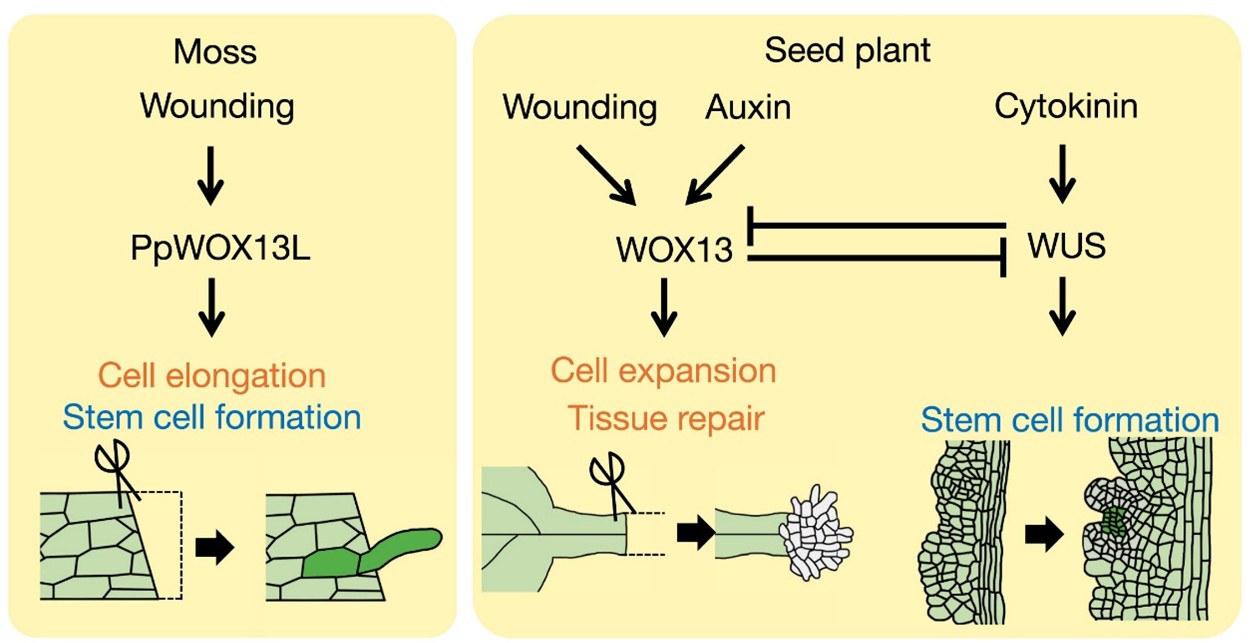 Plants cannot escape a bite from herbivore or being cut by a lawn mower, but they can regrow new leaves or even entire stems after damage. From simple mosses to giant sequoia trees, the process of building a new organ after wounding may be more similar than we previously thought. Key players in this process are the WUSCHEL-RELATED HOMEOBOX (WOX) family of transcription factors. In a recent review, Doll and colleagues discuss both shared and distinct roles of the WOX family in cellular reprogramming and organ regeneration across land plant lineages. WOXs can be divided into ancient (Type 1, T1), intermediate (Type 2, T2), and modern clades (Type 3, T3). Recent phylogenetic studies suggest, however, that the common ancestor of all land plants already contained both ancient and intermediate/modern superclades. Increasing interest in an evo-devo perspective has led to the analysis of WOX function in previously understudied lineages. In Physcomitrium patens, for example, the PpWOX13L gene is involved in reprogramming leaf cells into protonema stem cells. In Selaginella, SmWOX13a may drive regeneration of root tips. However, in contrast to its role in P. patens, WOX13 negatively affects stem cell establishment in Arabidopsis tissue culture, likely due to differences in cell wall regulation and loosening. The authors also emphasize that our understanding of plant regeneration is still based on a limited number of model species, and broader studies across bryophytes, ferns, and lycophytes are needed to fully understand the evolution of regeneration in land plants. (Summary by Katarina Kurtović, @katarinakurtovic.bsky.social) Curr. Opin. Plant Biol. 10.1016/j.pbi.2026.102882
Unveiling PlantScience.ai: A niche LLM to power your plant science research
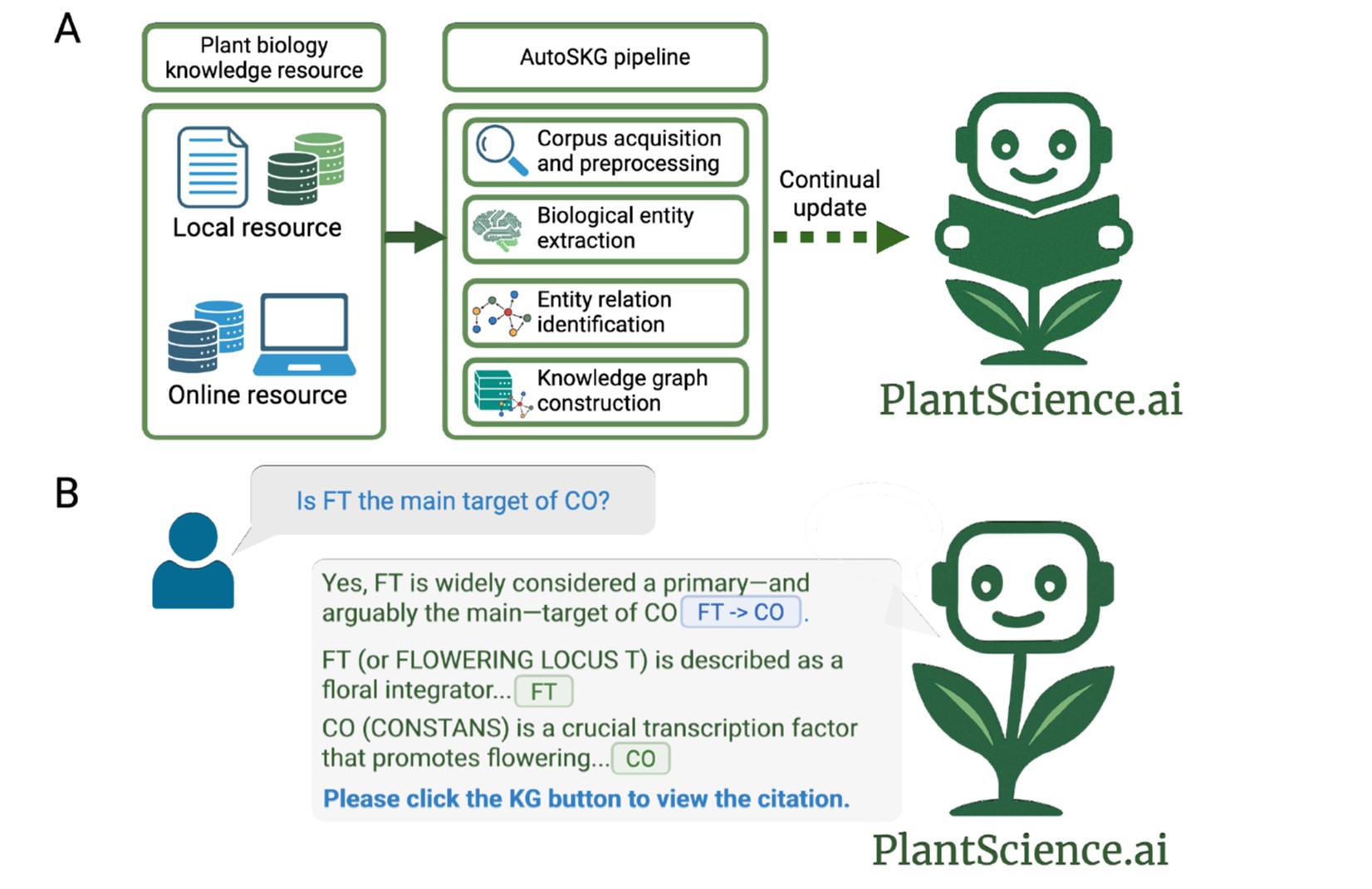 You ask a plant science specific question to a general-purpose large language model (LLM) and it puts out vague answers. Sometimes you wonder if the answer is valid or if the LLM is pulling you into a hallucination trap! Does this sound familiar? To tackle this problem, PlantScience.ai, a virtual scientist for plant sciences, has been rolled out recently as a domain-specific LLM for plant sciences. It provides the much-needed source credibility by providing citations from which the information was retrieved. Built using an automated scientific knowledge graph (AutoSKG) construction approach, this AI assistant adopts a dynamic learning approach. It continuously integrates latest research findings into the existing knowledge database by programmatically querying open access Application Programming Interfaces (APIs) and processes only CC-BY licensed publications. The performance of the AI assistant was assessed by domain specific human experts as well as another LLM on the grounds of factual accuracy, relevance and comprehensiveness, and it proved to perform relatively well compared to the general-purpose LLMs like Gemini, and Opus. Further, with the rapid developments in the AI era, the line between ease of information access and data privacy is becoming negligible. PlantScience.ai uses a client-side storage of all chat history to uphold the data privacy and security aspects, allowing its use in one’s own unpublished or sensitive research projects. After passing a yearlong set of tests by plant scientists at the John Innes Centre, and the Sainsbury Laboratory, PlantScience.ai is now available for use at https://plantscience.ai. Moreover, the AutoSKG pipeline can be used to construct knowledge graphs from one’s own unpublished work or protected data and the source code for it can be accessed at https://github.com/COLA-Laboratory/autoSKG Thus, this work can serve as a reference point to create such domain-specific LLMs for other niche fields grappling with a large amount of information overflow. (Summary by Shakunthala Natarajan @shakunthalan.bsky.social) Molecular Plant. 10.1016/j.molp.2026.03.010
Close, but not random: how plant receptors find their partners
 Nanodomains, also known as lipid rafts, temporarily group proteins within the plasma membrane, to efficiently perform cellular processes such as extracellular sensing. This study examines the unclear association dynamic of a very important plant plasma membrane receptor family, the Leucine-Rich Repeat Receptor Kinases (LRR-RKs), known for their critical functions in development, immunity, and reproduction. Using advanced fluorescence microscopy techniques and a variant of single-particle localization microscopy (spt-PALM), the authors studied a minimal LRR-RKs response network, composed of two ligand binding receptors; FLS2 that binds flagellin (a protein of the bacterial flagella) and the BRI1 receptor, that binds the plant hormone brassinosteroid; their common co-receptor BAK1, and their accessory receptor BIR3, which regulates the association between FLS2, BRI1, and BAK1. Unlike animal protein association dynamics, the two ligand-receptors, FSL2 and BRI1, are pre-organized into well-defined nanodomains; meanwhile, BAK1 has a diffuse distribution. However, the accessory receptor BIR3 maintains an available pool of BAK1 near FSL2 and BRI1, allowing the triggering of cellular response. This study thus provides visual evidence for receptor dynamics during the formation of ligand-induced complexes, which arise from the relative spatial positioning of their components rather than from random protein encounters within plasma nanodomains. (Summary by Montserrat López-Coria). bioRxiv https://doi.org/10.64898/2026.03.05.709869
Floral indeterminacy is mediated by a negative feedback loop
 Scientists have been curious as to how the shoot meristem maintains two adjacent cell populations that respond oppositely to the same systemic flowering signal. In this study by Huang et al., the authors reveal that LEAFY (LFY) transcription factor directly binds to the DNA of TERMINAL FLOWER1 (TFL1) and regulates its expression. Using mutant studies and complementation, the authors reiterate that LFY promotes determinate branching, with lfy mutants losing the determinacy of flowers; by contrast,TFL1 maintains indeterminacy at the inflorescence meristem such that tfl1 mutants exhibit determinate shoots. Through fluorescence in situ hybridization, the authors confirm that seasonal cues trigger florigen (FT) production and LFY up-regulation in the central region of all shoot meristems. Interestingly, they observe that within the inflorescence meristem, LFY forms a negative feedback loop with TFL1. The authors demonstrate that this loop buffers LFY levels to preserve the indeterminate growth in the inflorescence meristem. They also show that lateral meristems lack this buffering mechanism, causing determinacy. Using computational simulation modeling, the authors indicate that in these side branches, LFY prompts a fate switch, shifting the plant to producing flowers by triggering various floral genes, contradicting its buffering role that promotes indeterminacy in the inflorescence meristem. The authors also predict the likelihood of additional factor (s) that act directly or indirectly upon LFY. The authors conclude that at onset of strong flowering cue, shoot indeterminacy functions as a context-specific response thereby driving the shoot tip to grow indefinitely while the side branches produce flowers. (Summary by Sonal Sachdev sci3ntyst , sci3ntyst.bsky.social) Science 10.1126/science.adv5429
Stress accelerates aging! (In leaves)
 When I’ve had a stressful week I feel like I’ve aged 10 years. Luckily I bounce back after a bit of rest. By contrast, a new paper by Swift et al. shows that, in plants at least, stress accelerates aging at the transcriptional level. First, they did single-cell transcriptional profiling of leaves of different ages from the same-aged plants over the course of several days to establish an age-based fingerprint. Younger leaves expressed genes associated with cell division and growth (e.g., cyclins and wall-loosening enzymes), whereas older leaves expressed genes associated with senescence, such as KMD1 (a repressor of cyclin signaling). Next, they repeated the experiment on drought-stressed plants from which water was withheld. Interestingly, drought-stress caused aging-associated genes to be expressed earlier, which led to the leaf sizes being smaller. The authors similarly looked at a dose-response to drought intensity using a gradient of hard agar, and identified several genes positively responsive to aging and drought intensity, as well as negatively associated with plant size.They also identified a ferric chelate reductase, FRO6, that is positively correlated with aging but negatively correlated with drought stress. When they expressed this gene from a drought-insensitive promoter, the higher expression levels during drought were correlated with increased leaf area in the drought-stressed plants. This intriguing observation could lead to strategies to maintain plant growth and potentially yield during periods of drought. (Summary by Mary Williams @PlantTeaching.bsky.social) Nature Plants 10.1038/s41477-026-02254-3
Can plants adapt quickly enough to keep up with climate change?
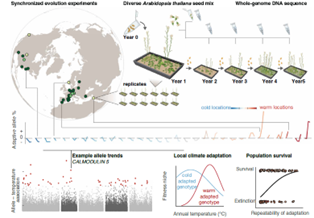 In a new article by Wu et al., a large team of collaborators led by the Moi lab addressed this question by doing a huge outdoor evolution experiment at 30 places with different climates. The authors achieved real-time adaptation under natural conditions by sowing a mixture of 231 Arabidopsis thaliana accessions and tracking genomic changes over five years. Long-term evolution experiments, like those led by Richard Lenski, have given us important information about microbes. However, it has been very hard to do similar studies on multicellular organisms in real-world settings. This study addresses partially that gap, demonstrating rapid and repeatable allele frequency shifts that point to natural selection rather than genetic drift. Evolutionary trajectories were similar under comparable climatic conditions, but differed in very distinct climates, showing how local adaptation works. Accessions from matching climates became more common, with temperature being a major factor in selection. However, an ‘adaptation lag’ suggests that populations may not yet be prepared for current conditions. Although populations adapted rapidly, this was often insufficient to prevent extinction in the warmest environments. This highlights eco-evolutionary tipping points at which natural selection is stronger than the capacity for adaptation. This study demonstrates that although plants can evolve rapidly, their ability to adapt is clearly limited in the context of climate change. (Summary by Adrian Gonzalez Ortega‑Villaizan @adrigov98 @adrigov.bsky.social) Science 10.1126/science.adz0777.
Peptide-driven changes in rice roots shift microbial metabolism and reduce methane emissions
Waterlogged paddy soils create anaerobic environments that support the growth of methanogenic archaea, contributing 7-17% of global methane (CH4) emissions. Prior work has shown that rice varieties with more extensive root aerenchyma can better oxygenate the surrounding soil, thereby reducing CH4 emissions. Additionally, peptides such as PLANT PEPTIDES CONTAINING SULFATED TYROSINE (PSY) have been shown to influence root growth in Arabidopsis thaliana and affect the production of root exudates that could serve as substrates for CH4 production. Here, Shi and coauthors tested if overexpressing rice OsPSY1 (oxOsPSY1) and OsPSY2 (oxOsPSY2) could modulate root architecture, rhizosphere microbial activity, and CH4 cycling. They found that oxOsPSY1 and oxOsPSY2 lines developed longer seminal roots and enhanced aerenchyma formation. Compared to Kitaake control, these genotypes released ~38% and ~58% less cumulative CH4 over a 10-week growth period. Although the overall microbial community structure in oxOsPSY1 remained largely unchanged, transcriptional activities were notably altered: CH4-producing genes were less active, H2-consuming hydrogenases were upregulated, and H2-producing hydrogenases were downregulated. Metabolomic analysis and metabolic modeling further supported these observations, predicting higher H2 consumption and lower H2 production in the oxOsPSY1 rhizosphere. Taken together, this study reveals a plant peptide-driven strategy to mitigate rice paddy methane emissions by restructuring microbial H2 metabolism in the rhizosphere. (Summary by Aditi Bhat @jumpy_botanist) Nature Comms 10.1038/s41467-026-68640-9
Jasmonate signalling drives rapid local and systemic immunity establishment
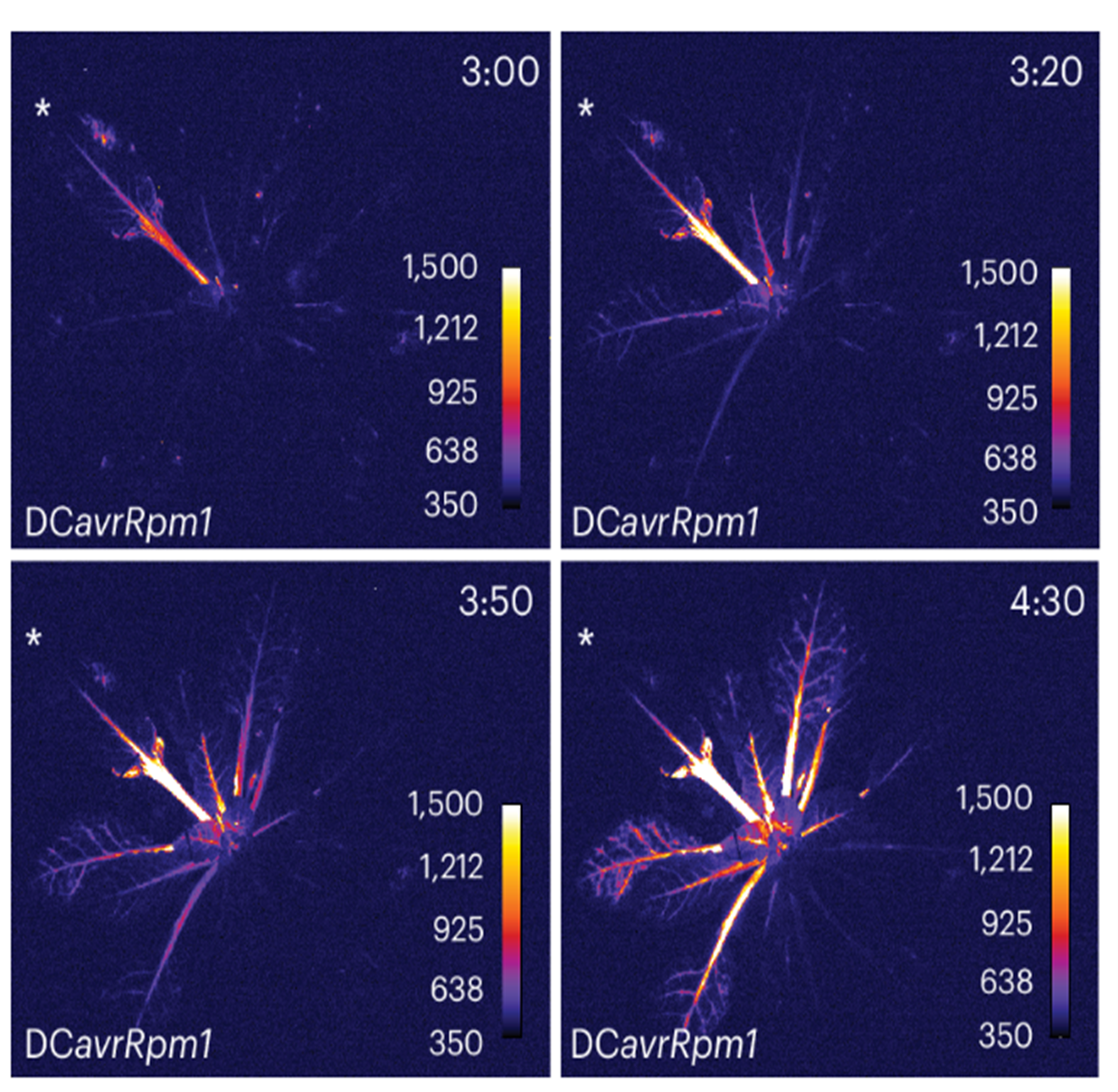 Systemic acquired resistance (SAR) provides plants with broad protection against many pathogens, but until recently, it was unclear how SAR signals are produced, transported, and expressed in distant tissues. In a new study in Nature Plants, Gaikwad and colleagues created a reporter construct that tracks these processes in real time. Following inoculation of leaves with Pseudomonas syringae expressing avrRpm1 to trigger effector-triggered immunity (ETI), JASMONATE-INDUCED SYSTEMIC SIGNAL 1 (JISS1), a protein in the endoplasmic reticulum with an unknown function, is activated quickly. Using a JISS1::LUC reporter, luciferase activity appeared in the petiole of locally treated leaves within 3 hours and spread to nearby leaves within 30 minutes, well before any visible cell death. Surprisingly, this fast signaling did not depend on the usual SAR components (SID2, NPR1, FMO1) or known SAR triggers. Instead, it relied on jasmonate production and sensing. Blocking JA-Ile synthesis with chemicals abolished or markedly attenuated DCavrRpm1-elicited JISS1::LUC activity in both local and systemic leaves, mirroring the phenotype observed in jasmonate biosynthesis (aos) and signaling (coi1-16) mutants. The researchers also found that ETI initiates jasmonate-dependent systemic surface electrical potentials that require both glutamate receptors and JISS1. However, neither glr mutants nor jiss1 loss-of-function lines lost SAR to Pseudomonas syringae, indicating that while these electrical potentials correlate with SAR signaling, they are not essential for establishing systemic resistance against this bacterial pathogen. Calcium signaling was also necessary, as the calcium inhibitor LaCl₃ completely inhibited reporter activity. This study challenges the idea that jasmonates undermine biotrophic immunity and instead shows that they are crucial for rapid SAR, offering new ways to study long-distance immune signaling. (Summary by Jahed Ahmed) Nature Plants 10.1038/s41477-025-02178-4
Benzoxazinoids (BXs) modulate soil microbiota to promote foliar disease resistance
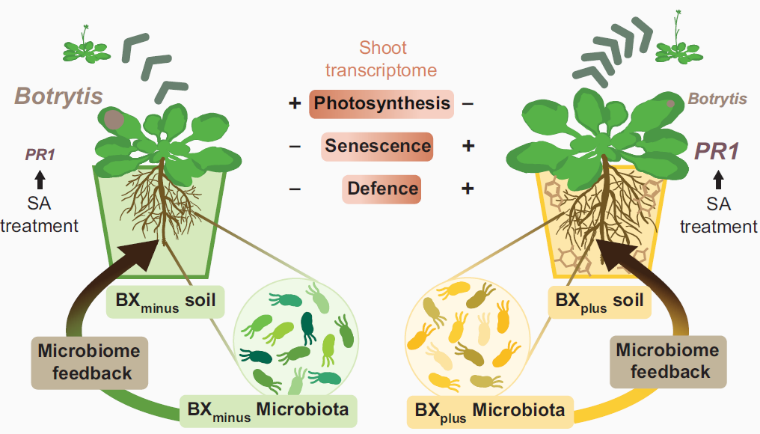 Plant roots exude organic compounds such as benzoxazinoids (BXs) to the surrounding soil. BXs modulate soil microbiota, which in turn regulate plant growth. In this study, Stengele et al. show that BX-modulated soil microbiota also promote plant immunity. The authors first pretreated soil with BXs by growing BX-secreting maize. They then used this BX-pretreated soil to grow Arabidopsis. The BX-conditioned soil showed altered root microbiota and promoted foliar disease resistance of the Arabidopsis plants. Transcriptome profiling revealed that plants grown in the BX-conditioned soil exhibited elevated expressions of defense marker genes in the shoots even without pathogen attack. Furthermore, these plants were more responsive to the defense hormone salicylic acid (SA). To test whether the enhanced disease resistance was directed by BX, the authors exposed Arabidopsis roots to BX. However, this treatment alone did not promote disease resistance, suggesting that the effect is mediated by changes in the soil microbiota. Taken together, the study concluded that BXs reshape soil microbiota which exerts an SA-dependent priming effect to promote plant immunity. This study by Stengele et al. advances our understanding of long-distance signalling and priming effect, highlighting the application potential of crop rotation to promote plant health. (Summary by Yee-Shan Ku @Yee-Shan Ku) New Phytologist 10.1111/nph.71098

