
Dewdrops act as microreactors that influence flowering time
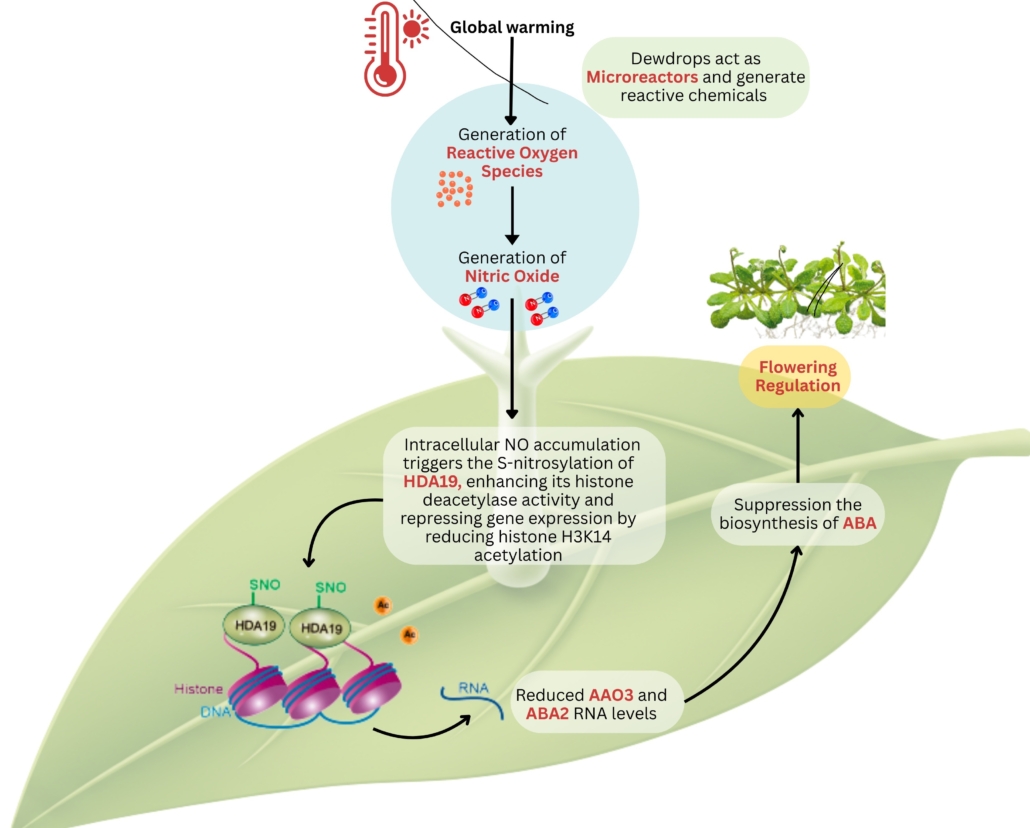
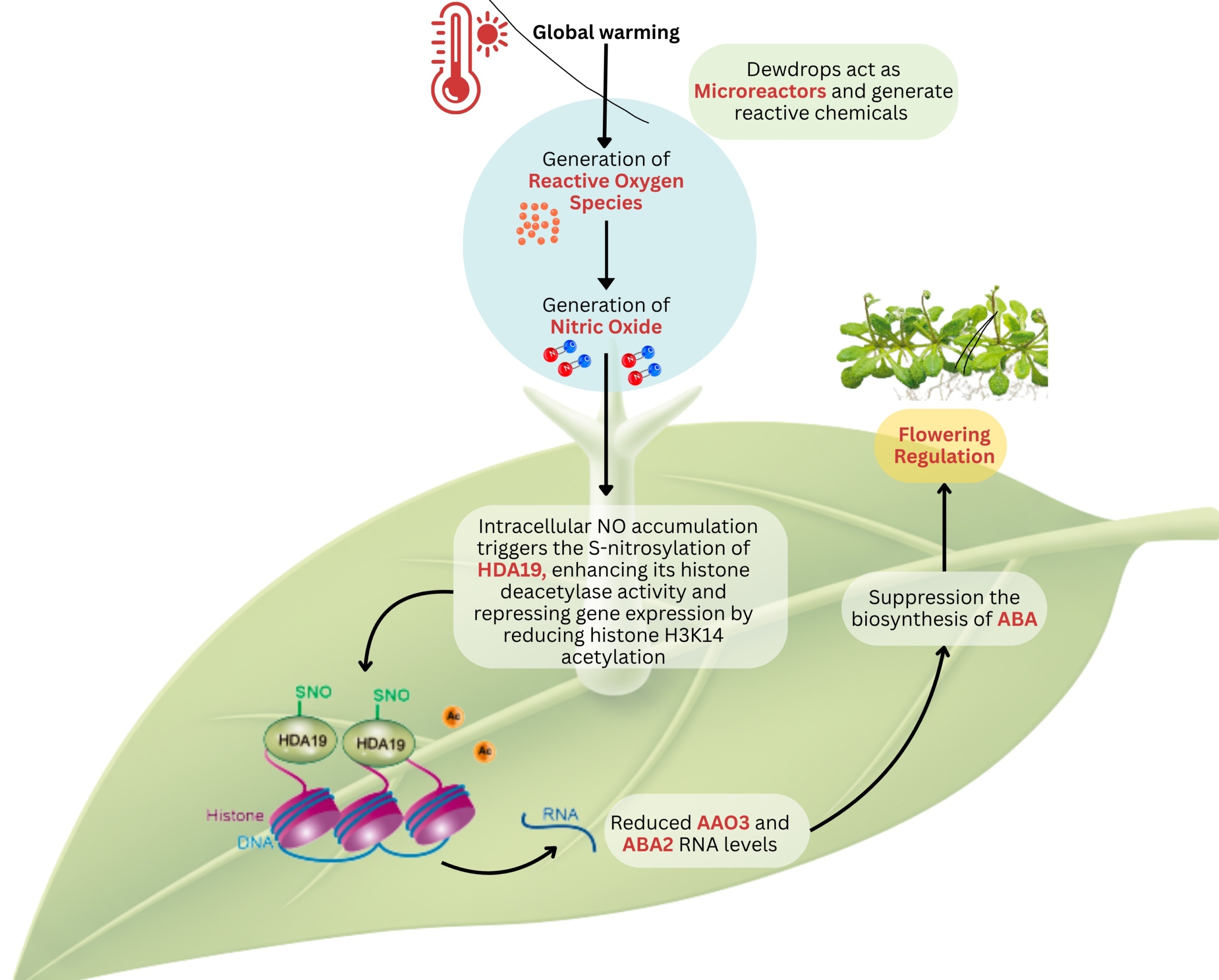 We don’t often consider tiny dewdrops as having much influence on plant physiology, but a new study by Zheng et. al. reveals that these delicate dewdrops are active microreactors that can influence when plants flower. Working with Arabidopsis thaliana, researchers discovered that microscopic dewdroplets forming on leaf surfaces act like miniature reactors. Within them, reactive oxygen species (ROS) are generated, which then trigger the production of nitric oxide (NO), a key signaling molecule. NO modifies the histone deacetylase HDA19, enhancing its activity and leading to the suppression of genes (AAO3 & ABA2) involved in abscisic acid (ABA) production. As ABA levels drop, the plant transitions more quickly to flowering. In essence, a simple drop of dew helps tip the balance toward reproduction. What makes this finding even more compelling is its global relevance. Analysis of millions of flowering records across Brassicaceae species shows a strong link between dew conditions and flowering time. Given the broad-scale changes caused by climate change, including effects on atmospheric moisture dynamics, these findings have important implications for plant productivity. (Summary by Sonia Balyan) PNAS 10.1073/pnas.2527021123