
Photosynthesis reinvented: Introducing the McG Cycle for boosting plant growth and yield
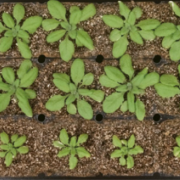
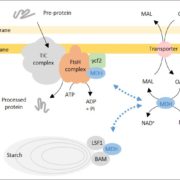
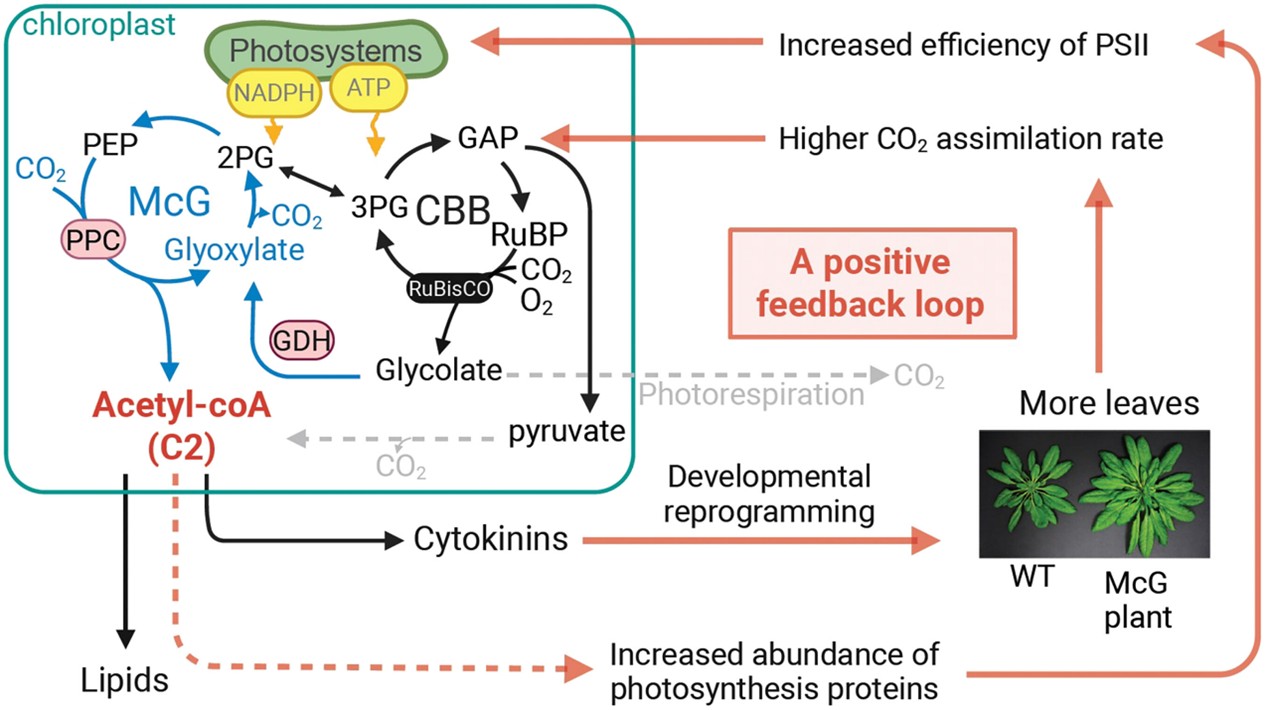 Photosynthesis is nature’s most powerful carbon capture system, fueling life on Earth and inspiring new strategies for sustainable agriculture. In plants, The Calvin–Benson–Bassham cycle generates C3 carbohydrates but is inefficient at producing the two-carbon acetyl–coenzyme A (CoA), which is the universal precursor for synthesizing lipids. The decarboxylation of pyruvate releases carbon, limiting the overall efficiency of carbon fixation. Interestingly, microbes have evolved alternative solutions. The McG cycle discovered in cyanobacteria uses phosphoenolpyruvate carboxylase to synthesize two acetyl-CoA molecules from one 3-phosphoglycerate and bicarbonate, not only avoiding carbon loss but actually increasing fixed carbon by one-third. Remarkably, it can also recycle RuBisCO’s oxygenase byproduct glycolate, transforming a wasteful liability into a valuable resource. Lu and colleagues successfully transplanted a synthetic McG cycle into Arabidopsis chloroplasts, combining six heterologous and four native enzymes. The results were extraordinary: higher photosynthetic efficiency, doubled CO₂ fixation, enhanced lipid biosynthesis, vigorous growth, and even a threefold increase in seed yield. This leap in metabolic engineering shows how reimagining nature’s blueprints can supercharge plant productivity. Beyond boosting harvests, such innovations may help plants serve as more effective carbon sinks, bridging agriculture and climate solutions in one bold step. (Summary by Ching Chan @ntnuchanlab) Science 10.1126/science.adp3