
Bluer than blue: Reduced stomatal density changes red and blue light responses in wheat
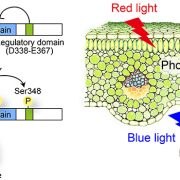
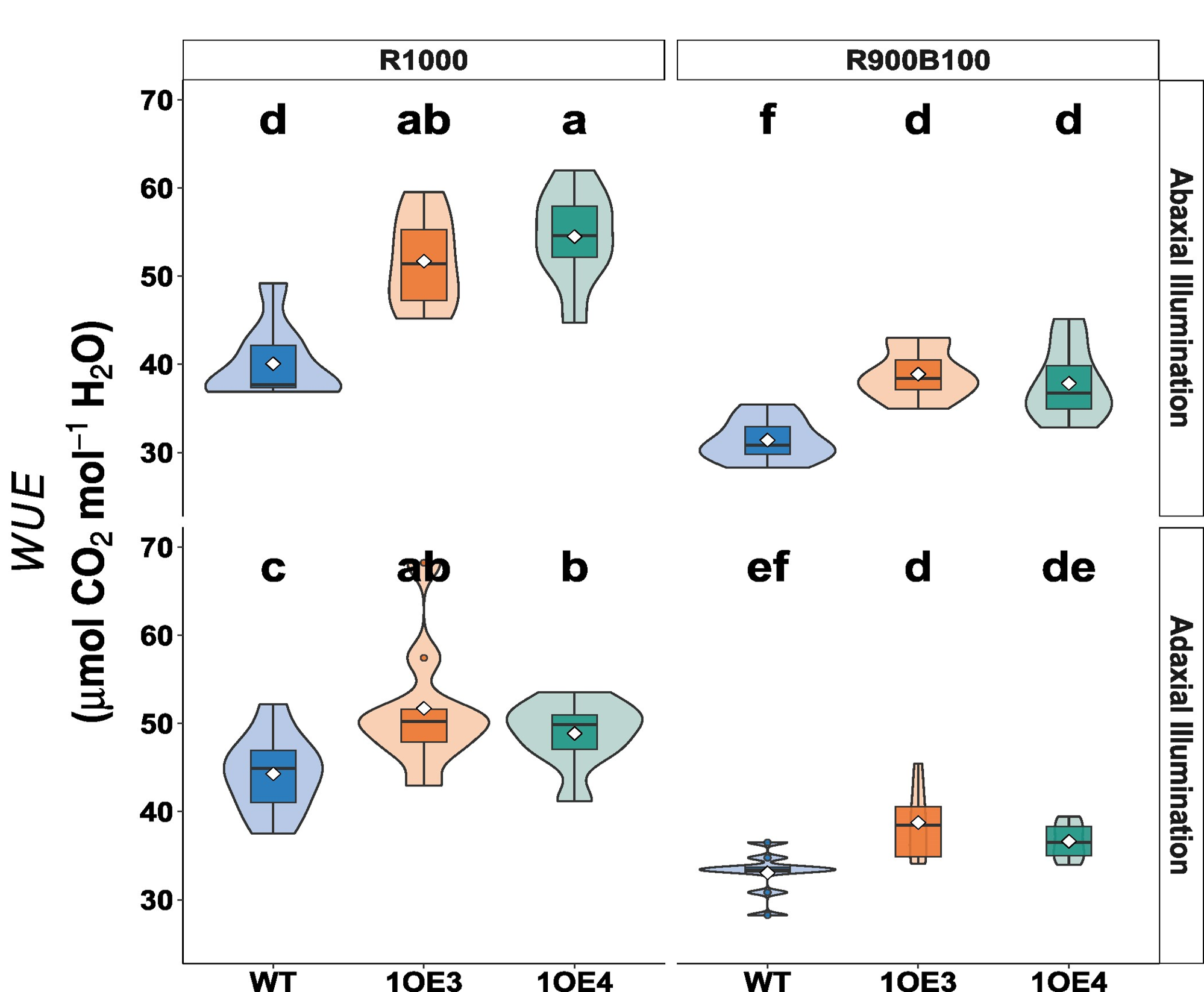 Stomata play an important role in balancing the amount of CO2 that goes in the plant for photosynthesis and the amount of water that goes out of the plant through transpiration. Stomatal density (SD) in plants has been studied with the goal of improving water-use efficiency (WUE) without sacrificing photosynthetic capacity. Fan et al. studied the effects of overexpressing Epidermal Patterning Factor 1 (EPF1) in wheat using a combination of dynamic gas exchange, anatomical measurements and molecular analyses. Results showed that SD was reduced in transgenic lines. In addition, the reduction in SD contributed to decrease in both photosynthetic rates (A) and stomatal conductance (gsw) in plants overexpressing EPF1 compared to the wildtype, particularly when there is high intensity of red light (R1000). However, upon addition of 10% blue light (R900B100), the transgenic plants showed a significantly high gsw but without a comparable change in A. Analysis of stomatal opening also showed that while the speed of stomatal opening is the same for both wildtype and transgenic plants, the reduced number of stomata and the lower aperture under red light results in lower gsw but increased sensitivity to blue light helps in maintaining photosynthetic rates. Overall, this study was able to show that reduction of SD in wheat results in reduction in A but with an accompanying increased sensitivity to blue light to compensate for the fewer stomata. This builds a foundation on stomatal density modifications that could lead to more water-use efficient crops in the future. (Summary by Mae Mercado) Plant Physiol. 10.1093/plphys/kiaf379