
Lessons from 138 bryophyte genomes
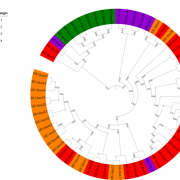
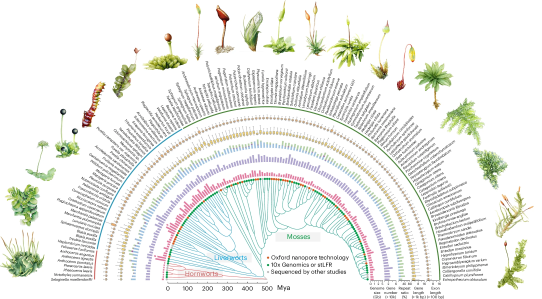 Pangenomes are amazing resources that provide glimpses into evolution that no single genome can capture. This new article by Dong et al. is a treat, as it describes the findings from a compilation of 138 bryophyte genomes, of which 123 are newly sequenced. Bryophytes are non-vascular plants (mosses, liverworts, and hornworts) and a monophyletic sister clade to tracheophytes. Unlike tracheophytes, bryophytes’ dominant life form is the haploid, gametophyte state. The authors found that although bryophytes on average contain fewer genes, they hold a greater diversity of gene families, including many previously undescribed genes and de novo genes, likely to have evolved from previously non-coding regions. Additionally, bryophyte genomes contain a lot of genes with origins in prokaryotes, viruses, fungi or animals, likely products of horizontal gene transfer. The authors propose that this expanded gene space in bryophytes likely contributed to their resilience across biomes and their “enduring presence on land over the past 500 million years”. (Summary by Mary Williams @PlantTeaching.bsyk.social) Nature Genetics 10.1038/s41588-025-02325-9