

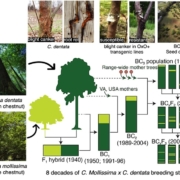
Genomic studies offer new hope for restoring the dwindling American chestnut
Plant Science Research WeeklyDeadly blight caused by the fungal pathogen (Cryphonectria parasitica) and root rot caused by an oomycete pathogen have pushed the American chestnuts toward extinction. In this study by Westbrook et al., the authors highlight the ongoing restoration strategies aiming to return the previously dominant…

Review: More is better, the importance of plasmodesmata in C4 photosynthesis
Plant Science Research WeeklyPlant (and many algal) cells facilitate cell-to-cell movement through specialized regulated pores called plasmodesmata that connect neighboring cells, and there is a rich literature in how plasmodesmata regulate intercellular movement for example by sealing closed following pathogen or viral infection.…
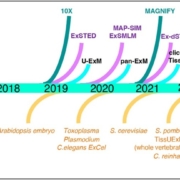
Review. Overcoming the scale barrier: expansion microscopy for nanoscale imaging in plants
Plant Science Research WeeklyMany biological questions, from tissue-level patterning to subcellular organization, demand 3D imaging with spatial resolution beyond the limits of conventional light microscopy, or even super-resolution microscopy. Expansion microscopy (ExM) offers an elegant solution by physically enlarging biological…
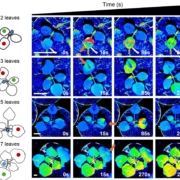
Macro Plant Projection Imaging (MAPPI): An open, scalable platform for whole-plant fluorescence real-time imaging
Plant Science Research WeeklyThe bid to understand long distance Ca2+ signaling patterns in co-ordinating whole-plant responses to systemic or induced defense have been scarce in soil-grown plants mainly due to limitations of conventional microscopy. Macro Plant Projection Imaging (MAPPI), a real-time, low-cost, dual-view fluorescence…
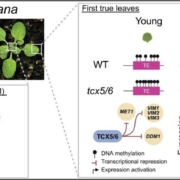
Every leaf has its own timeline: Advances in plant aging
Plant Science Research WeeklyIn humans and several mammals, the alterations in DNA methylation are a critical aging biomarker also known as the ‘Epigenetic Clock’. In this study by Dai et al., the authors examined the process of DNA demethylation in Arabidopsis plants to identify if this molecular marker of aging functions similarly…
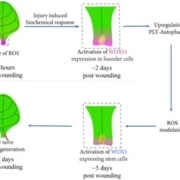
PLETHORA-autophagy fine tunes ROS to enable de novo root regeneration
Plant Science Research WeeklyAutophagy (or “self-eating”) is a conserved quality-check pathway that degrades and recycles damaged components of the cell to restore cellular homeostasis. In plants, autophagy has been studied during wound responses, but it is less clear how it particpates in de novo organ regeneration. In a recent…
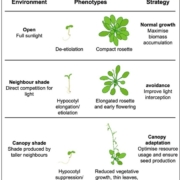
Sensing the neighbors: Phytochrome A fine-tunes plant adaptation to light
Plant Science Research WeeklyPlants constantly compete for light, and the threat of shading by neighbors has been a powerful driving force for the adaptive plasticity during evolution. Changes in both light quantity and quality, most notably a reduced ratio of red to far-red wavelengths (low R:FR), serve as early warning signals…
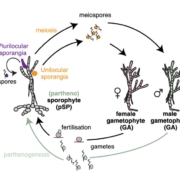
One ARGONAUTE protein governs sexual reproduction in brown algae
Plant Science Research WeeklyAcross multicellular eukaryotes, ARGONAUTE (AGO) proteins are the core of RNA silencing, steering development, defense, and stress responses by biding small RNA guides to seek out genes for repression. In plants and animals, these functions are distributed across multiple AGO homologs that support a…
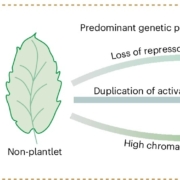
The secret toolkit of Mother of Thousands
Plant Science Research WeeklyKalenchoe plants, sometimes called “Mother of Thousands” are instantly recognizable by the abundance of little plantlets that form on their leaf margins. Kalenchoe daigremontiana is probably the most recognizable species, in which plantlet formation is constitutive, but other species in this genus…