Review: More is better, the importance of plasmodesmata in C4 photosynthesis
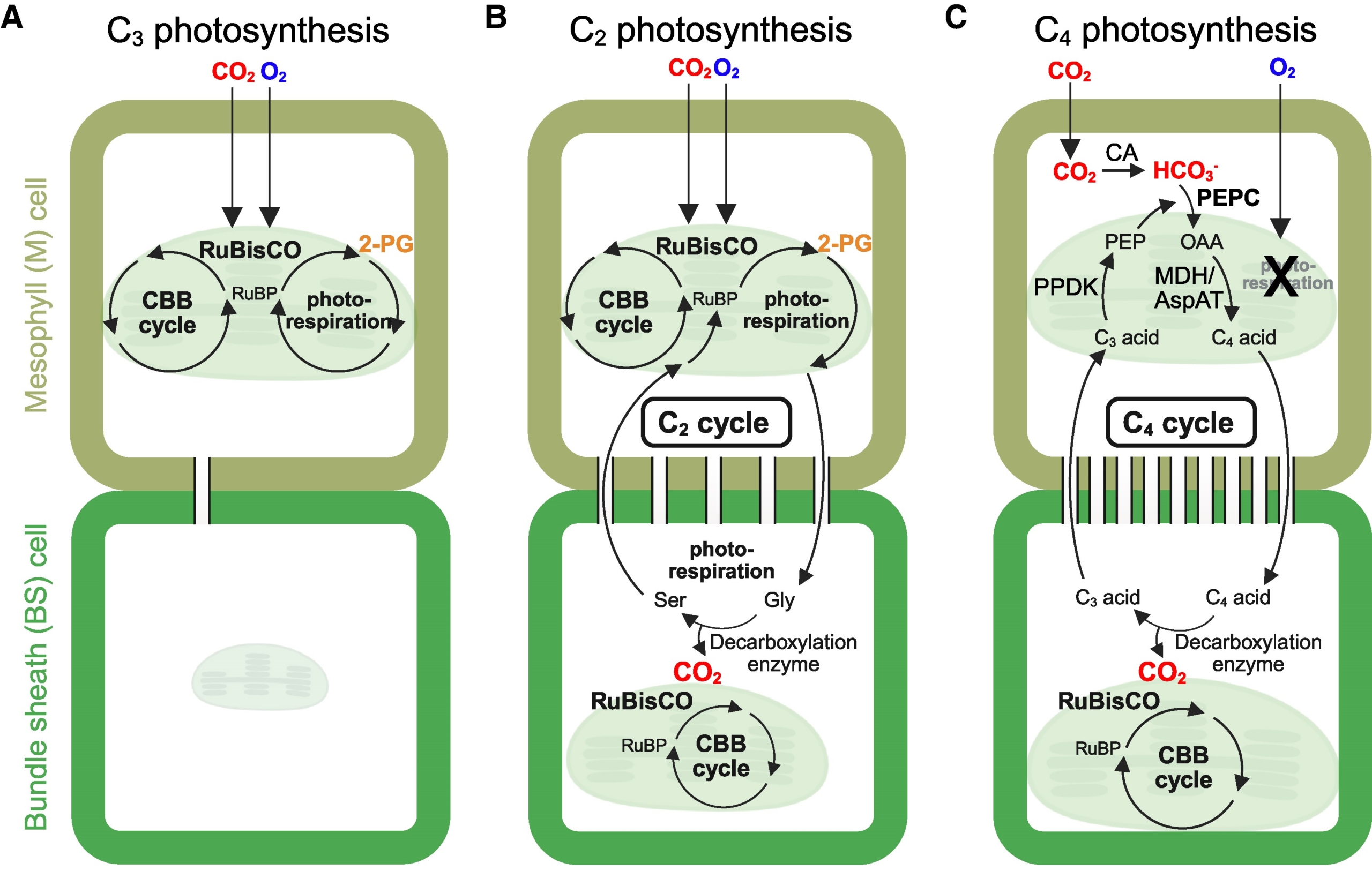 Plant (and many algal) cells facilitate cell-to-cell movement through specialized regulated pores called plasmodesmata that connect neighboring cells, and there is a rich literature in how plasmodesmata regulate intercellular movement for example by sealing closed following pathogen or viral infection. This new review by Schreier et al. focuses on the unique roles of plasmodesmata in mediating two-cell C4 photosynthesis, in which metabolites must move between the mesophyll and bundle-sheath cells. The authors note that the number of plasmodesmata bridging the mesophyll and bundle-sheath cells in C4 plants is roughly 10 fold higher than between other cell types. Plasmodesmatal abundance as well as morphology and function are sensitive to environmental factors as well as signals coming from chloroplasts, with many contributing genes identified and reviewed here. The authors then discuss the promise and challenges of engineering C4 photosynthesis in rice, and discuss a proposed synthetic biology pathway to engineer the enhanced plasmodesmatal abundance required for the two-cell C4 pathway to succeed in rice. (Summary by Mary Williams @PlantTeaching.bsky.social) J. Exp. Bot 10.1093/jxb/eraf497