

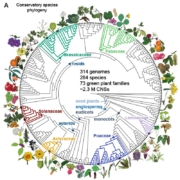
Conservatory: Unlocking the regulatory landscape of plant genomes
Plant Science Research Weekly
Long overshadowed by protein-coding genes, the non-coding genome remains one of the most elusive frontiers in plant biology. Their sequence diversity and limited conservation have made functional annotation particularly challenging. Addressing this gap, Amundson and colleagues introduce “Conservatory”,…
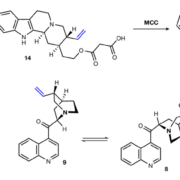
Quinine, deconstructed ✅
Plant Science Research WeeklyFor more than two centuries, quinine from Cinchona bark has stood as one of the best-known plant-derived medicines for malaria treatment, but the enzymes that build its distinctive scaffold were unknown. Lombe et al. have now resolved the core logic of cinchona alkaloid biosynthesis in Cinchona pubescens,…
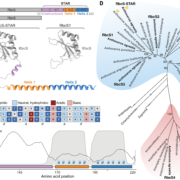
Toward improved CO₂ fixation: A hornwort-derived RbcS motif enables formation of Rubisco condensates
Plant Science Research WeeklyEnhancing photosynthetic CO₂ fixation to increase crop yields is a major focus in plant biotechnology. Notably, several algal species form pyrenoids, phase-separated organelles that boost the activity of the CO₂-fixing enzyme Rubisco by supplying it with concentrated CO₂, thereby making carboxylation…
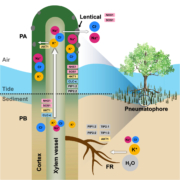
Mangrove pneumatophore roots engage in salt extrusion
Plant Science Research WeeklyMangroves are salt-adapted trees that provide critical habitats for many organisms and stabilize shorelines. They also have several strategies for dealing with the hostile coastal environment that is high in salt and, for the submerged root system, low in oxygen. Pneumatophores are upward-growing components…
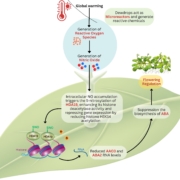
Dewdrops act as microreactors that influence flowering time
Plant Science Research WeeklyWe don’t often consider tiny dewdrops as having much influence on plant physiology, but a new study by Zheng et. al. reveals that these delicate dewdrops are active microreactors that can influence when plants flower. Working with Arabidopsis thaliana, researchers discovered that microscopic dewdroplets…
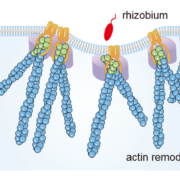
Conserved symbiont-induced actin reorganization in legumes and non-legumes
Plant Science Research WeeklyRhizobial symbiosis requires communication and recognition between the plant host and the nitrogen-fixing bacteria. When successful, plant root hairs reorganize their membranes and form specialized infection threads through which the rhizobia enter the root and initiate nodules. In new work, Qiao et…
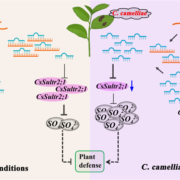
Network analysis of competing endogenous RNA (ceRNA) in tea plant upon fungal infection
Plant Science Research WeeklyTea plants (Camellia sinenesis) are usually cultivated in warm and humid regions where fungal infections are favoured. Foliar diseases directly affect the quality of the leaves that are used for tea production. Colletotrichum camelliae is a common fungal pathogen infecting tea plants. Previous studies…
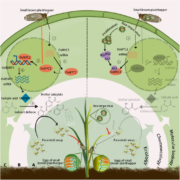
Rice viruses hijack plant volatiles to shield insect vectors from natural enemies
Plant Science Research WeeklyVector-borne viruses such as rice stripe virus (RSV) are transmitted from plant to plant by insects such as planthoppers. Plants under attack often emit volatile compounds such as methyl salicylate (MeSA) that attract parasitoid wasps that destroy the eggs of the virus-transmitting insects. In a recent…
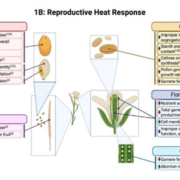
Review: What happens when it gets too hot – the vulnerability of plant reproduction in a warming world
Plant Science Research WeeklyClimate change brings about higher temperatures, threatening plant populations worldwide. Higher temperatures interfere with reproductive processes such as pollen production or fertilization, even if the plant itself can withstand these temperatures. For example, some plants can withstand temperatures…