

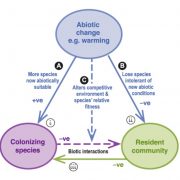
Community diversity outweighs effect of warming on plant colonization ($) (Global Change Biol.)
Plant Science Research WeeklySeveral studies have addressed growing concerns regarding increases in exotic plant colonization of communities in response to a warming climate. However, both abiotic (e.g., warming climate) and biotic (e.g., changes in community diversity) shifts can be simultaneous results of warming and both can…
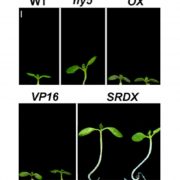
Plant Science Research Weekly: March 7
Blog, WWR Full PostReview: How mycorrhizal associations drive plant population and community biology ($)
Great strides have been made in discovering the molecular players that allow plants and mycorrhizal fungi to establish their symbiosis. Here, Tedersoo et al. look beyond the single plant and address how these associations…

Viral proteins activate autophagy
Research, The Plant Cell, The Plant Cell: In a NutshellIsmayil et al. identify a virus that activates autophagy and reveal the underlying mechanism.
Plant Cell https://doi.org/10.1105/tpc.19.00759
By Asigul Ismayil, MOE Key Laboratory of Bioinformatics, Center for Plant Biology, Tsinghua-Peking Joint Center for Life Sciences, School of Life Sciences,…

Pol IV Function is Differentially Essential within the Brassicaceae
Research, The Plant Cell, The Plant Cell: In BriefAt least five RNA polymerases (Pol I to Pol V) are known to exist in plant cells. Pol IV produces short transcripts that are converted into double-stranded RNAs by RNA-dependent RNA polymerase 2 (RDR2) and processed into 24-nucleotide (nt) small interfering RNAs (siRNAs) by DICER-LIKE 3 (DCL3). These…

Attacking the front and the rear – the elaborate control of reactive oxygen species production
Research, The Plant Cell, The Plant Cell: In a NutshellKimura et al. reveal how phosphorylation of a key enzyme activates reactive oxygen species production. Plant Cell https://doi.org/10.1105/tpc.19.00525
Sachie Kimuraa,b, Michael Wrzaczeka
aOrganismal and Evolutionary Biology Research Programme, Viikki Plant Science Centre, Faculty of Biological…

When to Sleep? CHT7 is Critical for Nutrient-dependent Quiescence in Chlamydomonas
Research, The Plant Cell, The Plant Cell: In BriefTo survive nutrient scarcity, unicellular organisms establish a reversible quiescent state in which cells cease growth and division and switch metabolism to an energy-conserving mode. When nutrients become available again, cells exit from quiescence and resume growth and division. The mechanistic details…
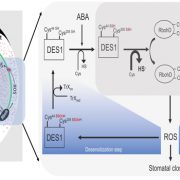
Persulfidation-controlled guard cell ABA signaling
Research, The Plant Cell, The Plant Cell: In a NutshellShen et al. explore the role of H2S signaling and the reversible modification persulfidation in guard cell signaling. https://doi.org/10.1105/tpc.19.00826
Yanjie Xie; Laboratory Center of Life Sciences, College of Life Sciences, Nanjing Agricultural University, Nanjing 210095, PR China.
Background:…

Paving the way for C4 evolution: study of C3-C4 intermediate species in grasses
Plant Physiology, Plant Physiology: News and Views, ResearchC4 photosynthesis originated as an adaptation to low atmospheric CO2 concentrations 30-35 million years ago (Sage, 2016). Although accounting for only 3% of the vascular plants on earth, C4 plants contribute 25% of terrestrial photosynthesis (Westhoff and Gowik, 2010), thus providing a highly desirable…

Recognizing Plant Direct authors: Daniel Santana de Carvalho
Plant Direct, Plant Direct: Author ProfilesDaniel Santana de Carvalho, first author of IsoSeq transcriptome assembly of C3 panicoid grasses provides tools to study evolutionary change in the Panicoideae
Current Position: Postdoctoral researcher, Bioinformatics Interdisciplinary Graduate Program, Federal University of Minas Gerais, Brazil
Education:…