


Recognizing Plant Physiology authors: Erica LaMontagne
Plant Physiology, Plant Physiology: Author ProfilesErica LaMontagne, co-first author of EPSIN1 modulates the plasma membrane abundance of FLAGELLIN SENSING2 for effective immune responses
Current Position: Research Scientist at Elemental Enzymes Ag & Turf, LLC
Education: PhD in Biochemistry from University of Missouri-Columbia (2013 - 2018);…

Recognizing Plant Physiology authors: Carina Collins
Plant Physiology, Plant Physiology: Author ProfilesCarina Collins, co-first author of EPSIN1 modulates the plasma membrane abundance of FLAGELLIN SENSING2 for effective immune responses
Current Position: Assistant Professor of Chemistry & Physics at Drury University
Education:
Post-doc in botany department University of Wisconsin Madison
Ph.D.…

Recognizing Plant Cell authors: Yuan Xie
The Plant Cell, The Plant Cell: Author ProfilesYuan Xie, co-first author of Photosynthetic Phosphoribulokinase Structures: Enzymatic Mechanisms and the Redox Regulation of the Calvin-Benson-Bassham Cycle
Current Position: Postdoctoral Associate in Department of Biophysics, Department of Pathology of Sir Run Run Shaw Hospital, Zhejiang University…

Recognizing Plant Cell authors: Ailing Yu
The Plant Cell, The Plant Cell: Author ProfilesAiling Yu, co-first author of Photosynthetic Phosphoribulokinase Structures: Enzymatic Mechanisms and the Redox Regulation of the Calvin-Benson-Bassham Cycle
Current Position: Ph.D. candidate in National Laboratory of Biomacromolecules, Institute of Biophysics, Chinese Academy of Sciences, Beijing,…

IbBBX24 Enhances Fusarium Wilt Resistance in Sweet Potato
Research, The Plant Cell, The Plant Cell: In a NutshellZhang et al. identify a target gene for enhancing pathogen resistance without yield penalty in sweet potato. Plant Cell https://doi.org/10.1105/tpc.19.00641
Background: Sweet potato is an economically important root and tuber crop that is widely used as an industrial and bioenergy resource worldwide…

Know Your Roots: A Transcriptomic Exploration of Key Life History Traits in the Model Lycophyte Selaginella moellendorffii
Research, The Plant Cell, The Plant Cell: In BriefLand plants (embryophytes) evolved from a freshwater charophycean algal predecessor over 450 million years ago and have since separated into the diversity of plant lineages observed today. A key factor in the expansion of plant life on land was the evolution of rooting structures and a vasculature that…

Silencing Transposons is Important for Pollen Development in Capsella
Research, The Plant Cell, The Plant Cell: In a NutshellWang et al. reveal that viable pollen formation in Capsella requires the function of a DNA-dependent RNA polymerase. Plant Cell https://doi.org/10.1105/tpc.19.00938
Background: Transposons, or “jumping genes”, are kept silent by a plant-specific pathway that starts with DNA-dependent RNA…
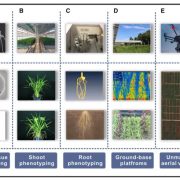
Review: Crop phenomics and high-throughput phenotyping (Mol. Plant)
Plant Science Research WeeklyCrop phenomics has lagged behind crop genomics because traditional methods are time-consuming, expensive, invasive and subjective. Recently, high-throughput, automated, sensor and machine-vision methods have been developed, as reviewed by Yang et al. This review describes a large number of phenotyping…

Review: Tropical trees as time capsules of anthropogenic activity (Trends Plant Sci.)
Plant Science Research WeeklyTrees will help us ensure our future, but they are also a valuable record of our past. This fascinating review article by Caetano-Andrade et al. describes how anthropologists are taking advantage of data recorded in trees to understand more about not only the atmospheric and geological events of the…