

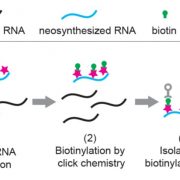
Metabolic labeling of RNAs uncovers hidden features and dynamics of the Arabidopsis transcriptome (Plant Cell)
Blog, Plant Science Research WeeklyThe ability to directly sequence RNAs (RNA-seq) has revolutionized our understanding of gene expression, but it can miss or underestimate short-lived RNAs. Several methods have been developed to identify newly-synthesized mRNAs to provide a snapshot of transcription as it happens. Szabo present Neu-seq,…
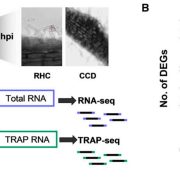
Reprogramming of root cells during nitrogen-fixing symbiosis involves dynamic polysome association of coding and noncoding RNAs ($) (Plant Cell)
Plant Science Research WeeklyThe symbiotic relationship between Rhizobium bacteria and leguminous plants like Medicago results in the development of secondary root organs called nodules. The bacteria housed in the nodule infection zone assimilate atmospheric nitrogen for plant growth. In this paper, Traubenik et al. used (RNA-seq)…

The pan-genome effector-triggered immunity landscape (Science)
Plant Science Research WeeklySuccessful plant pathogens produce a suite of small molecules called effectors that are injected into plant cells and perturb plant defense. As a counter defense, plants have evolved intracellular receptors (called NLRs; nucleotide-binding domain leucine-rich repeat) that detect specific effectors and…
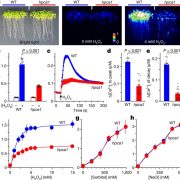
Hydrogen peroxide sensor HPCA1 is an LRR receptor kinase in Arabidopsis (Nature)
Plant Science Research WeeklyHydrogen peroxide (H2O2) is an important signal involved in diverse stress responses both intracellularly and extracellularly, but until now it hasn’t been clear how the plant recognizes it. Wu et al. used a genetic screen to search for plants that fail to produce a calcium influx response in the presence…
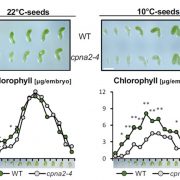
Embryonic photosynthesis affects post-germination plant growth (Plant Physiol.)
Plant Science Research WeeklyAngiosperm seeds develop within maternal tissues, yet in some species including Arabidopsis the developing embryos carry out photosynthesis. In Arabidopsis, this is transitory, and the embryonic chloroplasts lose chlorophyll and dedifferentiate into eoplasts as the seed matures. Sela et al. set out to…
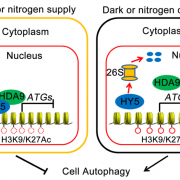
HY5 interacts with and recruits HDA9 to negatively regulate autophagy (Mol. Plant)
Plant Science Research WeeklyPlants activate autophagy, a cellular recycling process, to recycle useful nutrients or remove harmful items, helping them to withstand harsh conditions. Recently, Yang et al. found that HY5 is a hub connecting the light signaling and autophagy pathways. Under replete conditions (e.g., light and nitrogen-sufficient),…
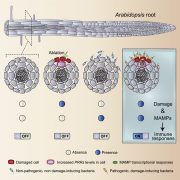
Damage-gated immune responses to microbes (Cell)
Plant Science Research WeeklyPlants are surrounded by diverse microbes and must avoid mounting an immune response against innocuous microbes, while properly activating defense against invading pathogens. As the initial plant-microbe contacts happen in a limited number of cells, understanding spatially-resolved plant immune responses…
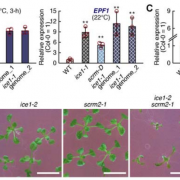
Does ICE1 participate in cold responses?
Plant Science Research WeeklyFor many years, the Arabidopsis transgenic allele ice1-1 was used to demonstrate the role of the transcription factor ICE1 in freezing and cold tolerance. This gene was first identified in a screening strategy using a luciferase reporter for DREB1A expression, another TF involved in downstream signaling.…
Plant Science Research Weekly: February 28
Blog, WWR Full PostReview: Crop phenomics and high-throughput phenotyping
Crop phenomics has lagged behind crop genomics because traditional methods are time-consuming, expensive, invasive and subjective. Recently, high-throughput, automated, sensor and machine-vision methods have been developed, as reviewed by Yang…