


CO2 Concentration in Chlamydomonas: Effect of the Pyrenoid Starch Sheath
Plant Physiology, Plant Physiology: News and Views, ResearchAnanya Mukherjee
ORCID ID: 0000-0003-1802-1806
amukherjee3@unl.edu
University of Nebraska Lincoln
Lincoln, NE 68588
In the photosynthetic Calvin-Benson cycle, the enzyme ribulose 1,5-bisphosphate carboxylase/oxygenase (Rubisco) fixes CO2 into organic compounds. A major limitation…

Recognizing Plant Physiology authors: Stephanie Klein
Plant Physiology, Plant Physiology: Author ProfilesStephanie Klein, first author of Multiple integrated root phenotypes are associated with improved drought tolerance
Current Position: PhD Candidate, Pennsylvania State University, University Park, PA, USA
Education: B.Sc. University of Illinois at Urbana-Champaign, Urbana, IL, USA
Non-scientific…

Recognizing Plant Physiology authors: Shengjin Liao
Plant Physiology, Plant Physiology: Author ProfilesShengjin Liao, first author of Cell wall invertase is essential for ovule development through sugar signaling rather than provision of carbon
Current Position: Assistant Professor, Beijing Academy of Agriculture and Forestry Sciences (BAAFS)
Education: PhD in Biological Sciences, B. Biotech (Hons)…
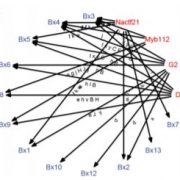
Drawing in the Net: Forty-Five Maize Gene Regulatory Networks from Over 6,000 RNA-Seq Samples
Research, The Plant Cell, The Plant Cell: In BriefEukaryotic gene expression is largely governed by transcription factors (TFs), the nuclear proteins that bind to specific DNA sequences and determine when and where genes are turned on. Transcriptional gene regulatory networks (GRNs) that modulate developmental processes and environmental responses consist…

A well-oiled machine: two fatty-acid exporters involved in seed oil biosynthesis
Plant Physiology, Plant Physiology: News and Views, ResearchA well-oiled machine: two fatty-acid exporters involved in seed oil biosynthesis
Mehran Dastmalchi
mdastmalchi@brocku.ca
Oilseed plants such as canola (Brassica spp.) are a massive, multi-billion dollar industry, with their lipids contributing to food, cosmetics, polymers and biofuels. For the…

Ouch! Plant perception of wounding
Research, The Plant Cell, The Plant Cell: In a NutshellSözen et al. describe two independent MAPK signaling cascades that are each activated with different kinetics, providing an immediate and delayed response to herbivore feeding. The Plant Cell (2020) https://doi.org/10.1105/tpc.19.00917
By Cécile Sözen, Marie Boudsocq and Jean Colcombet, Université…

Recognizing Plant Direct authors: Wei Hu
Plant Direct, Plant Direct: Author ProfilesWei Hu, first author of Regulation of monocot and dicot plant development with constitutively active alleles of phytochrome B
Current Position: Assistant project scientist at Prof. J. Clark Lagarias’ Laboratory, Department of Molecular and Cellular Biology, University of California Davis, USA
Education:
PhD,…

Tuning to the signal of stress: sub-cellular regulation of abscisic acid receptor abundance by E3 ubiquitin ligases
Plant Physiology, Plant Physiology: News and Views, ResearchMagdalena M. Julkowska
Magdalena.Julkowska@kaust.edu.sa
Developmental and environmental changes are communicated systemically throughout the plant by various signals, ranging from electric currents to plant hormones. As the responses elicited by the systemic signals depend on the tissue…

Repression of FUSCA3 by BASIC PENTACYSTEINE PROTEINS promotes ovule development and coordinates embryo and endosperm growth
Research, The Plant Cell, The Plant Cell: In a NutshellWu et al. found that FUSCA3, which regulates seed development, is localized to specific cells of the ovule and seed coat and is itself regulated by BASIC PENTACYSTEINE (BPC) proteins. Plant Cell https://doi.org/10.1105/tpc.19.00764
By Sonia Gazzarrini (University of Toronto, Dept. Biological Sciences…