


Aquaporins act in concert to regulate cold acclimation and freezing tolerance (Plant Cell Physiol.)
Plant Science Research WeeklyAquaporins, also known as plasma membrane intrinsic proteins (PIP), are a large group of transporters that facilitate water transport through membranes. In this article, Rahman et al. explored the role of aquaporins in the cold stress response. They found that two aquaporin genes, PIP1;4 and PIP2;5,…
Phylogenomic evidence for reductive evolution of stomata (Curr. Biol.)
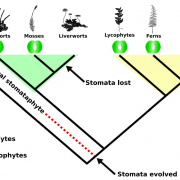
Plant Science Research WeeklyColonization of the terrestrial environment by land plants (embryophytes), a monophyletic clade that evolved from freshwater streptophyte algae, forever changed Earth by transforming biogeochemical cycles. The evolution of stomata was a key adaptation that allowed the colonization of terra firma. Present…
A plant secondary metabolite selectively targets bacterial pathogenicity (Cell Host Microbe)
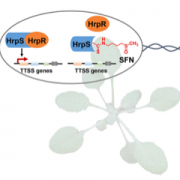
Plant Science Research WeeklyPlants have a variety of secondary metabolites that are associated with defense against pathogens, but the mode of action of such metabolites is poorly understood. Wang et al. revealed that the Arabidopsis secondary metabolite sulforaphane (SFN), which is derived from aliphatic glucosinolate, suppresses…
Interplay between phosphorylation and ubiquitination is key for regulating reactive oxygen species during plant immunity (Nature Comms)
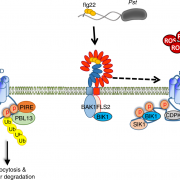
Plant Science Research WeeklyReactive oxygen species (ROS) are essential secondary messengers for rapid transmission of local and long-distance signalling in plants. Respiratory oxidase homologs (RBOHs) are the family of enzymes in plants that produce extracellular ROS, with RBOHD being the primary oxidase in Arabidopsis for ROS…
Morphology, molecular development and ecological function of pseudonectaries on Nigella damascena petals (Nature Comms)
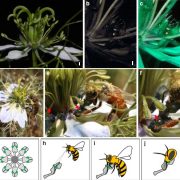
Plant Science Research WeeklyPseudonectaries do not secrete nectar like nectaries. So, what are their ecological functions? Are there any morphological and anatomical differences between them and true nectaries? How do they develop and evolve? Liao et al. examined pseudonectaries of Nigella damascene to answer these questions. The…

How animals shaped fruit traits, and how they did not (Funct. Ecol.)
Plant Science Research WeeklyThe dispersal syndrome hypothesis states that frugivores and fleshy-fruited plants coevolve by exerting selective pressures on each other. Even though this idea still prevails, some theoretical issues could make this scenario improbable. As a result, a new chicken-or-egg dilemma appeared: are the frugivores…
Plant Science Research Weekly: May 1st
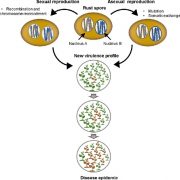
Blog, WWR Full PostReview: Evolution of virulence in rust fungi — multiple solutions to one problem
Rust fungi are a diverse group (more than 7800 species) of phytopathogenic fungi that cause considerable economic loss. (Coincidently, I’m writing on Robigalia, the Roman “anti-rust” festival, which dates from…
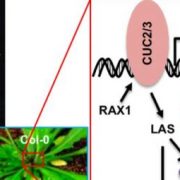
Activate, Breakdown, Branch Out: CUC2/3-DA1-UBP15 Controls Axillary Meristem Initiation
Research, The Plant Cell, The Plant Cell: In BriefShoot architecture is a key ecological and agricultural trait that impacts biomass, the potential to harvest light, planting density, and the reproductive success of a plant. Branching is a prominent feature of plant shoot architecture. A shoot branch develops from an axillary bud, which is located in…

Recognizing Plant Physiology authors: Hongchao Li
Plant Physiology, Plant Physiology: Author ProfilesHongchao Li, first author of Maize plant architecture is regulated by the ethylene biosynthetic gene ZmACS7
Current Position: Ph.D. student, National Maize Improvement Center, China Agricultural University
Education: Ph.D. student in Crop Genetics and Breeding and M.Sc. in Agricultural Extension…