

Cell Wall Remodeling During Wood Development
Plant Physiology, Plant Physiology: News and Views, ResearchMadeleine Seale
Department of Plant Sciences, University of Oxford, South Parks Road, Oxford, OX1 3RB, United Kingdom
maddy.seale@plants.ox.ac.uk
ORCID: 0000-0002-8924-3943
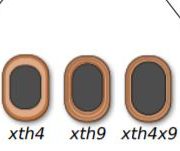
Wood formation occurs via radial proliferation of vascular cambium cells and the deposition of secondary cell wall layers…

TREHALOSE-6-PHOSPHATE SYNTHASE1 – an essential enzyme in Arabidopsis
Research, The Plant Cell, The Plant Cell: In a NutshellFichtner et al. transformed the embryo-lethal mutant tps1 with variants of the TPS1 gene to identify critical domains for function and localization of the gene product. The Plant Cell (2020) https://doi.org/10.1105/tpc.19.00837
By Franziska Fichtner1,2 and John Lunn1, 1Max Planck Institute of Molecular…
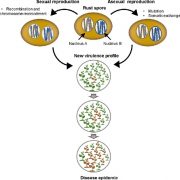
Review: Evolution of virulence in rust fungi — multiple solutions to one problem (COPB)
Plant Science Research WeeklyRust fungi are a diverse group (more than 7800 species) of phytopathogenic fungi that cause considerable economic loss. (Coincidently, I’m writing on Robigalia, the Roman “anti-rust” festival, which dates from before we understood that microbes, not gods, cause disease). Figurero et al. have written…
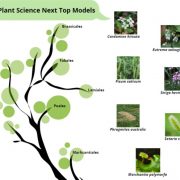
Review: Plant science's next top models (Ann. Bot)
Plant Science Research WeeklyThale cress (Arabidopsis thaliana) has been the absolute star of plant science research for more than 40 years, being the ideal model organism for its ease of handling and transferable knowledge to crops. In this review, Cesarino and coworkers explain how advances in "omics" technologies, together with…
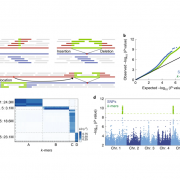
No-Genome-Required-GWAS (Nature Genetics)
Plant Science Research WeeklyConventional approaches to connect phenotype to genotype, including genome-wide association studies (GWAS), are often limited by the quality of the species’ reference genome, and frequently neglect to detect structural variants that are common in plant genomes. Here, Voichek and Weigel present a “No-Genome-Required-GWAS”…
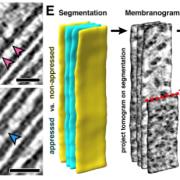
A close-up view of the thylakoids (eLIFE)
Plant Science Research WeeklyThe thylakoid membranes inside the chloroplasts house the major protein complexes required for photosynthesis, including photosystems I and II (PSI/II), the b6f complex and ATP synthase. To optimize photosynthetic efficiency, the distribution and abundance of these complexes are dynamically regulated…
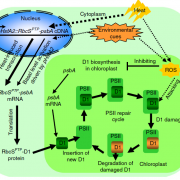
Nuclear-encoded synthesis of the D1 subunit of photosystem II increases photosynthetic efficiency and crop yield (Nature Plants)
Plant Science Research WeeklyPhotosystem II (PSII) is a protein complex located in the thylakoid membrane of chloroplasts that is involved in executing the initial reaction of photosynthesis in plants. When plants are exposed to extreme temperature conditions, PSII gets damaged. To repair the damage, one of the core proteins of…

Nitrate defines shoot size through compensatory roles for endoreplication and cell division (Curr. Biol.)
Plant Science Research WeeklyIn this paper, Moreno et al. investigate how nitrate affects the balance between cell proliferation and cell expansion in shoots during early seedling development. They note that the cells in Arabidopsis cotyledons undergo considerable enlargement, and that the increase in cell size is correlated with…
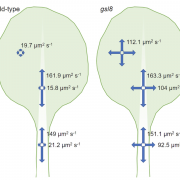
Symplastic auxin transport: Active, passive or both? (Curr. Biol.)
Plant Science Research WeeklyAdjacent cells in plants are connected by cytoplasmic connections called plasmodesmata (PD) and the movement through PD is called symplastic movement. Studies have shown that auxin transport between cells is protein-dependent, but it is not clear whether it can also move freely in the symplastic pathway.…