

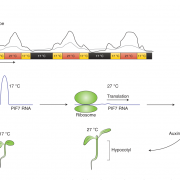
An RNA thermoswitch regulates daytime growth in Arabidopsis (Nature Plants)
Plant Science Research WeeklyPlants are sessile organisms and as such they must be highly responsive to environmental cues including temperature, and adjust their growth and development accordingly. Considering that mean global surface temperatures are expected to continue to rise dramatically in the 21st century, it is crucial…
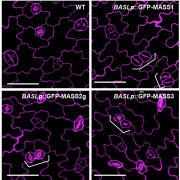
MASS proteins and stomatal development in Arabidopsis (PLOS Genetics)
Plant Science Research WeeklyStomata are the pores surrounded by a pair of guard cells on the plant epidermis that help in gaseous exchange. The number and spacing of stomata are regulated by a series of phosphorylation and de-phosphorylation events of key transcription factors through the mitogen-activated protein kinase (MAPK)…

Intertwined signatures of desiccation and drought tolerance in grasses (PNAS)
Plant Science Research WeeklyDesiccation tolerance (i.e., the capacity of surviving with very low water content) is widespread in seeds and pollen, but quite rare in vegetative organs. Most authors agree that in angiosperms it originated multiple independent times from rewiring seed desiccation tolerance pathways. Here, Pardo et…
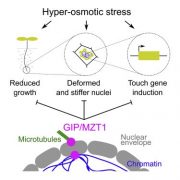
Mechanical shielding in plant nuclei (Curr. Biol.)
Plant Science Research WeeklyThe nucleus is an organelle with tremendous shape flexibility in response to environmental cues; it has been described as the “plastic, elastic, and fantastic” organelle. The change in nuclear geometry based on mechanical stress is well documented from single cell studies in culture, but the question…
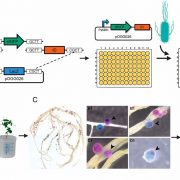
A molecular toolkit for screening elite rhizobia (PNAS)
Plant Science Research WeeklyN2-fixing rhizobia bacteria are able to establish symbiotic interactions with legumes in specialized organs called root nodules. Identifying elite rhizobia that are both competitive for nodule occupancy and effective in N2 fixation in agricultural environments is crucial for maximizing the yield of legumes.…
Plant Science Research Weekly: May 8th
Blog, WWR Full PostTissue-resolved multi-omics atlas of Arabidopsis
Arabidopsis as a model system has been intensively studied over the past twenty years, but the proteome of Arabidopsis has been less well characterized. Here, Mergner et al. report the first 30-tissue-type integrated proteome, phosphoproteome and transcriptome…
Life is Sweeter with Trehalose 6-Phosphate
Research, The Plant Cell, The Plant Cell: In BriefBesides making our daily lives sweeter, sugars are the most important energy source in all organisms. Balancing their availability and regulating their partitioning between tissues are major determinants for growth and development. In plants, sucrose is the main product of photosynthesis and is transported…

Recognizing Plant Cell authors: Ching Chan
The Plant Cell, The Plant Cell: Author ProfilesChing Chan, first author of STRESS INDUCED FACTOR 2 regulates Arabidopsis stomatal immunity through phosphorylation of the anion channel SLAC1
Current Position: Post-doctoral researcher, Academia Sinica, Taiwan
Education: PhD in Biology (The Chinese University of Hong Kong); MPhil and BSc in Biochemistry…

Closing Gaps and Opening New Avenues During Megasporogenesis of Rice
Plant Physiology, Plant Physiology: News and Views, ResearchThe formation of the mature female gametophyte is one of the most complex processes in plants. It requires successive rounds of diploid mitosis, followed by meiosis and finally haploid mitosis, not to mention cell differentiation and cell degeneration in the multicellular gametophyte. Since the female…