


Recognizing Plant Cell authors: Vivek Bharadwaj
The Plant Cell, The Plant Cell: Author ProfilesVivek Bharadwaj, co-first author of Molecular mechanism of polysaccharide acetylation by the Arabidopsis xylan O-acetyltransferase XOAT1
Current Position: Staff Scientist at National Renewable Energy Laboratory (NREL) in Golden, Colorado
Education: PhD Chemical Engineering
Non-scientific Interests:…

Recognizing Plant Cell authors: Hsin-Tzu Wang
The Plant Cell, The Plant Cell: Author ProfilesHsin-Tzu Wang, co-first author of Molecular mechanism of polysaccharide acetylation by the Arabidopsis xylan O-acetyltransferase XOAT1
Current Position: Ph.D. candidate in the Department of Biochemistry and Molecular Biology at the University of Georgia
Education: B.S. and M.S. in Forestry and…

Recognizing Plant Cell authors: Vladimir V. Lunin
The Plant Cell, The Plant Cell: Author ProfilesVladimir V. Lunin, co-first author of Molecular mechanism of polysaccharide acetylation by the Arabidopsis xylan O-acetyltransferase XOAT1
Current Position: Scientist IV, Biosciences Center, National Renewable Energy Lab
Education: PH.D. In Chemistry awarded by the Institute of Crystallography of…

Recognizing Plant Physiology authors: Kamal Kumar Malukani
Plant Physiology, Plant Physiology: Author ProfilesKamal Kumar Malukani, first author of Dual activities of receptor like kinase OsWAKL21.2 induce immune responses
Current Position: Research Associate in the lab of Dr. Ramesh V. Sonti at CSIR-Centre for Cellular and Molecular Biology (CCMB), Hyderabad, India. Looking for postdoc in plant-microbe interaction.
Education:…

In the Search for the SWEETest Pear
Plant Physiology, Plant Physiology: News and Views, ResearchIf you close your eyes and think about the most delicious fruit you have ever tasted, it is likely that one specific characteristic will come to mind (and mouth!): its sweetness. Humans have a natural appreciation of plant sugars, and it is no surprise that enhanced sugar content is among the most desired…
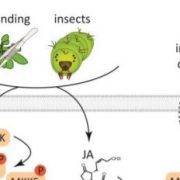
Defense, fast and slow: activation of different MAPK pathways in response to wounding
Research, The Plant Cell, The Plant Cell: In BriefIn a world full of herbivores and mechanical stresses, the ability to sense and respond to wounding is crucial for plants, as injuries open doors for phytopathogen entry and allow uncontrolled evaporation. Wounding triggers local and systemic defenses that heal injuries, make plants taste unpleasant…

A closed mouth catches no pathogens: how plants sense bacteria and regulate stomata
Research, The Plant Cell, The Plant Cell: In a NutshellChan, Panzeri, et al. show how a receptor-like kinase regulates stomatal immunity by phosphorylating an anion channel that mediates closure of stomata. Plant Cell. https://doi.org/10.1105/tpc.19.00578
By Ching Chana,b and Laurent Zimmerlia
aDepartment of Life Science and Institute of Plant Biology,…
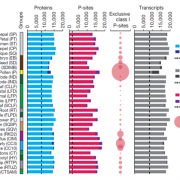
Tissue-resolved multi-omics atlas of Arabidopsis (Nature)
Plant Science Research WeeklyArabidopsis as a model system has been intensively studied over the past twenty years, but the proteome of Arabidopsis has been less well characterized. Here, Mergner et al. report the first 30-tissue-type integrated proteome, phosphoproteome and transcriptome atlas of Arabidopsis. The data cover the…
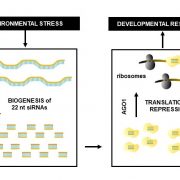
Plant 22-nt siRNAs mediate translational repression and stress adaptation (Nature)
Plant Science Research WeeklyAmong the myriad small interfering RNAs, 21- and 24-nucleotides siRNAs control plant development and immunity through mRNA cleavage and RNA-directed DNA methylation, respectively. Still, the regulation and biological function of 22-nt siRNAs remain unresolved. In this report, Wu and coworkers investigated…