

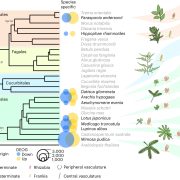
Comparative phylotranscriptomics reveals ancestral and derived root nodule symbiosis programs
Plant Science Research WeeklyThere are about ~17,500 plants species that can participate in nitrogen-fixing root nodule symbioses. The majority of these (~17,300) are in the order Fabales, which includes the legumes. The remainder fall into three orders (Rosales, Fagales, and Cucubitales), leading to the question of whether this…
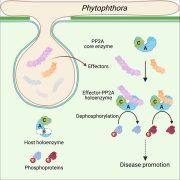
Pathogen protein modularity enables elaborate mimicry of a host phosphatase
Plant Science Research WeeklySome of the most fascinating discoveries in biology are found at the interface between hosts and pathogens, where each organism is endlessly fighting for its survival. Plant pathogens produce a wide array of effector proteins that promote their virulence, but we only understand how some of these effectors…
Plant Science Research Weekly: July 7, 2023
WWR Full PostReview. CRISPR/Cas-mediated plant genome editing: Outstanding challenges a decade after implementation
I’ll be honest, I was surprised to see “a decade after implementation” in this title, but indeed, the first publication describing CRISPR/Cas in plants was in 2013. We’ve learned a lot in…

Lifang Geng: Plant Physiology First Author
Plant Physiology: Author ProfilesLifang Geng, first author of "Transcription factor RcNAC091 enhances rose drought tolerance through the abscisic acid-dependent pathway"
Current Position: Master candidate, College of Landscape Architecture and Forestry, Qingdao Agricultural University
Education: 2016.09–2020.06, Bachelor degree…
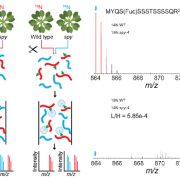
SPY catalyzes O-fucosylation of hundreds of proteins to promote sugar-dependent plant growth
The Plant Cell: In a NutshellBi, Shrestha, Zhang et al. elucidate mechanisms of sugar-dependent growth regulation.
Yang Bi, Zhi-Yong Wang
Department of Plant Biology, Carnegie Institution for Science, Stanford, CA, USA
Background: Extensive studies in animals have shown that the O-linked N-acetyl-glucosamine (O-GlcNAc)…
Out of the haze of DNA–protein crosslink repair
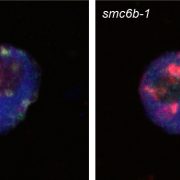
The Plant Cell: In a NutshellDvořák Tomaštíková et al. study the role of SMC5/6 complex in repair of toxic DNA protein crosslinks in Arabidopsis. The Plant Cell (2023).
By Pecinka Ales and Eva Dvořák Tomaštíková
Background: Cellular DNA is constantly damaged by various internal and external factors that eventually…

Plant Physiology Focus Issue Webinar: Fruit Crops (1)
Plant Physiology, Plantae Webinars, Research, WebinarsPlant Physiology Webinar: Fruit Crops (1)
Celebrating the July 2023 Focus Issue on Fruit Crops
Recorded Wednesday, July 12, 2023
About This Webinar
Fruits are major sources of nutrients for humans, and fruit growing is a significant driver for economic growth and development in rural areas and…

Evolution of C4 photosynthesis in the Cleomaceae
The Plant Cell: In a NutshellHoang et al. examine the Gynandropsis gynandra genome to provide insight into genome evolution and the emergence of C4 photosynthesis in a sister family to the Brassicaceae.
Background: The Cleomaceae is the sister family to the Brassicaceae (including the model species Arabidopsis and Brassica…
Salt stress disturbs sugar metabolism
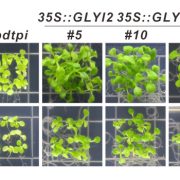
The Plant Cell: In a NutshellFu et al. examine how salt stress affects sugar metabolism via the reactive oxygen species hydrogen peroxide.
Zheng-Wei Fu (State Key Laboratory of Hybrid Rice, College of Life Sciences, Renmin Hospital of Wuhan University, Wuhan University, Wuhan, China)
Background: Soil salinization is a serious…