

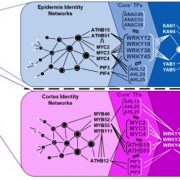
Back to the Roots of Plant Immunity
Blog, Research, The Plant Cell, The Plant Cell: In a NutshellRich-Griffin et al. uncover cell type-specific gene networks that function in plant immunity in Arabidopsis roots. The Plant Cell (2020) https://doi.org/10.1105/tpc.20.00154
By Charlotte Rich-Griffin1, Ruth Eichmann1,2, Sascha Ott3,4,5 & Patrick Schäfer1,2
1School of Life Sciences,…
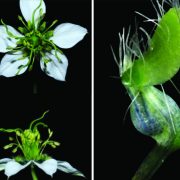
A damascene moment: the genetic basis of complex petals in Nigella
Blog, Research, The Plant Cell, The Plant Cell: In BriefFrom the flat white sheets of our favourite weed Arabidopsis thaliana to the colourful cups and spirals of orchids, petals come in a spectacular array of shapes, sizes, colours and textures. These elaborate forms have often evolved to attract pollinators. For example, bee orchids produce petals that…

TPLATE complex subunits are recruited simultaneously to the plasma membrane
Blog, Plant Physiology, Plant Physiology: News and Views, ResearchKerri Hunter
Viikki Plant Science Centre, Organismal and Evolutionary Biology Research Programme, Faculty of Biological and Environmental Sciences, University of Helsinki, Helsinki, Finland
ORCID: 0000-0002-2285-6999
[email protected]
Endocytosis is the process by which extracellular…
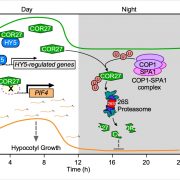
In the Cold of the Night: how COR27 Regulates HY5 Activity and Integrates Light and Circadian Signals
Blog, Research, The Plant Cell, The Plant Cell: In a NutshellZhu et al. discover that the COR27 protein interacts with the central regulators of light-mediated development COP1 and HY5 and plays a critical role in hypocotyl elongation. Plant Cell https://doi.org/10.1105/tpc.20.00192
By Wei Zhu (Southern University of Science and Technology, Shenzhen, China)…

2020 ASPB Conviron Scholars Program Highlights
Blog0 Comments
/
The ASPB Conviron Scholars program delivers an experience intended to serve as a foundation for a career in plant science.
In spite of the pandemic outbreak this year, this program continued to strive and moved forward. Why? Because the ASPB Conviron Scholars program is a virtual…

Plantae Presents: Alejandra I. Huerta and Paola Reyes-Caldas
Blog, Plantae Presents, Research SkillsPlantae Presents - Alejandra I. Huerta and Paola Reyes-Caldas
Recorded Tuesday Sep 8, 2020 9:00 PM EDT (6:00 PM PDT)
Alejandra I. Huerta: In pursuit of durable disease resistance in rice: Exploiting effectors, allelic variation and MAGIC
Alejandra I. Huerta is an Assistant Professor of Phytobacteriology…

Plant Science Research Network Releases Decadal Vision 2020-2030
Blog, Plant Science Research NetworkResearch network presents action plan for the plant science community to maximize impact on pressing global issues such as human health and climate change.
Plant science research has tremendous potential to address pressing global issues including climate change, food insecurity and sustainability.…

RDR6 is essential for double-strand break formation during male meiosis in rice
Blog, The Plant Cell, The Plant Cell: In BriefPlant RNA-dependent RNA polymerases (RDRs) are essential for the biogenesis of small, interfering RNAs (siRNAs). These polymerases function by converting single-stranded RNA transcripts into double-stranded RNAs, which are processed by Dicer-like ribonucleases into 21- to 24-nucleotide siRNAs (reviewed…
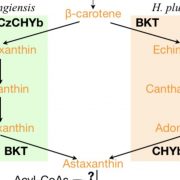
An Alternative Route for Astaxanthin Biosynthesis in Green Algae
Blog, Plant Physiology, Plant Physiology: News and Views, ResearchTianhu Sun
ORCID ID: 0000-0002-2513-1387
Plant Breeding and Genetics Section, School of Integrative Plant Science, Cornell University, Ithaca, New York 14853
[email protected]
Astaxanthin is the reddish carotenoid pigment that gives color to shrimp, salmon, and flamingo. However, these animals…