

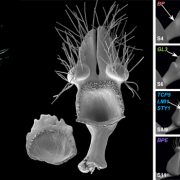
Towards Uncovering the Developmental Mechanisms of Elaborate Petals: Nigella damascena as a Beginning
Blog, Research, The Plant Cell, The Plant Cell: In a NutshellZhang et al. explore the mechanisms underlying elaborate petal development and specialized character formation in Nigella damascena. Plant Cell https://doi.org/10.1105/tpc.20.00330
By Rui Zhang, Xuehao Fu, Caiyao Zhao, Jie Cheng, Hongyan Shan, and Hongzhi Kong
Background: Petals can be simple or…

It takes two to be you: promoter motif pairs keep immune responses within cell identity boundaries
Blog, Research, The Plant Cell, The Plant Cell: In BriefBeing a multicellular organism is not an easy task. Proper functioning of individual cell types with different functions requires coordination of gene expression to determine cell identity, but also regulatory mechanisms to respond to environmental cues. The root may appear simple at first sight, but…

Implicit Bias & Conscious Inclusion Workshop
BlogImplicit Bias and Conscious Inclusion
A joint workshop of ASPB’s Equity, Diversity and Inclusion and Women in Plant Biology Committees
When: Friday, September 11, 2020 at 9 AM PDT (UTC-7) | 11 AM CDT (UTC-5) | 12 PM EDT (UTC-4) NOTE: This webinar is 2 hours long.
To register, please complete this…

Tomatoes turn pale in the heat: high temperature reduces red and green pigmentation via phytochromes
Blog, Plant Physiology, Plant Physiology: News and Views, ResearchThe gardeners among us know that direct sunlight is a prerequisite to obtain full-sized, bright red tomato (Solanum lycopersicum) fruits. Indeed, light increases the accumulation of yellow and red carotenoid pigments, particularly lycopene, in ripe tomato fruits while it also boosts chlorophyll levels…
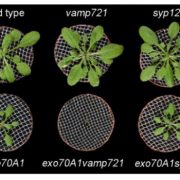
Interactions between exocyst and SNARE vesicle trafficking machinery support plant growth
Blog, Research, The Plant Cell, The Plant Cell: In a NutshellLarson et al. examine the interactions between subunits of the exocyst and SNARE complex and the effects of these interactions on trafficking, secretion, and growth. Plant Cell https://doi.org/10.1105/tpc.20.00280
Emily R Larson1,3, Jitka Ortmannová2,4, Naomi A Donald1, Jonas Alvim1, Michael…
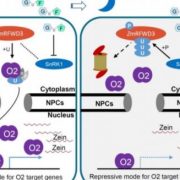
SnRK1-ZmRFWD3-Opaque2: A Nexus of Seed Nutrient Accumulation and Diurnal Cycles
Blog, Research, The Plant Cell, The Plant Cell: In BriefPlant seeds store nutrients in the form of protein, starch, and oil to support seed germination and seedling establishment. The seed nutrient reserves are supplied with carbon and nitrogen assimilated in vegetative tissues, where primary metabolism oscillates in a circadian manner (Farré and Weise,…
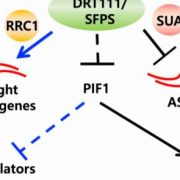
SPLICEd in the Seeds: Integration of ABA and Light Signaling in Arabidopsis
Blog, Plant Physiology, Plant Physiology: News and Views, ResearchDhineshkumar Thiruppathi 1,2
ORCID ID: 0000-0002-2018-3356
Donald Danforth Plant Science Center,
Saint Louis, Missouri 63132
1Author for contact: [email protected]
2Lead author
Plant development and adjustment to the environment require not only tight regulation of core…

Back to where it came from: chloroplast expression of both Rubisco subunits helps functional enzyme analysis
Blog, Research, The Plant Cell, The Plant Cell: In BriefRubisco catalyzes the key carboxylation step in photosynthetic CO2 fixation and is probably the most abundant protein on Earth. The enzyme is famous for inefficient catalysis and the habit of binding oxygen instead of CO2 in one out of every four binding events, leading to photorespiration reactions…

Trapped In the Rhizosheath: Root-Bacterial Interactions Modulate Ethylene Signaling
Blog, Plant Physiology, Plant Physiology: News and Views, ResearchAuthor: Sjon Hartman 1,2
ORCID: 0000-0002-6709-6436
1 Plant Ecophysiology, Institute of Environmental Biology, Utrecht University, Padualaan 8, 3584 CH, Utrecht, The Netherlands
2 Corresponding author contact: [email protected]
Even moderate droughts can greatly limit plant performance…