


Taproot S5E0: Join us for Season 5 and let us know how you’ve been navigating these chaotic and unusual times!
Blog, The Taproot Season 5, The-Taproot0 Comments
/
It has been quite a few months since our last episode! We intended to have a new season out by now, but as you might imagine, a few things got in the way. We are, however, back to working on topics and guests for Season 5 so stay tuned for new episodes this Fall!
In the meantime, we want to hear…
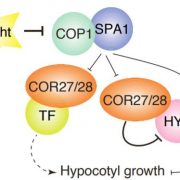
How COR27 and COR28 Promote Hypocotyl Growth: Bind to COP1 And Suppress HY5 Activity
Blog, Research, The Plant Cell, The Plant Cell: In BriefSeedling growth and development rely on the successful integration of information from external signals, such as light and temperature, and endogenous processes, such as the rhythmic ticking of the circadian clock. Together, these signaling pathways tune hypocotyl elongation to allow seedlings to escape…
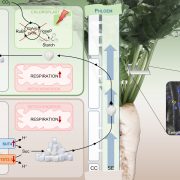
Chilling Lessons from Sugar Beets: Switching Sources
Blog, Research, The Plant Cell, The Plant Cell: In a NutshellRodrigues et al. found that the source and sink identities of sugar beet shoots vs. taproots are switched upon vernalization (chilling) due to a cold-induced reversal of the phloem stream. Plant Cell https://doi.org/10.1105/tpc.20.00072
By Cristina Martins Rodriguesa, Christina Müdsamb and Benjamin…
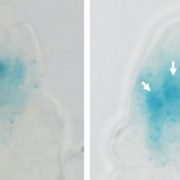
The Sounds of Silence: Cell Fate Restriction and RNA Silencing in Plant Ovules
Blog, Research, The Plant Cell, The Plant Cell: In BriefGamete formation in sexually reproducing plants begins with formation of a “mother cell” that undergoes meiosis to generate haploid spores. Haploid spores further develop into gametophytes within which gametes differentiate. In flowering plants (angiosperms), including crop systems, the female mother…

Translational regulation of PHOSPHATE 1 affects shoot phosphate levels and biomass
Blog, Plant Physiology, Plant Physiology: News and Views, ResearchEva Hellmann, The Sainsbury Laboratory, University of Cambridge, CB2 1LR Cambridge, United Kingdom
[email protected]
Phosphorus (P) is an essential plant nutrient and makes up part of membranes, DNA and RNA; it also serves as energy currency in the form of ATP cycling. It is involved…

Plant Science Research Weekly: September 11, 2020
Blog, WWR Full PostReview. Roles of plant retinoblastoma protein: cell cycle and beyond
The cell cycle is at the heart of processes such as cell division, fate acquisition and cell cycle exit towards differentiation. Decades of cell cycle research in animals and yeast have outlined the main components that control the…
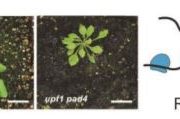
On UPF Proteins, Baking Cookies, and the Many Targets of Nonsense-Mediated RNA Decay
Blog, Research, The Plant Cell, The Plant Cell: In BriefWhen we cut out cookies from rolled-out dough, we often end up with unwanted dough scraps, and sometimes the dough sticks to the cookie-cutter, resulting in misshapen cookies. Just like these misshapen cookies, faulty or aberrant RNAs can arise in cells due to mistakes during transcription, RNA processing,…
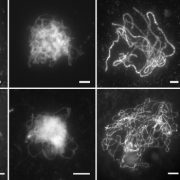
Oryza sativa RNA-dependent RNA polymerase 6 modulates rice meiosis
Blog, Research, The Plant Cell, The Plant Cell: In a NutshellLiu et al. connect small RNA biogenesis and meiotic recombination by examining RNA-dependent RNA polymerase 6. The Plant Cell https://doi.org/10.1105/tpc.20.00213
By Changzhen Liu, Yi Shen and Zhukuan Cheng
Background: Meiosis is a specialized cell division that takes place in sexually…

Timing is everything: MND1 regulates meristem phase change in barley
Blog, Plant Physiology: News and Views, ResearchLena Maria Müller
Boyce Thompson Institute, Ithaca, NY 14853, USA
0000-0002-6036-4514
[email protected]
The shoot and inflorescence architecture of grasses are characterized by complex branching patterns, which contribute to the great diversity of this plant clade (Whipple 2017).…