

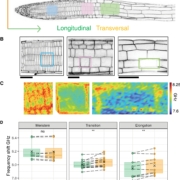
Developmental and stress responses of single root cell mechanical properties
Plant Science Research WeeklyClearly, the mechanical properties of plant cell walls have important implications for growth and development, but they are not necessarily easy to measure, especially in intact, living tissues. Here, Alonso-Baez et al. used Brillouin microscopy and molecular rotors to characterize cell wall properties…
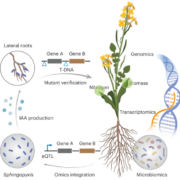
Host transcriptional regulation shapes microbiome-mediated nitrogen uptake
Plant Science Research WeeklyNitrogen is a key nutrient for plant development, and plant nutrient acquisition is highly influenced by the rhizosphere microbiome. However, how host genomic variation and root transcriptional regulation shape microbiome assembly under field conditions remains unclear. Li and colleagues addressed this…
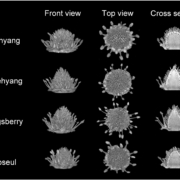
Beyond selfing: floral trait selection and the irreplaceable role of pollinators
Plant Science Research WeeklySelf-pollination in many crop cultivars has been extremely useful for humans. It simplifies propagation, stabilizes traits, and supports reliable fruit production. But for many plant species, selfing comes with biological costs: reduced genetic diversity, inbreeding depression, and potential declines…
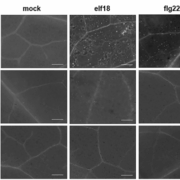
A natural antisense transcript regulates pattern triggered immunity in Arabidopsis
Plant Science Research WeeklyA natural antisense transcript (NAT) is a form of non-coding RNA that shares sequence complementarity with a protein coding sense gene. Although originally thought to be transcriptional noise, recent findings show that NATs contain functional roles, often through the regulation of their cognate sense…
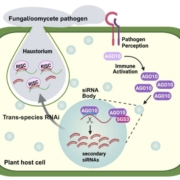
The role of AGO10 in plant immunity via trans-species RNA interference
Plant Science Research WeeklyIn this preprint, Wang et al. unravel a novel role for ARGONAUTE10 (AGO10) in plant immunity. Specifically, they found that AGO10 is involved in trans-species RNA interference (tsRNAi), a mechanism plants use to silence target genes in pathogens. Upon Phytophthora capsici infection, two distinct ago10…
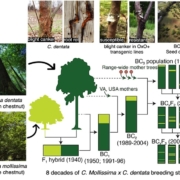
Genomic studies offer new hope for restoring the dwindling American chestnut
Plant Science Research WeeklyDeadly blight caused by the fungal pathogen (Cryphonectria parasitica) and root rot caused by an oomycete pathogen have pushed the American chestnuts toward extinction. In this study by Westbrook et al., the authors highlight the ongoing restoration strategies aiming to return the previously dominant…
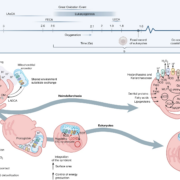
Plant Science Research Weekly: March 13, 2026
WWR Full PostReview: What happens when it gets too hot - the vulnerability of plant reproduction in a warming world
Climate change brings about higher temperatures, threatening plant populations worldwide. Higher temperatures interfere with reproductive processes such as pollen production or fertilization, even…
USDA-ARS Postdoctoral Fellowship in Biology & Gene Editing | Oak Ridge Institute for Science and Education
UncategorizedCanal Point, Florida, *Applications are reviewed on a rolling-basis.
ARS Office/Lab and Location: A research opportunity is currently available with the U.S. Department of Agriculture (USDA), Agricultural Research Service (ARS), located in Canal Point, Florida.
The Agricultural Research…