A natural antisense transcript regulates pattern triggered immunity in Arabidopsis
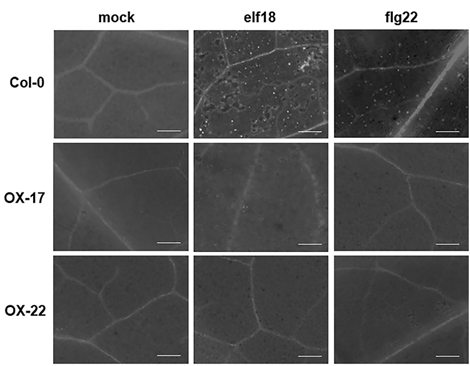 A natural antisense transcript (NAT) is a form of non-coding RNA that shares sequence complementarity with a protein coding sense gene. Although originally thought to be transcriptional noise, recent findings show that NATs contain functional roles, often through the regulation of their cognate sense transcripts. Work by Seo et al. has identified ELF18‐INDUCED LONG NONCODING RNA 19 (ELENA19) as a NAT that regulates pattern triggered immunity (PTI) in plants. Both ELENA19 and its cognate sense gene, UDP-glycosyltransferase 71B6 (UGT71B6), which glycosylates ABA, are upregulated when treated with the pathogen-associated molecular patterns (PAMPs) elf18 and flg22, suggesting a role in PTI. Overexpression (OX) of ELENA19 in transgenic Arabidopsis thaliana resulted in an attenuated PTI response, as indicated through a significant decrease in callose deposition. This antagonistic effect is accomplished by disrupting ABA homeostasis in plants. Overexpression of ELENA19 attenuates the induction of UGT71B6 following PAMP treatment, resulting in plants that contain higher levels of endogenous ABA, as indicated by competitive ELISA. The elevated levels of ABA are then associated with limited expression of genes required for PAMP-mediated callose formation. Although the exact means by which ELENA19 regulates UGT71B6 remains to be determined, this work provides compelling evidence for a NAT-mediated regulatory network for plant immune response that should be further studied. (Summary by Reed Arneson @Reed_Arneson) Plant Cell Reports. 10.1007%2Fs00299-026-03720-0