

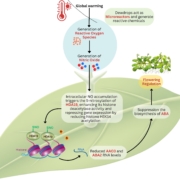
Plant Science Research Weekly: March 27, 2026
WWR Full PostReview: Rare variants in crops genomes and how to spot them
Despite the usefulness of genome-wide association studies (GWAS) for linking DNA variation to agronomic traits, GWAS are focused on detecting common alleles and often fail to detect less-common, rare variants. Rare variants may account for…

Global Differences in Regulation of Genetically Modified Crops: The History and Where We Are Going
Blog, EducationA Tale of Two Fields
Imagine two farmers growing the same drought-tolerant maize variety developed using modern biotechnology. One farmer plants it without hesitation. The crop is approved, seeds are commercially available, and national policies actively support agricultural innovation. The other…

Tips for Starting a New Lab Position: A Comprehensive Guide on What to Expect at Each Stage
Blog, CareersA position in academia is a profound commitment. It is one of those fields where you must constantly consolidate your knowledge just to prepare for the next phase. In a lab setting, the work often extends far beyond a formal job description. Success is usually proportional to the effort invested beyond…

Thriving Despite Difficult Supervision: Navigating Power, Gender, and Lab Challenges in Plant Science
Blog, CareersIt’s Monday morning. You start the week with a clear goal. Then, in a quick lab meeting, you are told that goals have changed, again. And now your monthly plan must be rewritten to meet new expectations. For the fourth time this year.
It’s an exhausting cycle.…
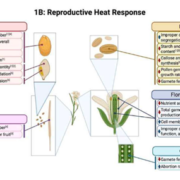
Review: What happens when it gets too hot – the vulnerability of plant reproduction in a warming world
Plant Science Research WeeklyClimate change brings about higher temperatures, threatening plant populations worldwide. Higher temperatures interfere with reproductive processes such as pollen production or fertilization, even if the plant itself can withstand these temperatures. For example, some plants can withstand temperatures…
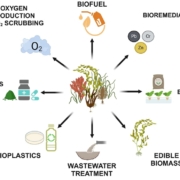
Review. Growing the future in orbit: Applications of macroalgae for food, air, and life support in space
Plant Science Research WeeklyPlants and other photoautotrophs have potential to support astronaut needs, including food production, atmospheric and water recycling, and the generation of pharmaceuticals and biofuels. A recent review by Murphy et al. provides a brief historical overview of microalgae and cyanobacteria research in…
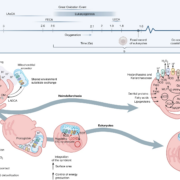
Metagenomic insights into the ancestor of eukaryotes
Plant Science Research WeeklyThe awesome power of metagenomics is providing fascinating insights into the origins of life. Tracing backwards from today’s life forms we can identify features that were likely present in the last universal common ancestor (LUCA), as well as the last eukaryotic common ancestor (LECA), which arose…
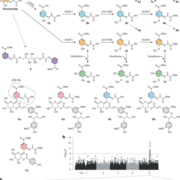
Decoding a multifunctional biosynthetic gene cluster for post-chorismate metabolism in Arabidopsis
Plant Science Research WeeklyBiosynthetic gene clusters (BGCs) are groups of genes physically located in close proximity in a genomic region and can be thought of as a close-knit genomic orchestra. While these BGCs were thought to be rare in plants, unlike bacteria, Peng et al. takes the story a step ahead with the discovery of…
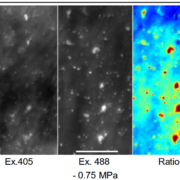
Spatial organization of ROS signaling at the plasma membrane
Plant Science Research WeeklyGenetic studies in Arabidopsis have identified a lot of the participants in signal transduction pathways, but often its less clear precisely where they function. As an example, although it is well known that H2O2 (hydrogen peroxide) production by RBOHs in the apoplast triggers many downstream cellular…