

Plant Science Research Weekly: March 13, 2026
Review: What happens when it gets too hot – the vulnerability of plant reproduction in a warming world
 Climate change brings about higher temperatures, threatening plant populations worldwide. Higher temperatures interfere with reproductive processes such as pollen production or fertilization, even if the plant itself can withstand these temperatures. For example, some plants can withstand temperatures up to 60 oC, but the average optimal temperature for pollen and seed development is around 26 oC. However, current work focused on predicting how populations respond to increased temperatures rarely account for this discrepancy. In this review, Denney et al. suggest that it’s time to start integrating fertility-related metrics into ecological and evolutionary studies and predictions of how plant populations may behave in future climates. They discuss current understanding of the effects of heat on reproductive development directly and indirectly due to effects on whole-plant physiology. They identify a pressing gap – current studies often focus on the effects of heat on photosynthesis, without considering the more vulnerable aspect of reproductive development. Ultimately, the authors suggest that integrating insights from how heat affects reproduction can complement the ecological and evolutionary work looking at plant adaptation and extinction risk. Further research in this area can help us get a better understanding of how species may adapt to climates and even help us make decisions about conservation of plant populations. (Summary by Anastasia Kolesnikova https://www.linkedin.com/in/n-ksci/) EcoEvoRxiv https://doi.org/10.32942/X20M2K
Review. Growing the future in orbit: Applications of macroalgae for food, air, and life support in space
 Plants and other photoautotrophs have potential to support astronaut needs, including food production, atmospheric and water recycling, and the generation of pharmaceuticals and biofuels. A recent review by Murphy et al. provides a brief historical overview of microalgae and cyanobacteria research in space and highlights the potential of macroalgae such as kelp as promising candidates for future spaceborne experiments, while also acknowledging the associated challenges with this work. Because little to no research has been conducted on macroalgae under spaceflight conditions, the review primarily draws on studies of cyanobacteria and microalgae to inform potential applications. The authors describe several potential benefits of macroalgae, including nutrient supplementation in regolith (the upper layer of bedrock on bodies such as the Moon or Mars); use as a symbiotic partner with nitrogen-fixing bacteria or as a biospacer (an organic material that changes a material’s texture); integration into hydroponic systems; enhancement of plant phenotypic robustness through macroalgae-based foliar sprays or seed priming; improved flavor and nutritional quality of crops; and autonomous CO₂ scrubbing. However, significant challenges remain, particularly in the capture, transport, and storage of water systems and in maintaining macroalgal growth during spaceflight. Addressing these issues will likely require the development of reliable autonomous cultivation and life-support systems. (Summary by Ruth Nichols www.linkedin.com/in/ruth-nichols-b0386519a). Dev. in App. Phycology. 10.1007/978-3-032-02955-3_28.
Metagenomic insights into the ancestor of eukaryotes
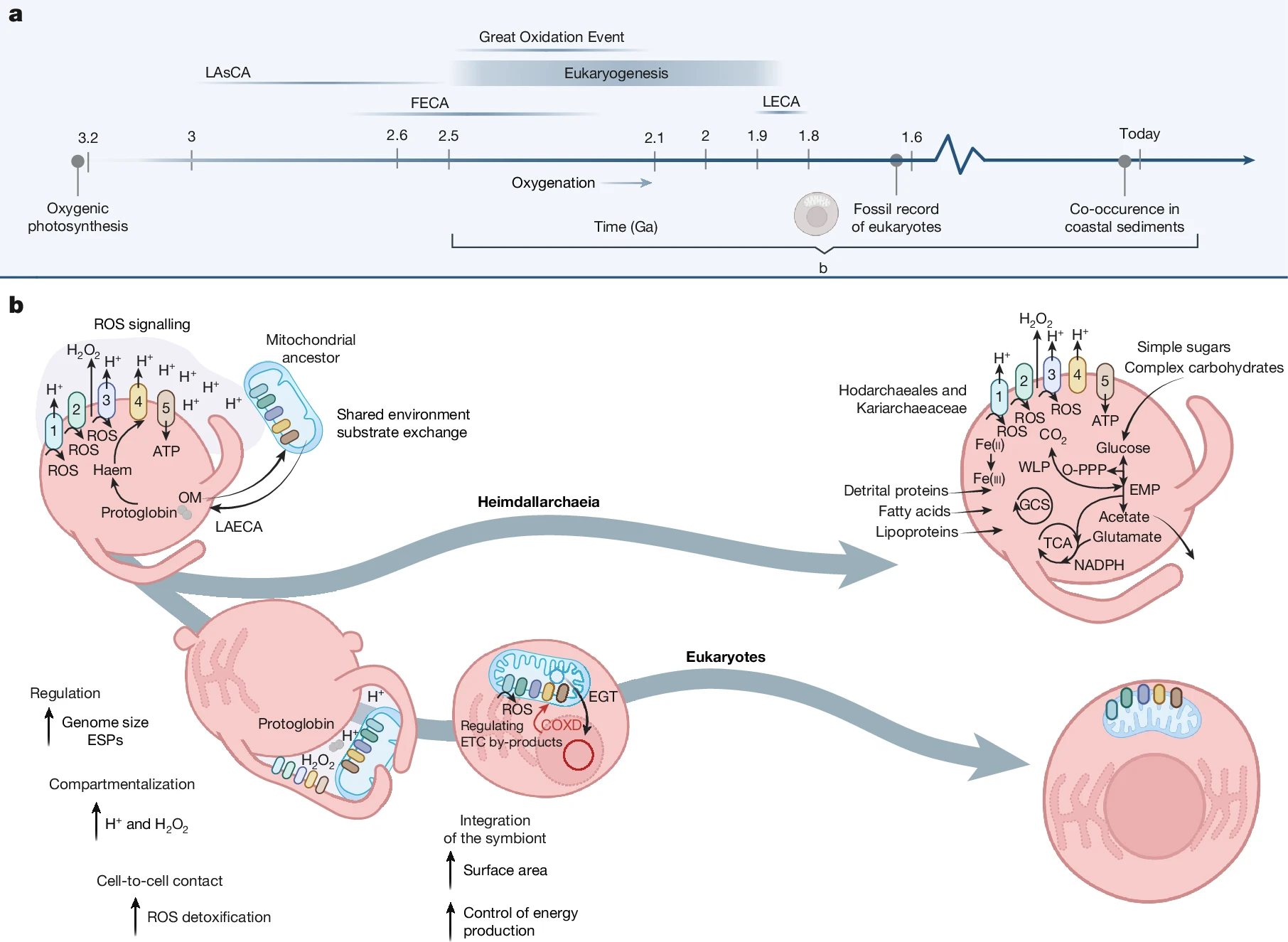 The awesome power of metagenomics is providing fascinating insights into the origins of life. Tracing backwards from today’s life forms we can identify features that were likely present in the last universal common ancestor (LUCA), as well as the last eukaryotic common ancestor (LECA), which arose after the evolution of oxygenic photosynthesis. This exciting paper by Appler et al. provides new insights into the origin of eukaryotes (eukaryogenesis), which is thought to have involved an endosymbiotic event between an alphaproteobacteria (pre-mitochondria) and an Asgard archaea, which have many eukaryotic-like proteins (Asgard was the home of Norse gods, based on the naming conventions of the archaea). The researchers carried out a massive sequencing effort, resulting in over 400 new metagenome-assembled genomes (MAGs) that they identified as Asgardarchaeota, and took a deep dive into their metabolic capabilities. The authors conclude, “that the archaeal ancestor of eukaryotes was not just oxygen tolerant, through an arsenal of ROS-detoxifying enzymes, but potentially benefited from oxygen through aerobic respiration.” Interestingly, this raises the possibility that the selective advantage of acquiring mitochondria wasn’t solely conferred by aerobic respiration, but perhaps by the compartmentalization of it. (Summary by Mary Williams @PlantTeaching.bsky.social) Nature 10.1038/s41586-026-10128-z
Decoding a multifunctional biosynthetic gene cluster for post-chorismate metabolism in Arabidopsis
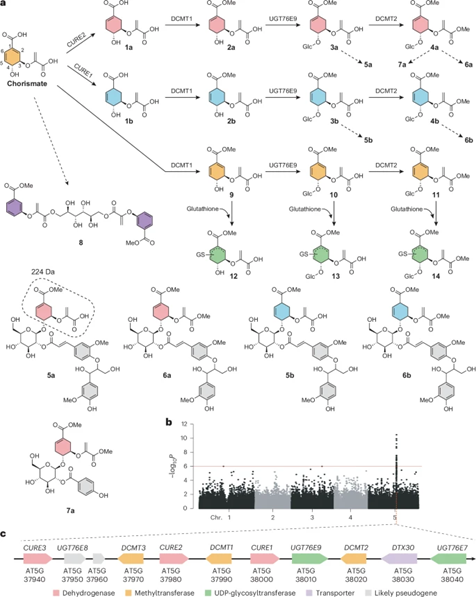 Biosynthetic gene clusters (BGCs) are groups of genes physically located in close proximity in a genomic region and can be thought of as a close-knit genomic orchestra. While these BGCs were thought to be rare in plants, unlike bacteria, Peng et al. takes the story a step ahead with the discovery of a BGC in Arabidopsis that harbors genes participating in not just one but three different chorismate biosynthetic pathways. Chorismate is a precursor to several downstream metabolites including amino acids, hormones, and vitamins. The quest for the BGC began with an uncharacterized metabolite showing up in a previous phenolic profiling study. Nuclear magnetic resonance (NMR) identified the unknown metabolite as methyl-2,5-dihydrochorismate. Genome wide association studies (GWAS) revealed a locus on chromosome 5 harboring ten enzyme-encoding genes. Genetic variations at this locus were linked to the varying abundance of a methyl-2,5-dihydrochorismate-associated compound. Six genes in the locus were strongly coexpressed with different chorismate-utilizing enzymes, confirming their role in different post-chorismate pathways. To test their functional roles, knockout and knockdown mutants were generated for metabolite profiling followed by liquid chromatography-mass spectrometry (LC-MS). These studies unravelled two parallel post-chorismate pathways producing non-aromatic compounds and a third pathway producing modified derivatives of chorismate. Candidate gene functions were ascertained using in-vitro enzymatic assays. Further evolutionary analysis showed that the cluster is present in a few closely related Brassicaceae plants, but was lost from others in the evolutionary trajectory. This work thus elegantly demonstrates the synergy of leveraging multi-omics approaches like metabolomics, genomics and transcriptomics and also looks at plant BGCs from a different lens. (Summary by Shakunthala Natarajan @shakunthalan.bsky.social) Nature Plants. 10.1038/s41477-025-02185-5
Spatial organization of ROS signaling at the plasma membrane
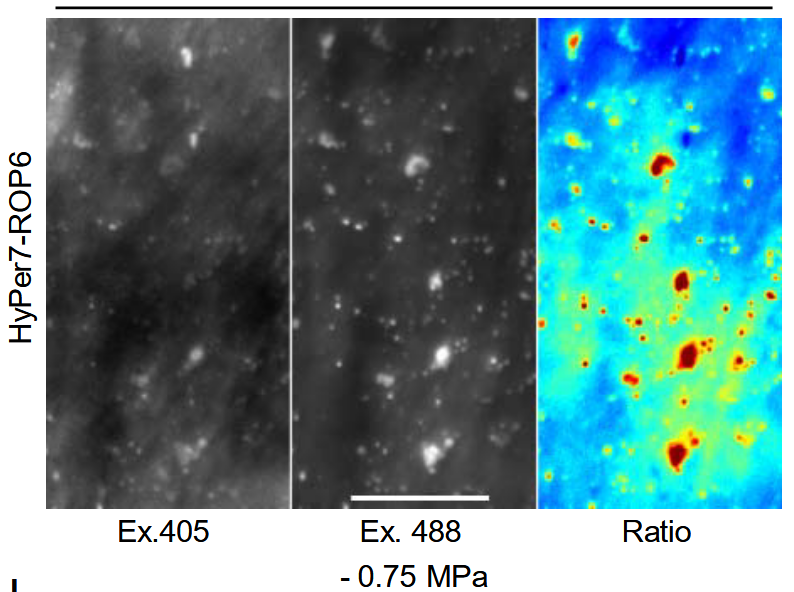 Genetic studies in Arabidopsis have identified a lot of the participants in signal transduction pathways, but often its less clear precisely where they function. As an example, although it is well known that H2O2 (hydrogen peroxide) production by RBOHs in the apoplast triggers many downstream cellular events, exactly where the signal is effective and how it reaches the cytosol is unknown. In a new study, Poitout et al. used a sensitive H2O2 reporter, HyPer7, to investigate H2O2 location in plant cells. They fused it to ROP6, a small GTPase which had previously been associated with RBOHs, and found that, upon osmotic stress, an H2O2 burst localizes with ROP6 nanodomains on the cytosolic side of the plasma membrane, demonstrating that these nanodomains can generate gradients of small diffusible molecules. Interestingly, the authors found that PIP2;7 channels (a specific class of aquaporin water channels that also transport H2O2), both co-localize with the ROP6 nanodomains and are necessary for H2O2 to effectively diffuse across the plasma membrane. It will be interesting to explore further the roles of these ROS signaling nanodomains. (Summary by Mary Williams @PlantTeaching.bsky.social) bioRxiv https://doi.org/10.64898/2026.01.19.698185
Developmental and stress responses of single root cell mechanical properties
 Clearly, the mechanical properties of plant cell walls have important implications for growth and development, but they are not necessarily easy to measure, especially in intact, living tissues. Here, Alonso-Baez et al. used Brillouin microscopy and molecular rotors to characterize cell wall properties in Arabidopsis seedling roots. Brillouin microscopy determines wall stiffness and viscosity (which are not necessarily correlated) by measuring linewidth of the inelastically scattered light. Similarly, molecular rotors report on hydrodynamic porosity (mesh size) through fluorescent measurements of probe rotation. (For a great explanation of how these techniques work, check out this virtual publication from the first author https://youtu.be/uvgipGyC0mY?si=sRsx7XO3-0OeYZ6I). The authors looked at stiffness and viscosity in different tissue layers in transverse and longitudinal directions, comparing several known cell-wall mutants and responses to various treatments such as osmotic stress. They observed that the mechanical properties are quite dynamic. They vary by cell type, during developmental progression, and are affected by a wide range of mutants and environmental changes. These fascinating data demonstrate a powerful new tool with which to probe cell biology in situ and provide new insights into how cell wall properties change over time. (Summary by Mary Williams @PlantTeaching.bsky.social). Sci. Advances 10.1126/sciadv.aeb0032
Host transcriptional regulation shapes microbiome-mediated nitrogen uptake
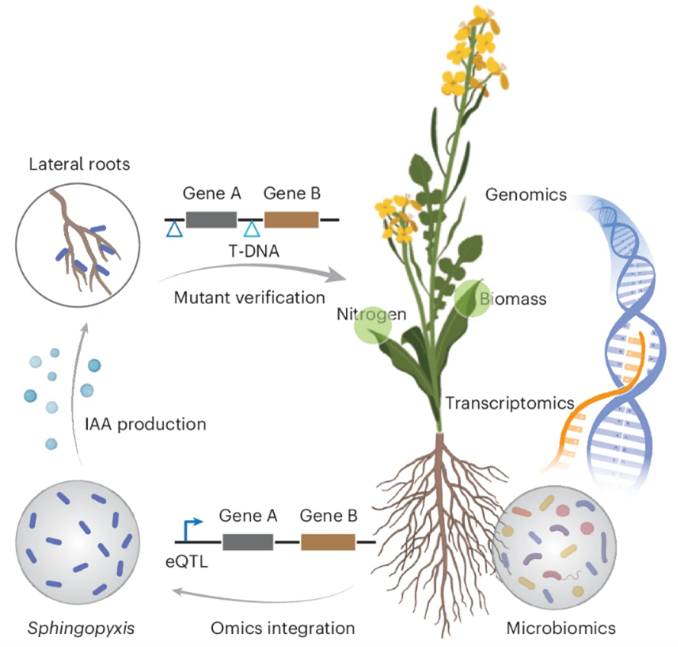 Nitrogen is a key nutrient for plant development, and plant nutrient acquisition is highly influenced by the rhizosphere microbiome. However, how host genomic variation and root transcriptional regulation shape microbiome assembly under field conditions remains unclear. Li and colleagues addressed this important question through a large-scale multi-omics study across 175 Brassica napus accessions. The authors identified highly heritable bacterial amplicon sequence variants (ASVs) associated with root nitrogen level. Surprisingly, root gene expression predicted microbiome composition better than host genomic markers, highlighting transcriptional regulation as a “Rosetta stone” between host genotype and microbial recruitment. By integrating microbial features with genomic and transcriptomic data the authors improved prediction accuracy for nitrogen uptake. Among microbial taxa, there was one that plays a key role, the genus Sphingopyxis. An isolated strain from this genus promoted lateral root growth and enhanced nitrogen uptake under low nitrogen conditions. This strain produces biologically active auxin and modulates host auxin signaling, linking host gene regulation to microbiome-driven changes in root architecture. Altogether, this study provides a very exciting framework for microbiome‑assisted breeding strategies for improving nitrogen use efficiency and crop resilience. (Summary by Adrian Gonzalez Ortega‑Villaizan @adrigov98 @adrigov.bsky.social) Nature Plants 10.1038/s41477-025-02210-7
Beyond selfing: floral trait selection and the irreplaceable role of pollinators
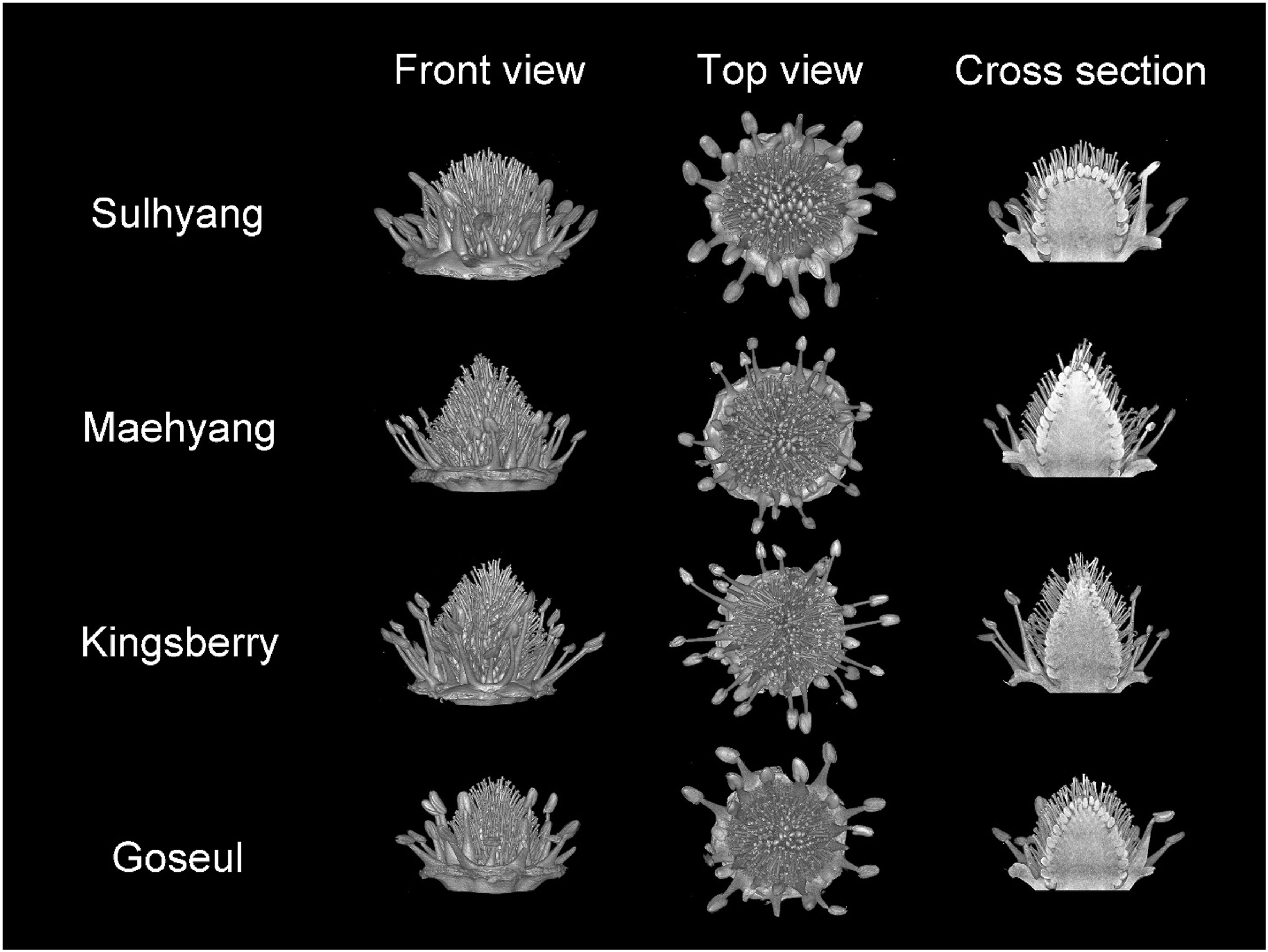 Self-pollination in many crop cultivars has been extremely useful for humans. It simplifies propagation, stabilizes traits, and supports reliable fruit production. But for many plant species, selfing comes with biological costs: reduced genetic diversity, inbreeding depression, and potential declines in long‑term resilience. In a new study of strawberries by Lee et al., the authors explore how selection for more efficient self-pollination could be strengthened through direct selection on flower morphology, particularly in conditions where pollinator visits are insufficient or unpredictable. They show that traits such as the distance between stigma and anthers, pollen viability, and the spacing between filament and receptacle strongly influence seed set and, therefore, overall fruit production. However, self-pollination still does not match the fruit yield achieved with the aid of pollinators. In short, selfing can help, but it cannot fully replace what pollinators provide. This research highlights a new path for improving crop productivity by optimizing floral traits for self-pollination. At the same time, it stresses a crucial message: even as we develop crops that can better self-fertilize, maintaining healthy pollinator communities remains essential. (Summary by Ale Lombardi @alepanda.bsky.social ) Plant Physiology and Biochemistry 10.1016/j.plaphy.2026.111057
A natural antisense transcript regulates pattern triggered immunity in Arabidopsis
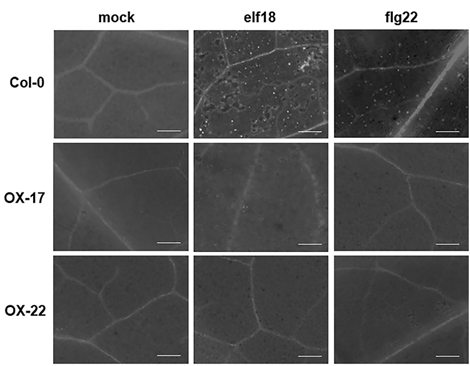 A natural antisense transcript (NAT) is a form of non-coding RNA that shares sequence complementarity with a protein coding sense gene. Although originally thought to be transcriptional noise, recent findings show that NATs contain functional roles, often through the regulation of their cognate sense transcripts. Work by Seo et al. has identified ELF18‐INDUCED LONG NONCODING RNA 19 (ELENA19) as a NAT that regulates pattern triggered immunity (PTI) in plants. Both ELENA19 and its cognate sense gene, UDP-glycosyltransferase 71B6 (UGT71B6), which glycosylates ABA, are upregulated when treated with the pathogen-associated molecular patterns (PAMPs) elf18 and flg22, suggesting a role in PTI. Overexpression (OX) of ELENA19 in transgenic Arabidopsis thaliana resulted in an attenuated PTI response, as indicated through a significant decrease in callose deposition. This antagonistic effect is accomplished by disrupting ABA homeostasis in plants. Overexpression of ELENA19 attenuates the induction of UGT71B6 following PAMP treatment, resulting in plants that contain higher levels of endogenous ABA, as indicated by competitive ELISA. The elevated levels of ABA are then associated with limited expression of genes required for PAMP-mediated callose formation. Although the exact means by which ELENA19 regulates UGT71B6 remains to be determined, this work provides compelling evidence for a NAT-mediated regulatory network for plant immune response that should be further studied. (Summary by Reed Arneson @Reed_Arneson) Plant Cell Reports. 10.1007%2Fs00299-026-03720-0
The role of AGO10 in plant immunity via trans-species RNA interference
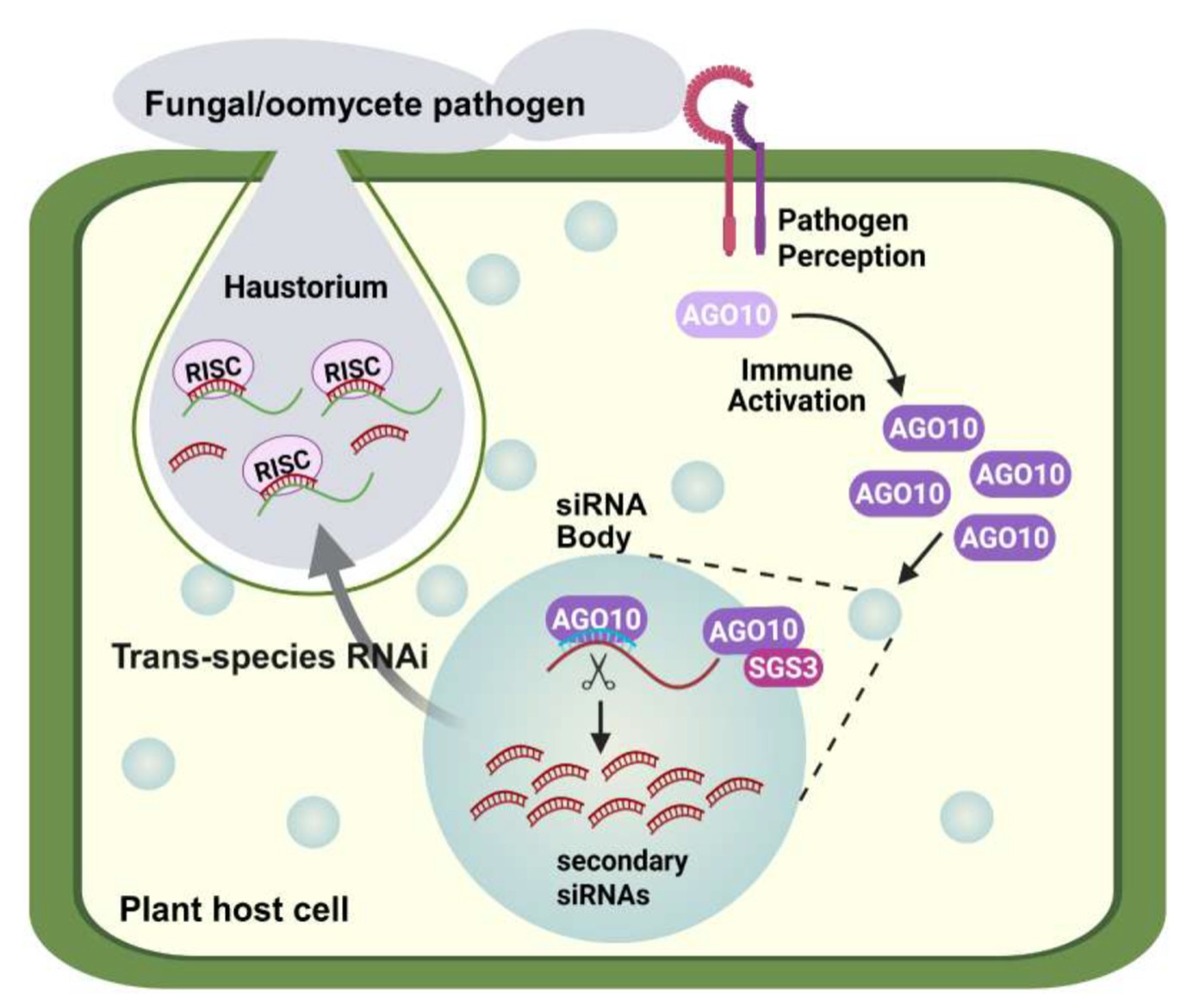 In this preprint, Wang et al. unravel a novel role for ARGONAUTE10 (AGO10) in plant immunity. Specifically, they found that AGO10 is involved in trans-species RNA interference (tsRNAi), a mechanism plants use to silence target genes in pathogens. Upon Phytophthora capsici infection, two distinct ago10 mutants are significantly more susceptible to the pathogen compared to wild-type plants. By evaluating the abundance of two siRNAs involved in P. capsici defense, they discovered that the infection-induced upregulation observed in WT plants is abolished in ago10 mutants. Remarkably, after pathogen perception, AGO10 proteins rapidly accumulate, even though their mRNA levels remain unchanged. The accumulated AGO10 proteins relocalize into liquid-like cytoplasmic condensates, also referred to as puncta. Cytoplasmatic puncta are localized in plant cells situated near the infection site and in direct contact with the invasive hyphae. The dynamic responsiveness relies on an intrinsically disordered region (IDR) at the N-terminus of the AGO10a protein. This IDR is essential for AGO10 interaction with SGS3, which is a key scaffolding component of siRNAs bodies. AGO10-SGS3 interaction is necessary for recruiting AGO10 into these condensates, where AGO10 effectively promotes the production of defensive secondary siRNAs. Finally, these small RNAs mediate the silencing of specific pathogen virulence genes. (Summary by Emma Olmi @olmiemma.bsky.social) bioRxiv https://doi.org/10.64898/2026.02.18.706620
Genomic studies offer new hope for restoring the dwindling American chestnut
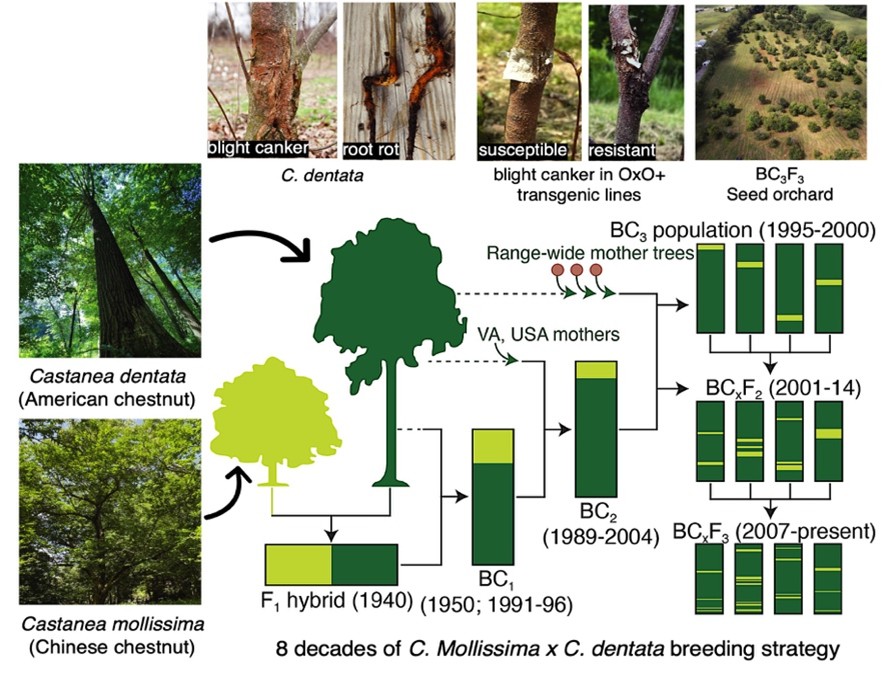 Deadly blight caused by the fungal pathogen (Cryphonectria parasitica) and root rot caused by an oomycete pathogen have pushed the American chestnuts toward extinction. In this study by Westbrook et al., the authors highlight the ongoing restoration strategies aiming to return the previously dominant American chestnut to its native range. The authors implemented a multi-strategic approach, including hybridization with resistant Chinese chestnuts, backcrossing and intercrossing to improve blight resistance in the American chestnut. The authors also evaluate the performance of transgenic lines overexpressing oxalate oxidase (OxO), which degrades a fungal virulence factor. Although this transgene provides significant protection, a broad genetic foundation from diverse breeding populations remains essential for long-term survival. The authors developed a chromosome-scale genome for the chestnuts to overcome the molecular limitations of breeding strategies. They report that although most protein-coding genes are shared across species, extensive copy number variation (CNV) in the Chinese chestnut contributes significantly to its superior immunity. Through RNA sequencing, they found that resistant trees have constitutively upregulated biosynthesis of certain metabolites, particularly lupeol, a triterpene sterol that actively inhibits fungal growth. Using quantitative trait loci (QTL) mapping, the authors found that blight resistance is controlled by a network of numerous small-effect QTLs. They conducted a genome-wide association study (GWAS) across 3365 hybrid trees to further detect blight resistance-associated loci. Despite selection for blight resistance, substantial root rot resistance was also inherited in the hybrid population, indicating multilocus resistance. The authors propose recurrent selection strategies within hybrid populations as a key approach to enhance disease resistance and forest competitiveness, emphasizing that successful restoration requires selecting hybrid trees with roughly 70-85% American chestnut ancestry. (Summary by Sonal Sachdev @sci3ntyst @sci3ntyst.bsky.social) Science 10.1126/science.adw3225
