

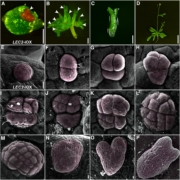
How do plants attain totipotency? Reprogramming somatic cells into embryos
Plant Science Research WeeklyPlants have an extraordinary ability to regenerate entire organs or even embryos from a single somatic cell, a phenomenon known as totipotency. Remarkably, differentiated cells can reacquire totipotency and form embryos through somatic embryogenesis, however molecular mechanisms behind this developmental…
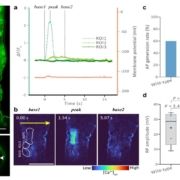
MSL10 and the Prey: A high-sensitivity mechanosensor in Venus flytrap
Plant Science Research WeeklyPlants are sessile and must sense and adapt to environmental stresses, including mechanical forces from wind or physical contact. Mechanosensitive genes, such as those in the Mechanosensitive channel of Small conductance-Like (MSL) family, prevent cell rupture by acting as osmotic safety valves under…
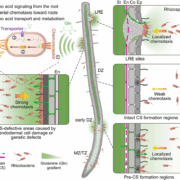
When roots call, microbes answer: Glutamine as a key signal for microbial attraction
Plant Science Research WeeklyPlants don’t grow alone. They cultivate vibrant microbial communities around their roots that shape their growth, health, and resilience. Root exudates, cocktails of secreted metabolites, play a key role in selectively recruiting beneficial soil bacteria. Yet when, where, and how these exudates are…
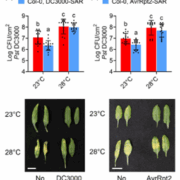
Under attack: One reason why plants struggle in a warmer world
Plant Science Research WeeklyPlants, like animals, have a natural immune system that helps them defend against diseases. They not only fight local pathogens but can also alert distant, non-infected tissues to prepare for infection, a process called systemic acquired resistance (SAR). All these mechanisms can be threatened by climate…
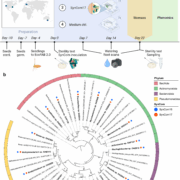
Amping up reproducibility of microbiome studies through standardized protocols and fabricated ecosystems
Plant Science Research Weekly
There is ample evidence for the impacts of plant microbiomes to plant growth and metabolism, but there are also challenges to obtaining reproducible data. In a first of its kind multi-laboratory microbiome reproducibility study, researchers from five groups across three continents used prefabricated…
Plant Science Research Weekly: October 17, 2025
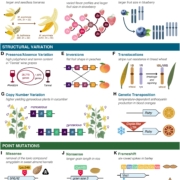
WWR Full PostReview: Beautiful mutations
This is an interesting and engaging review article, written by a team from Bayer US Crop Science, on how mutations (broadly defined) have benefited plant domestication and breeding. While it briefly covers the basics, such as population genetics, it really focuses on demystifying…

Rooted in Resilience: Why Plant Science and ASPB Ambassadors Matter Now More Than Ever
UncategorizedASPB Ambassadors builds community. Just like a healthy ecosystem, a strong scientific community depends on diverse connections, mutual support, and shared purpose. Building the community of ASPB, we lift each other up through outreach, support, and collaboration. We have come together after the…

Plantae Presents - Rooted in Balance: Building Healthy Work-Life Balance as a Plant Scientist
Blog, Education, Plantae WebinarsPlantae Presents - Rooted in Balance: Building Healthy Work-Life Balance as a Plant Scientist
Featuring Kevin Cope, Jessica Erickson, Gnanesh Nanjappa, and Vojtěch Schmidt
When: Thursday, October 23, 2025, at
6:00 AM PDT | 9:00 AM EDT | 2:00 PM BST | 9:00 PM Beijing
About this Webinar
Similar…
Staying Sane in the Lab: Tips for Mental Health Strategies for Researchers
Blog, CareersIt’s 10:30 p.m. and your laptop is still open. The submission deadline is tomorrow, your latest experiment failed, and your email inbox is a small avalanche. You silently wonder how long you can keep this up — and how everyone else seems to handle it better than you. Even though it can often feel…