

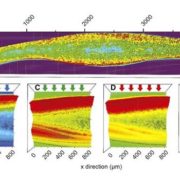
Imaging of Light Absorption and Photosynthesis
Blog, Plant Physiology: On The Inside, Research, Research BlogDue to its ease of use and noninvasive nature, variable chlorophyll fluorescence techniques have become increasingly popular for estimating photosynthetic parameters. Most measurements of variable chlorophyll fluorescence in complex plant tissues and surface-associated cell assemblages (e.g. biofilms)…
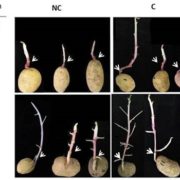
Suc Signals Induce Etiolated Stem Branching
Blog, Plant Physiology, Plant Physiology: On The Inside, Research, Research BlogPlant shoot branching is determined by apical dominance, a process in which the apical bud (shoot tip) inhibits the outgrowth of axillary buds further down the stem to control the number of growing branches. In response to this inhibition, plants have evolved rapid long-distance signaling mechanisms…
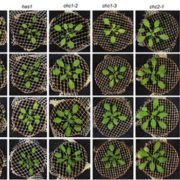
Clathrin and Stomatal Function
Blog, Plant Physiology, Plant Physiology: On The Inside, Research, Research BlogVesicle traffic to and from the plasma membrane plays an integral role in regulating protein localization and activity, membrane composition, and cell surface area. Clathrin is a structural protein that forms a lattice-like complex composed of two H chain subunits (CHC1 and CHC2) and two light chain…
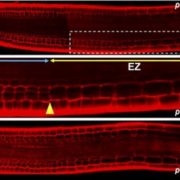
Cell Fate Specification in Arabidopsis Roots
Blog, Plant Physiology: On The Inside, Research, Research BlogPattern formation in multicellular organisms is the result of coordinated cell division and cell fate determination. In animals, cell fate is determined mainly by a cell lineage-dependent mechanism, whereas positional information is thought to be the primary determinant of cell fate in plants. Currently,…

Author Interview: Emily Larson
Blog, Plant Physiology, Plant Physiology: Editorials, Research, Research BlogGeraint Perry from GARNet (@GARNetweets) interviewed Emily Larson (@erlarson_phd), author of "Clathrin Heavy Chain subunits coordinate endo- and exocytic traffic and affect stomatal movement" published recently in Plant Physiology.
Emily Larson from the University of Glasgow talks clathrin, balloons…

A look back at the first season of the Taproot Podcast
Blog, Careers, Careers - Blog, Research, Research Blog
July 2017 marked the debut of a new podcast that digs beneath the surface to understand how plant science publications are created. The Taproot Podcast was developed and is hosted by Elizabeth (Liz) Haswell (Professor at Washington University in St. Louis) and Ivan Baxter (Research Computational…

Review: Secondary growth as a determinant of plant shape and form
Blog, Plant Science Research Weekly, Research, Research BlogSecondary growth from the vascular cambium, a lateral meristem, increases the plant’s girth. It also produces wood (secondary xylem) and important fibers like flax, jute and hemp (secondary phloem). Ragni and Greb review secondary growth in plants. They start with a review of the evolutionary history…
Review: Exocyst, exosomes, and autophagy in pollen-stigma interactions ($)
Blog, Plant Science Research Weekly, Research, Research BlogSome plants are able to suppress inbreeding through a system called self-incompatibility, in which “self”-pollen is unable to reach “self” eggs. Self-incompatibility has evolved multiple times and takes several forms. Goring reviews the cellular processes of self-incompatibility that occur in…
Review: The structure-to-function missing link of plasmodesmata: ($)
Blog, Plant Science Research Weekly, Research, Research BlogPlasmodesmata are tiny channels between cells that allow intercellular movement of messages and metabolites as well as pathogens. They are structurally complex and usually have a central strand of endoplasmic-reticulum (the desmotubule) that passes between adjacent cells, connected by spoke-like elements…