
Rapid shifts in the patterns of gene expression shapes flowering plant diversity
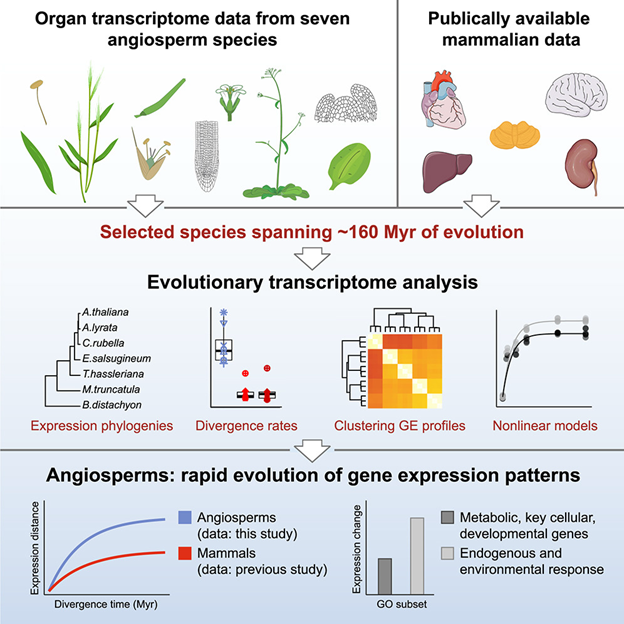 Flowering plants are the most widespread group of plants, occupying almost every environment on our planet. They play important roles in maintaining the earth’s biodiversity and have a remarkably high rate of diversification. What’s always puzzled scientists is how they became so incredibly diverse. To explore this Schuster and colleagues looked at how gene activity changes across different plant organs and across species, instead of focusing on changes in DNA sequence. What they found is striking: gene expression in plant organs evolves much faster than in mammalian organs. Even organs that look similar, like leaves or flowers, can have very different expression patterns. It’s interesting to note that different portions of the plant exhibit different behaviors. Reproductive tissues such as stamens and pollen show especially rapid changes in gene expression, while on the other hand tissue takes part in growth and maintenance, like leaves and meristems, are much more stable. When they looked at gene function, they found that genes that change the most are those involved in responding to the environment, things like stress, signals, and external cues, whereas genes required for basic cellular functions and development are less flexible. Together, these findings highlight the angiosperm gene expression patterns have evolved quickly, which may be one of the reasons flowering plants have been so successful and so diverse. Since plants can’t move, this kind of rapid evolution is probably crucial part of their survival strategy. This ability to rapidly fluctuate gene expression might help plants adapt to new habitat quickly, survive climate changes, and ultimately diversify into many species and spread rapidly. Overall, this study offers a conceptual framework and practical tools for understanding plant adaptation, conservation, and even crop improvement in the future. (Summary by Kavita Joshi @JoshiKvita) Cell 10.1016/j.cell.2025.12.015